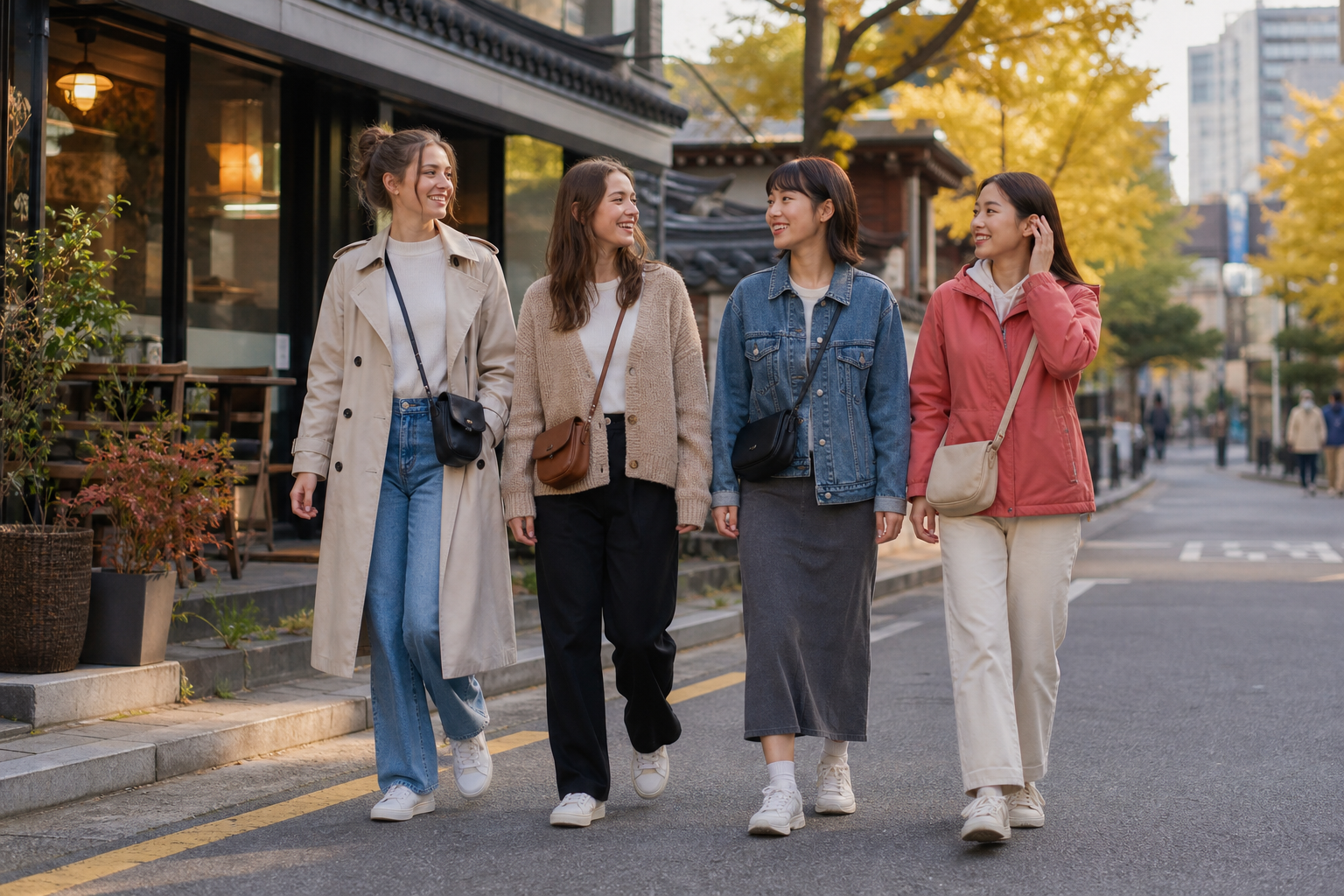
Seoul can give you warm sun, cold wind and an air-conditioned subway on the same day. The smartest Korea wardrobe is not a suitcase full of trend pieces—it is a small layered system that works for long walks, sudden rain, cafés, palaces and photos.
Fact-checked: August 17, 2026. Seasonal averages are only a starting point. Climate patterns are changing, so check Seoul’s real-time forecast 48 hours before departure and again each morning.
The fast packing answer

- Spring: light layers, a real jacket for early spring, comfortable closed shoes and a compact umbrella.
- Summer: breathable clothes, rain protection, sun protection and a layer for strong indoor air-conditioning.
- Autumn: T-shirts plus knitwear and a light coat; add warmth quickly from late October into November.
- Winter: insulated outerwear, thermal base layers, gloves, warm socks and shoes with useful grip.
Official Korean tourism guidance describes spring and fall as generally mild, summer as hot and humid, and winter as cold and dry. It also warns that late June through July can overlap with the rainy season and that extreme heat, heavy rain or cold waves can alter the usual pattern.
Spring in Seoul: March to May
Spring changes quickly. March sunshine can look warm while the air and evening wind still feel wintry. April is usually easier for outdoor walking, and May can become genuinely warm during the day. The official Visit Seoul climate guide shows the average daily mean rising substantially between March and May, so one “spring outfit” cannot cover the whole season.
Pack for spring
- a trench, light padded jacket or structured wind-resistant coat;
- two breathable long-sleeve tops and one knit or cardigan;
- jeans, relaxed trousers or a midi skirt with optional tights;
- closed walking shoes and socks that handle a full day;
- a compact umbrella and a foldable tote for changing layers.
For cherry-blossom photos, use one light or coral accent rather than packing a complete pastel wardrobe. Flower forecasts and peak dates change every year; plan the outfit for the weather, not for an old social-media date.
Summer in Seoul: June to August
Seoul summer is hot, humid and often wet. The Korean rainy season, jangma, generally begins around mid-to-late June and lasts about a month, but rainfall timing varies. Typhoon or heavy-rain advisories can also affect plans later in the season. Prioritize fabric that dries, footwear that remains safe on wet pavement and a backup indoor itinerary.
Pack for summer
- breathable T-shirts, sleeveless tops or loose blouses;
- light trousers, skirts or shorts that do not restrict walking;
- a thin overshirt or cardigan for cold trains, malls and cafés;
- a lightweight rain shell or reliable compact umbrella;
- quick-drying sneakers or sandals with secure soles;
- a sun hat, sunglasses and sunscreen appropriate for your skin and destination rules.
Avoid making white linen your only option during heavy rain. Pack one darker bottom and a small waterproof pouch for phone, passport copy and power bank. If shoes become soaked, give them time to dry rather than wearing the same wet pair for three days.
Autumn in Seoul: September to November
Early September can still feel like summer. October often delivers the clear, layered-outfit weather travelers imagine, while November evenings can become cold enough for a substantial jacket. Korea Tourism Organization guidance describes fall as moderate overall, but the transition is rapid.
Pack for autumn
- T-shirts or thin long sleeves for the base;
- a cardigan, sweatshirt or light knit;
- a denim jacket, trench or leather-style layer;
- comfortable sneakers or ankle boots already broken in;
- a scarf for late October or November evenings.
Autumn is ideal for a compact street-style wardrobe because each piece can appear in multiple outfits. Choose two neutral bottoms, three tops and two outer layers that all work together. One interesting bag, earring or coral layer creates variety without extra luggage.
Winter in Seoul: December to February
Winter is not simply “a little colder.” Seoul can fall well below freezing, and wind changes how long you can comfortably stay outdoors. Visit Seoul notes that temperatures can sometimes reach around −15°C. Indoor spaces are heated, so the useful strategy is removable warmth rather than one heavy outfit with no layers.
Pack for winter
- an insulated coat or long padded jacket;
- thermal base tops and leggings for very cold days;
- knits or fleece that fit comfortably under the coat;
- gloves, a warm hat, scarf and thick socks;
- water-resistant shoes with grip for snow, slush or icy pavement;
- lip balm and a moisturizer that already suits your skin.
Do not test brand-new fashion boots on a frozen, 20,000-step day. Traction, warmth and dry socks matter more than a perfect photo. Carry a slim tote or foldable bag for gloves and scarf when entering a heated mall.
The one-week Seoul capsule wardrobe
- 3 everyday tops;
- 2 bottoms that match every top;
- 1 dress or alternative evening look if you will use it;
- 2 seasonal layers;
- 1 weather-appropriate outer layer;
- 2 pairs of shoes at most: primary walking pair plus a lighter or dressier backup;
- sleepwear, underwear and socks with one extra day of each;
- one small laundry bag and stain wipe.
Many Seoul hotels and longer-stay properties offer laundry access, but never assume. Check the room listing, operating hours, detergent availability and payment method before reducing your clothing count.
Footwear: Seoul is a walking city

Subway transfers, palace grounds, hills and shopping streets create more steps than an itinerary suggests. Bring shoes you have already worn for several long days. A cushioned insole cannot fix a shoe that rubs, slips or compresses your toes.
- Wear the bulkiest pair on the flight.
- Pack blister patches in your day bag.
- Use socks that stay comfortable when damp.
- For summer sandals, choose straps and grip rather than a flat loose slide.
- For winter, test the sole on wet surfaces before travel.
Korean spaces where shoes or dress choices matter
Korea does not impose one strict tourist dress code, but you may remove shoes in homes, some guesthouses, temple spaces and floor-seating restaurants. Wear clean socks without difficult fastenings on days that include these places. Follow posted rules at religious or traditional sites and carry a light layer if your outfit feels too exposed for the setting.
Hanbok rental is different from everyday packing. Choose a reputable shop, ask what is included, confirm return time and store your belongings securely. Do not wear rental shoes that feel unstable on stone palace paths.
Shopping in Seoul when sizing varies
Korean fashion shopping is easiest when you treat the label as a starting point, not a promise. A boutique’s “one size”, a global chain’s S or M and a shoe marked 240 can all fit differently. Save your own measurements in centimeters before the trip, wear easy-to-change layers and confirm the store’s fitting-room and return rules before paying.

Step 1: save five measurements in centimeters
- shoulder width across a jacket that already fits;
- bust or chest at the fullest point;
- natural waist and fullest hip;
- preferred garment length and trouser inseam;
- foot length in millimeters, measured in the socks you will wear.
Keep the numbers in a phone note that works offline. Compare them with the actual garment measurements when available. Do not assume that a 240 shoe or a “free size” garment will match every brand, style or foot shape.
Step 2: choose the shopping area by purpose
- Myeongdong: useful for a first comparison because the district mixes major retail, casual fashion and beauty stores and is accustomed to international visitors.
- Hongdae R3 Fashion Street: a dense, youth-oriented area for trend-led clothing, accessories and cosmetics. Browse first and compare quality before buying several inexpensive pieces.
- Seongsu Yeonmujang-gil: best for contemporary boutiques, converted industrial spaces and changing pop-ups. Check the current pop-up schedule because brands and entry rules change quickly.
- Hannam: better for slower showroom and select-shop browsing. Prices may be higher, so confirm payment, tax-refund and return support at each store.
Store hours, branches and pop-ups can change. Save the Korean address and nearest subway exit from the store’s current official page on the morning of your visit.
Step 3: ask before entering the fitting room
- Ask whether fitting is allowed for that item; some small stores, sale items, white clothing, hats, jewelry or close-fitting pieces may have restrictions.
- Check the maximum number of garments and whether shoes must be removed.
- Use a disposable face cover if the store provides one and avoid transferring makeup to pale clothing.
- Test sitting, raising your arms, walking and using the pockets—not only the mirror pose.
- Never photograph another customer or the inside of an occupied fitting area.
Step 4: inspect the item before payment
- Match the size, color and product code on the garment and tag.
- Check seams, zipper, buttons, lining, stains and missing accessories.
- Read the fiber and care label; delicate or dry-clean-only pieces can cost more to maintain.
- Ask whether the display item is the item you will receive and inspect the packed item again.
- For shoes, walk on the permitted surface and check both feet, heel movement and toe space.
Step 5: confirm exchange, return and receipt rules
Do not assume that an in-store purchase has the same cooling-off period as an online order in your country. Policies can differ by retailer and by item. Before paying, ask: “Can I exchange or return this item? By what date, at which branch, and with which tags and receipt?” Confirm whether sale items, accessories, underwear, cosmetics or altered goods are final sale. Keep the receipt, tags, packaging and card slip until you are sure.
If the item is defective or the transaction is disputed, photograph the product, tag and receipt and contact the retailer promptly. Travelers can also ask the 1330 Korea Travel Helpline for tourism assistance; it is not a substitute for emergency or legal advice.
Step 6: ask about tax refund before opening the package
Clothing, shoes, bags and accessories can be eligible at participating tax-refund stores, but the store, purchase and traveler must meet the current requirements. Look for the official tax-refund sign, present the required passport information at checkout and keep the refund document and receipt. VISITKOREA’s current guide lists a minimum qualifying purchase of KRW 15,000 and says eligible goods must be taken out of Korea within three months. Opened or used items are generally excluded, so check the process before wearing a tax-refund purchase.
Limits and procedures can change. Recheck the official VISITKOREA comprehensive tax-refund guide shortly before the trip and follow the instructions printed on your own refund document.
A 30-second checkout script
- “Is fitting allowed for this item?”
- “May I see the measurements or another size?”
- “What is the exchange or return deadline?”
- “Is this item final sale?”
- “Does this store provide an immediate or general tax refund?”
- Check the packed item, receipt and refund document before leaving.
Accuracy note: Store assortment, hours, fitting-room rules, returns, payment support and tax-refund participation can change. The retailer’s current written policy and the official refund document control.
Official planning links
- Visit Seoul: Myeongdong
- Visit Seoul: Hongdae R3 Fashion Street
- Visit Seoul: Seongsu Yeonmujang-gil
- Visit Seoul: example of Hannam select-shop visitor information
- VISITKOREA: comprehensive tax-refund guide
Match your packing to the itinerary
- Palace and hanok day: stable shoes, respectful adjustable layers and a bag that leaves hands free.
- Seongsu or Hongdae day: comfortable street style, a foldable tote and one layer that works indoors and outside.
- K-pop location route: build one photo-friendly outfit around walking shoes. Use our K-pop and movie locations guide to reduce transfers.
- Jeju beach extension: add secure swimwear, cover-up, sun protection and beach-safe footwear. Start with the Hyeopjae Beach guide.
- Medical or beauty appointment: follow the provider’s clothing and aftercare instructions; choose loose layers and read the Medical Korea booking guide.
The 48-hour final weather check
- Check the daily high, low and “feels like” range.
- Review hourly rain, wind, heat or cold-wave advisories.
- Look at the forecast for day trips outside Seoul separately.
- Move one emergency layer into your carry-on.
- Change the itinerary—not just the outfit—during severe weather.
Official planning links
VEMORIQ tip: Pack for the coldest, wettest two hours of your forecast—not for the prettiest afternoon photo you found online.
Leave a Reply