Dreaming of Jeju beaches, Gangwon coastlines or countryside stops that are awkward by bus? A rental car can unlock the route, while central Seoul is usually easier without one.
Reviewed: August 19, 2026. Rental rules, permits, insurance and toll procedures can change. Confirm them with your rental company before paying. This guide covers the first-timer flow from documents and insurance to Hi-pass and navigation.
Documents to prepare before flying
- Passport matching the booking name.
- International Driving Permit (IDP) for the vehicle class, issued by an authorized body in your home country before travel. An unofficial online certificate or phone photo may not be accepted.
- Original physical home-country license. Some companies require it with the IDP.
- Payment card in the main driver’s name. VISITKOREA’s basic guide specifies a driver-named credit card; confirm the branch’s foreign-card policy.
- Booking confirmation and exact pickup address.
VISITKOREA states that short-term tourist renters using an IDP must generally be at least 21 and have been in Korea less than one year. Minimum driving experience and age rules may be stricter for premium cars, vans and larger SUVs.
Choose the right car and options
A compact is easiest for city parking and narrow lanes. A small SUV can help with luggage; an EV makes sense only after you understand its connector, payment method and return-charge rule. Ask whether an additional driver, child seat, phone holder, built-in navigation, winter equipment and Hi-pass terminal must be reserved.
ONE VEHICLE-CHOICE SYSTEM · SEOUL · BUSAN · JEJU
Choose a rental car by people and luggage—not seats alone
Quick answer: count every large suitcase before booking. A five-seat car does not automatically carry five travelers and five cases. Operators guarantee a vehicle class, so confirm the actual seat layout and boot capacity.

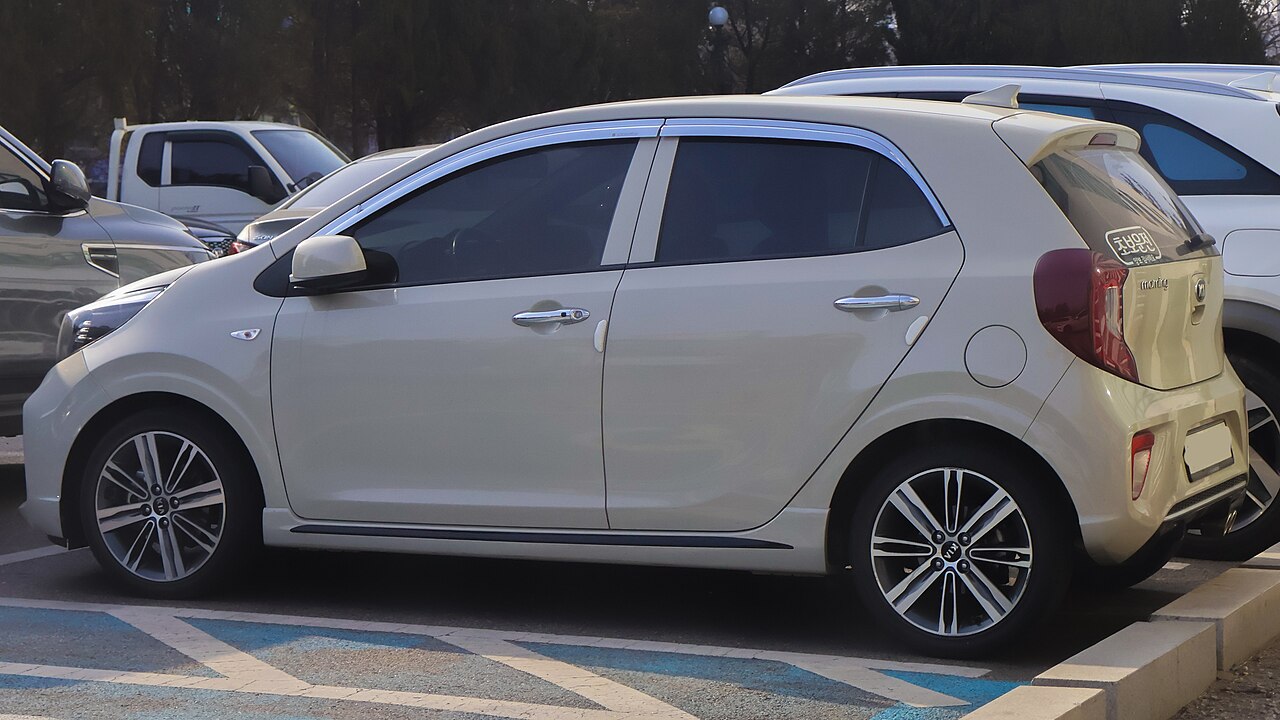
Mini / economy
Morning or Ray class
Narrow streets and easy parking. Two adults with two large cases should move up a class.
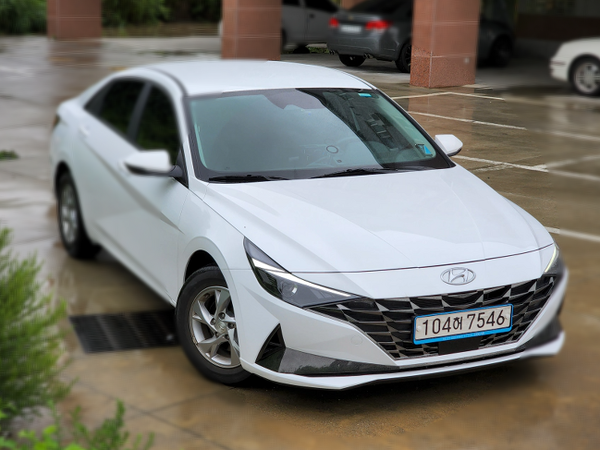
Compact / midsize sedan
Avante, K3, K5 or Sonata class
A practical default for two adults. Confirm the boot opening and LPG-versus-petrol fuel rule.

Small / midsize SUV
Kona, Seltos, Sportage or Tucson class
More flexible for coastal routes and luggage; exact cargo space changes by model.
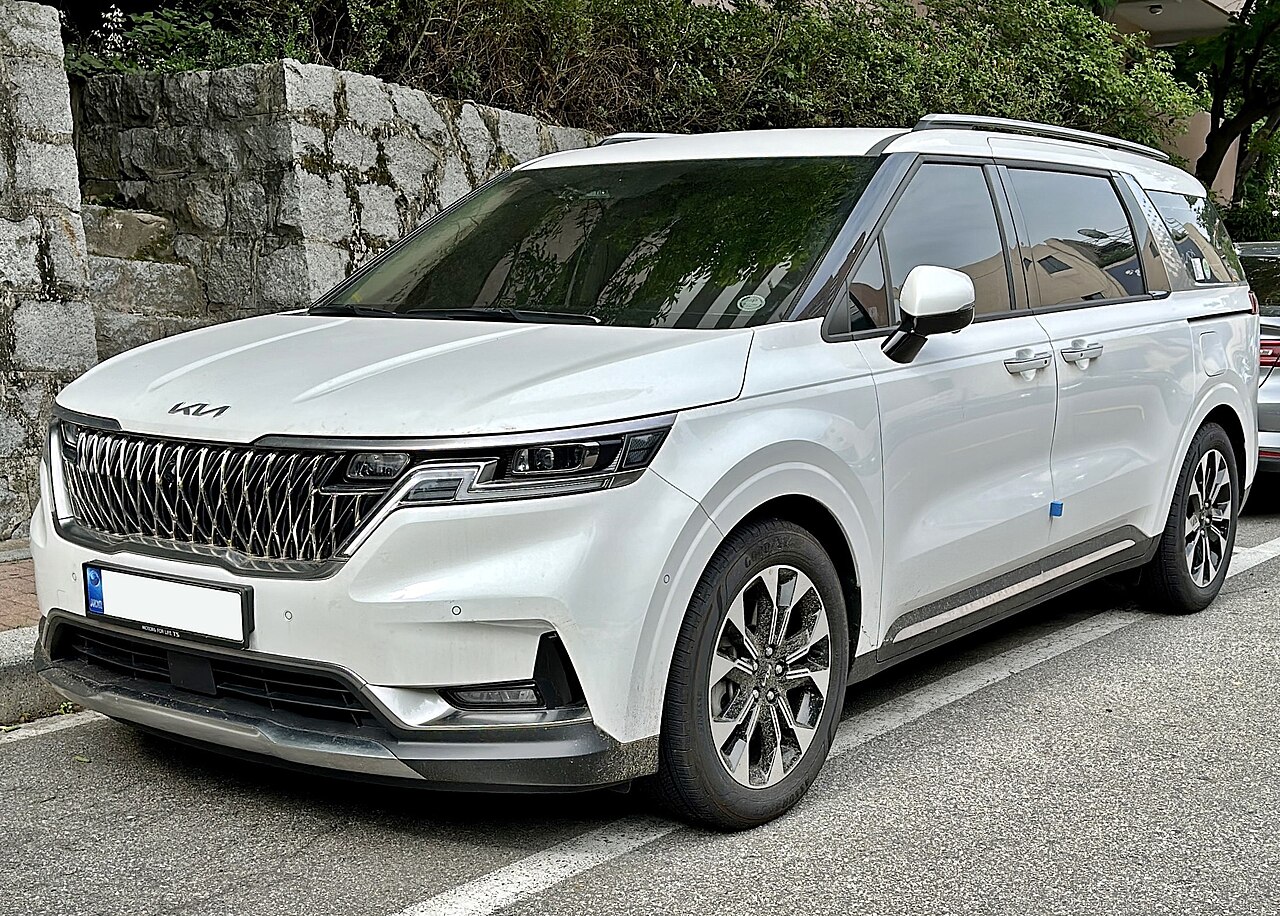
Large SUV / minivan
Sorento, Palisade or Carnival class
Best for families. Using every passenger seat can sharply reduce luggage space.
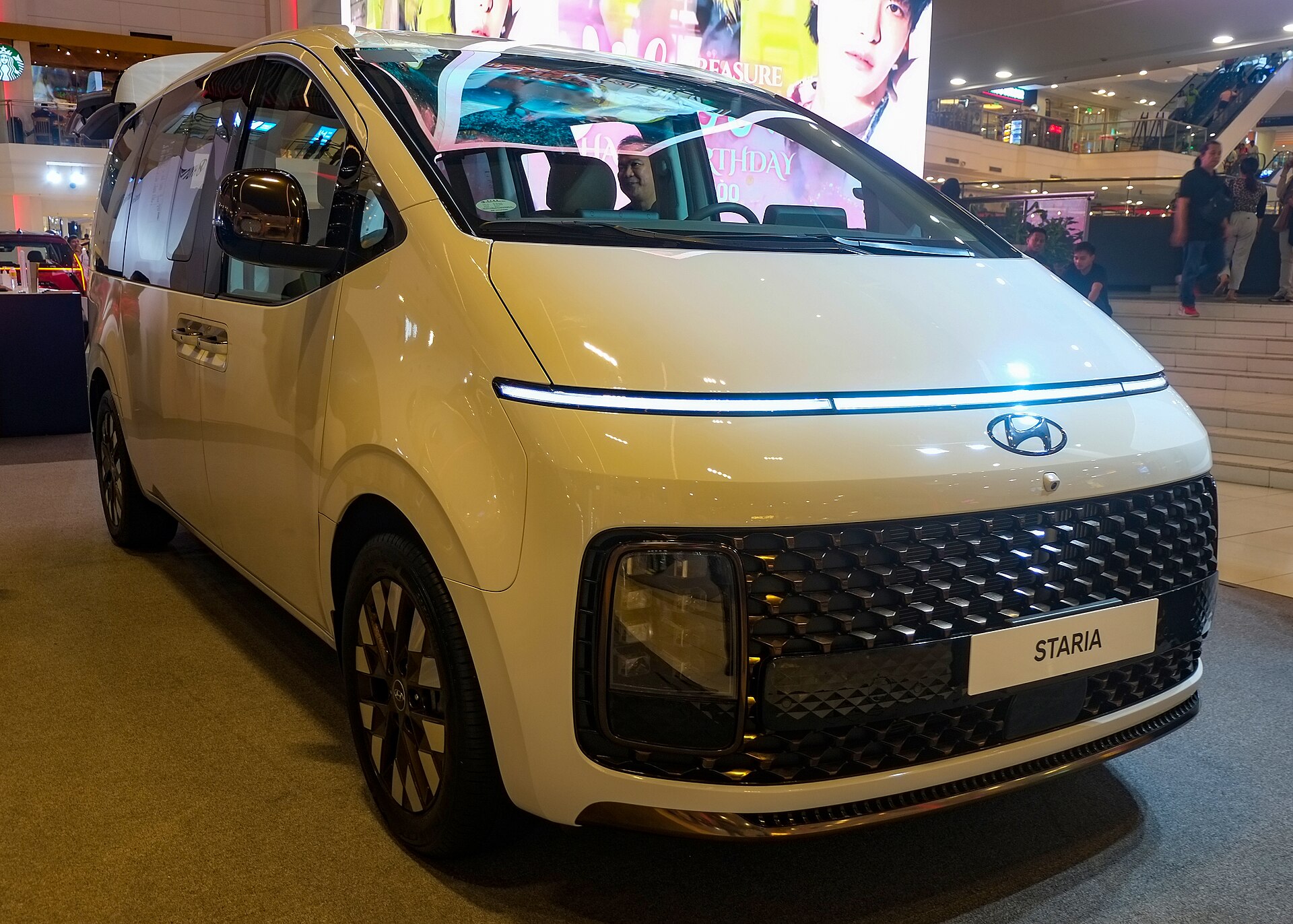
9-seat MPV / group van
Staria or 9-seat Carnival class
The safest one-car choice for bigger groups. Driver-age and experience rules are often stricter.
Photo and capacity rule: each photo shows one real example model, not the vehicle guaranteed by a rental company. These are conservative planning estimates. Child seats, golf bags, wheelchairs and folded strollers consume cargo space; ask for the exact model or move up one class.
Seoul
Usually skip the car
Subway, rail and taxis are normally easier inside central Seoul. Rent for countryside day trips, mobility needs or a group carrying substantial luggage; avoid rush hour and confirm hotel parking.
Busan
Useful beyond the subway corridor
Rail and taxis cover the core. A car becomes useful for Gijang, coastal stops or a Geoje extension. Allow extra time around beach districts and verify parking.
Jeju
Often the most flexible choice
Jeju has no rail network and cross-island buses can be slow. Airport handover normally uses an off-airport branch shuttle, so save the company, boarding zone and return time.
Open the complete Korea driving, IDP, insurance and toll guide →
What should you budget for the car?
The table below is a planning reference—not a promise of the final checkout price. It uses LOTTE Rent-a-Car’s official mainland daily rack rates effective July 16, 2026, before member promotions and optional coverage. Airport/Jeju location, season, driver age, insurance, one-way fees and inventory can move the live quote substantially.
| Class | Example | 1–3 days | 7+ days, per day | Best for |
|---|---|---|---|---|
| Mini | Morning-class | ₩115,000 | ₩92,000 | 1–2 travelers, light luggage |
| Compact sedan | Avante-class | ₩143,000 | ₩114,400 | Easy city parking |
| Midsize sedan | Sonata/K5-class | ₩197,000–207,000 | ₩157,600–166,000 | Comfort plus larger luggage |
| Small SUV | Kona/Niro/Seltos-class | ₩217,000 | ₩173,600 | Two large bags, higher seating |
| Midsize SUV | Tucson/Sportage-class | ₩262,000–275,000 | ₩209,600–220,000 | Group luggage and longer drives |
Smart booking check: compare the same pickup time, coverage, deductible, mileage, additional-driver fee, fuel policy and one-way fee. “Sonata-class” means a vehicle category; the exact model and trim are not guaranteed.
Rental-company shortlist: what can be verified
There is no single official traveler-facing national “top five” table with live branch totals. Publishing a made-up ranking would be less useful than showing verifiable scale. Korea Exchange filings identify LOTTE Rent-a-Car as No. 1 and SK Rent-a-Car as No. 2 by 2025 market share; their official locators list airport, KTX-station and regional locations. Exact open-branch totals change, so use the live locator rather than a frozen number.
| Verified position | Operator | Scale/locations travelers can verify | Before booking |
|---|---|---|---|
| 1 | LOTTE Rent-a-Car | Official nationwide branch list; airport, rail-station and urban pickup options. Jeju Auto House alone states 3,500+ vehicles. | Check English support, after-hours arrival and shuttle instructions. |
| 2 | SK Rent-a-Car / AVIS service | Official regional locator covering Jeju, Incheon Airport and multiple provinces; 2025 filing reports a 195,008-vehicle fleet and 15.0% share. | Confirm the actual operator, pickup desk and IDP rules on your reservation. |
| 3–5 | Regional/local providers | No reliable nationwide rank or comparable branch-count disclosure found. | Compare reviews for the exact branch, English accident support, coverage exclusions and shuttle hours—not the brand name alone. |
Transparency note: positions 3–5 are intentionally not invented. We will add named operators only when current, comparable nationwide evidence is available.
Insurance: ask five questions
- Is damage to the rental car covered?
- What deductible do I still pay?
- Is there a non-operation charge while the car is being repaired?
- Are tires, wheels, glass, mirrors, keys, interior, roof and underbody excluded?
- What accident number should I call, and is English help available?
Basic liability insurance does not automatically mean every scratch costs nothing. Read the actual coverage and exclusions before signing.
The 10-minute pickup inspection
Film one continuous walk-around in good light: front, sides, rear, roof edge, windshield and every wheel. Record existing damage, odometer, fuel or battery level. Test lights, indicators, wipers, air-conditioning, navigation and charging. Save the accident number and return address offline, and add every driver to the contract.
Hi-pass: the terminal is not the toll payment
Hi-pass is Korea’s electronic toll system. Before leaving, ask: Is the terminal working? Is an active toll card inserted? Are tolls prepaid, billed later or settled at return? What does its warning sound mean? Use a blue Hi-pass lane only after staff confirms the setup. Slow down, keep distance and never stop or reverse in the lane.
 Original VEMORIQ media
No Hi-pass? Use a general lane
Follow signs for a staffed or general payment lane. Depending on the road, collect a ticket at entry and pay at exit, or pay at the relevant toll point. Keep the ticket safe. If you accidentally pass through a Hi-pass lane without a working device, do not reverse or cut across lanes. Note the entry tollgate name and explain it to staff at the exit; VISITKOREA says they can process the toll.
Navigation that works in Korea
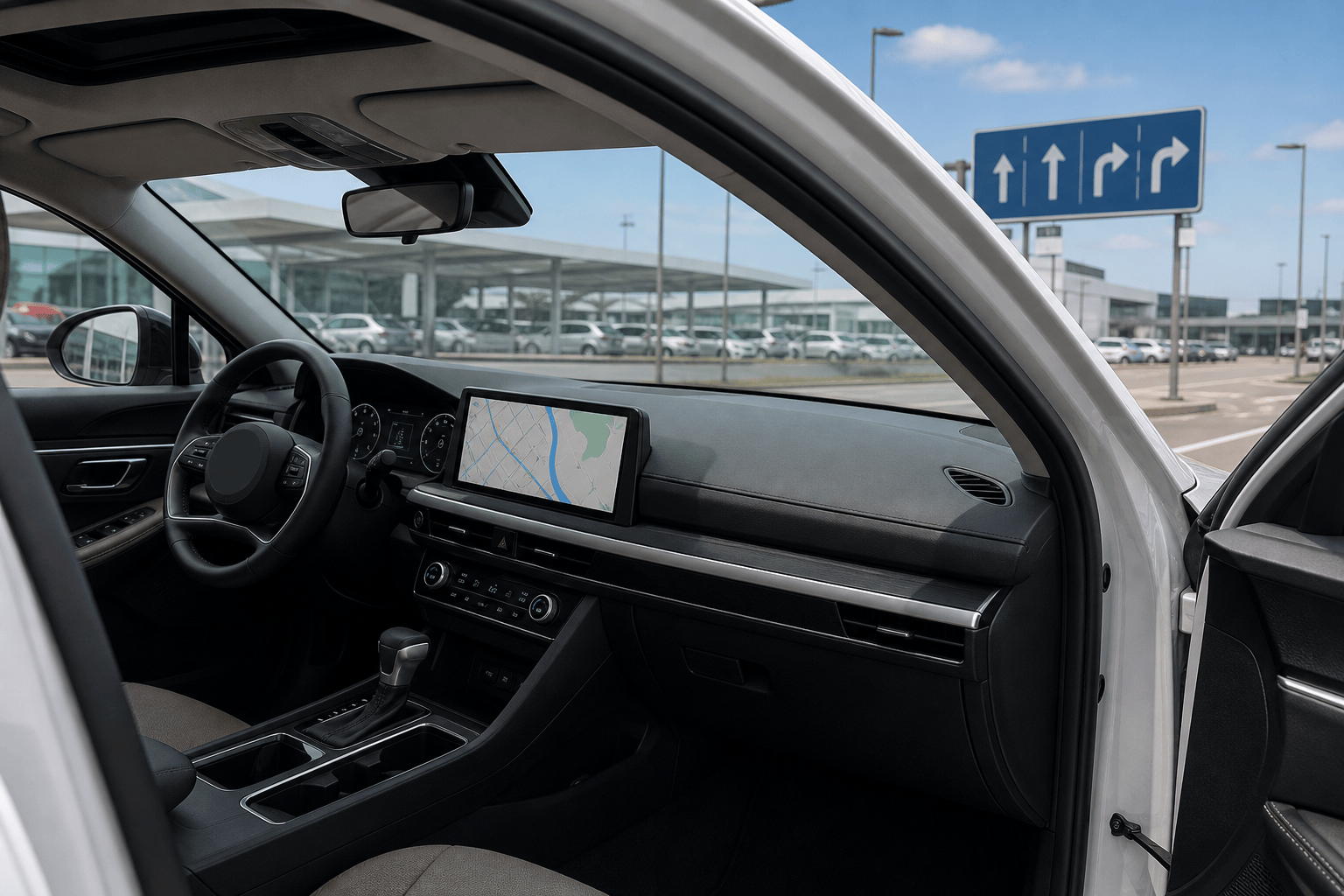
Install NAVER Map or KakaoMap before pickup. VISITKOREA lists both for English GPS navigation; full Google Maps driving navigation is limited in Korea.
 Original VEMORIQ media
- When English search fails, use the Korean place name, road address or phone number.
- Pin the hotel parking entrance, rental return branch and first rest stop in advance.
- Check toll-road settings and let a passenger change routes.
- Carry a charging cable and screenshot the final turns for underground parking.
Road rules worth knowing
Korea drives on the right, the driver sits on the left, and speeds are in km/h. Seatbelts are mandatory; yield to pedestrians, never hold a phone, and never drink and drive. On multi-lane expressways the far-left lane may be a passing lane. Lane changes are prohibited in tunnels.
Never stop on an expressway shoulder except in an emergency. Use a full hyugeso (휴게소, service area) or a smaller joreum shwimteo (졸음쉼터, drowsy rest area).
How to use a service area
- Signal early, exit and park in the correct marked bay.
- Photograph the parking section at large locations.
- Use the restroom and stretch before checking fuel or charge.
- At food courts, order at a kiosk or counter, keep the receipt and watch the number screen.
- Confirm your travel direction before rejoining the expressway.
Large service areas commonly provide restrooms, nursing rooms, food, convenience shopping and fuel, sometimes with EV charging, local markets, viewpoints, exhibits or leisure facilities. Amenities vary by location and direction.
Accident, breakdown and return
Use hazard lights and prioritize people. Move only when safe, call emergency services for injury or immediate danger, and contact the rental company promptly. Do not accept a private cash settlement you do not understand. At return, restore the contracted fuel/charge level, settle tolls, photograph the car and save the receipt.
Official planning sources
- VISITKOREA: Driving in Korea
- VISITKOREA: Your Guide to Driving in Korea
- 2026 Korea Transportation Guide
- LOTTE official short-term rate table
- LOTTE English branch locator
- SK English rental guide and regional locator
- LOTTE corporate filing (market position)
- SK corporate filing (fleet and market share)
- Korea Expressway Corporation
Reviewed: August 19, 2026. Rental rules, permits, insurance and toll procedures can change. Confirm them with your rental company before paying.
Driving is brilliant for Jeju, Gangwon beaches and countryside routes, but rarely necessary in central Seoul. Here is the complete first-timer flow—from documents and insurance to Hi-pass and navigation.
Documents to prepare before flying
- Passport matching the booking name.
- International Driving Permit (IDP) for the vehicle class, issued by an authorized body in your home country before travel. An unofficial online certificate or phone photo may not be accepted.
- Original physical home-country license. Some companies require it with the IDP.
- Payment card in the main driver’s name. VISITKOREA’s basic guide specifies a driver-named credit card; confirm the branch’s foreign-card policy.
- Booking confirmation and exact pickup address.
VISITKOREA states that short-term tourist renters using an IDP must generally be at least 21 and have been in Korea less than one year. Minimum driving experience and age rules may be stricter for premium cars, vans and larger SUVs.
Choose the right car and options
A compact is easiest for city parking and narrow lanes. A small SUV can help with luggage; an EV makes sense only after you understand its connector, payment method and return-charge rule. Ask whether an additional driver, child seat, phone holder, built-in navigation, winter equipment and Hi-pass terminal must be reserved.
Insurance: ask five questions
- Is damage to the rental car covered?
- What deductible do I still pay?
- Is there a non-operation charge while the car is being repaired?
- Are tires, wheels, glass, mirrors, keys, interior, roof and underbody excluded?
- What accident number should I call, and is English help available?
Basic liability insurance does not automatically mean every scratch costs nothing. Read the actual coverage and exclusions before signing.
The 10-minute pickup inspection
Film one continuous walk-around in good light: front, sides, rear, roof edge, windshield and every wheel. Record existing damage, odometer, fuel or battery level. Test lights, indicators, wipers, air-conditioning, navigation and charging. Save the accident number and return address offline, and add every driver to the contract.
Hi-pass: the terminal is not the toll payment
Hi-pass is Korea’s electronic toll system. Before leaving, ask: Is the terminal working? Is an active toll card inserted? Are tolls prepaid, billed later or settled at return? What does its warning sound mean? Use a blue Hi-pass lane only after staff confirms the setup. Slow down, keep distance and never stop or reverse in the lane.
No Hi-pass? Use a general lane
Follow signs for a staffed or general payment lane. Depending on the road, collect a ticket at entry and pay at exit, or pay at the relevant toll point. Keep the ticket safe. If you accidentally pass through a Hi-pass lane without a working device, do not reverse or cut across lanes. Note the entry tollgate name and explain it to staff at the exit; VISITKOREA says they can process the toll.
Navigation that works in Korea
Install NAVER Map or KakaoMap before pickup. VISITKOREA lists both for English GPS navigation; full Google Maps driving navigation is limited in Korea.
- When English search fails, use the Korean place name, road address or phone number.
- Pin the hotel parking entrance, rental return branch and first rest stop in advance.
- Check toll-road settings and let a passenger change routes.
- Carry a charging cable and screenshot the final turns for underground parking.
Road rules worth knowing
Korea drives on the right, the driver sits on the left, and speeds are in km/h. Seatbelts are mandatory; yield to pedestrians, never hold a phone, and never drink and drive. On multi-lane expressways the far-left lane may be a passing lane. Lane changes are prohibited in tunnels.
Never stop on an expressway shoulder except in an emergency. Use a full hyugeso (휴게소, service area) or a smaller joreum shwimteo (졸음쉼터, drowsy rest area).
How to use a service area
- Signal early, exit and park in the correct marked bay.
- Photograph the parking section at large locations.
- Use the restroom and stretch before checking fuel or charge.
- At food courts, order at a kiosk or counter, keep the receipt and watch the number screen.
- Confirm your travel direction before rejoining the expressway.
Large service areas commonly provide restrooms, nursing rooms, food, convenience shopping and fuel, sometimes with EV charging, local markets, viewpoints, exhibits or leisure facilities. Amenities vary by location and direction.
Accident, breakdown and return
Use hazard lights and prioritize people. Move only when safe, call emergency services for injury or immediate danger, and contact the rental company promptly. Do not accept a private cash settlement you do not understand. At return, restore the contracted fuel/charge level, settle tolls, photograph the car and save the receipt.
Official planning sources
- VISITKOREA: Driving in Korea
- VISITKOREA: Your Guide to Driving in Korea
- 2026 Korea Transportation Guide
- Korea Expressway Corporation
Community Talk & Local Updates
Visited this place? Share your latest experience with fellow travelers!
The WordPress comment form will appear here. Please keep updates factual, respectful and free of personal medical information.
Leave a Reply