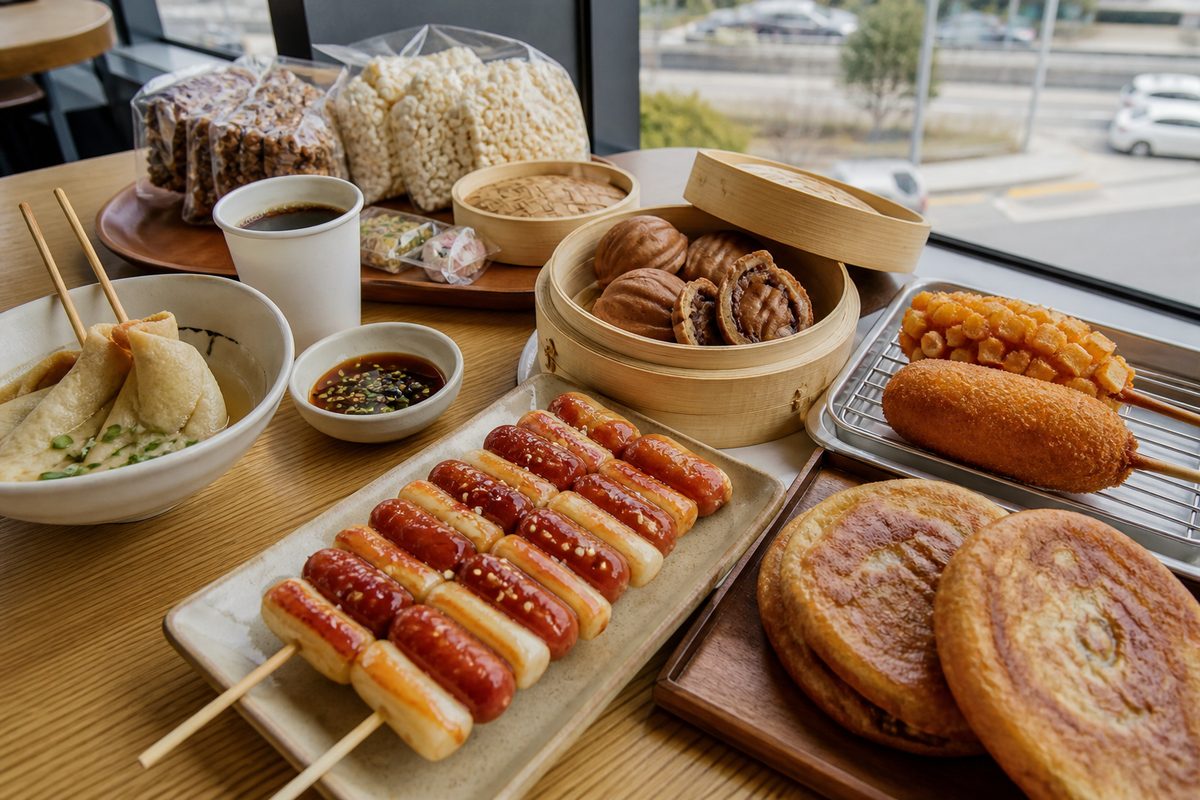
A Korean expressway service area (hyugeso) is a time-limited food stop, not simply a convenience-store break. The best choice depends on whether you have five minutes on an express-bus stop, want a portable snack for a road trip, or can sit down for a regional meal. Check the stop’s name and travel direction before saving it: facilities and menus on opposite carriageways can differ.
 Original VEMORIQ media
Pick by appetite and time
- Fast and savory — sotteok-sotteok: alternating sausage and rice cake give a springy-versus-snappy texture. Sweet-spicy sauce is common, but ask whether sauce can be served separately if you want less heat or need to examine ingredients. Eat soon after purchase; the rice cake firms as it cools.
- Portable gift — hodugwaja: walnut-shaped cakes usually contain sweet red bean and walnut. This is not merely a nationwide “rest-stop food”: VISITKOREA traces the pastry to Cheonan, where walnuts were a local specialty. Buy a small warm batch for the car; for a gift, check the box’s storage date and whether the filling is red bean or a newer cream variation.
- Fresh sweet snack — hotteok: a griddled pancake often contains a molten brown-sugar filling. Let it cool, especially before handing it to a child. Seeds, nuts or other fillings vary by stall.
- Warm but lighter — eomuk: fish-cake skewers with broth suit a cool-weather stop. The cake can contain fish, wheat or egg; broth ingredients also need checking.
- Full meal — food-court soup or noodles: read the menu board rather than assuming the local specialty is sold everywhere. A bowl is a poor choice if the bus driver has announced a short departure window.
How the counter usually works
Snack stalls often take payment at their own register. Food courts may use a kiosk or central cashier and display your receipt number when the meal is ready. Keep the receipt, collect the dish at the correct counter and return the tray where marked. On an express bus, note the vehicle’s number plate and departure time before queuing: long-distance buses normally make scheduled service-area stops, but the driver’s announced time governs your stop.
Where regionality matters
Cheonan hodugwaja has a documented place identity; sotteok-sotteok and hotteok are broad snack categories, not proof that a particular service area has a unique local recipe. Some larger stops also carry regional food markets or bakery products. Read the producer and place name on the label before calling something “local,” and compare the per-piece price or package weight when buying souvenirs.
Allergy and food-safety checks
Walnut cakes can contain walnut, wheat, egg or milk; sausage and sauce formulations vary; fish cake may contain fish, wheat and other ingredients. Shared griddles and fryers complicate severe-allergy decisions. Use a translated allergy card and request ingredient information, or choose a sealed item with a readable label. Do not treat a snack as safe because its name sounds simple. Refrigeration and consumption limits on a packaged product take priority over a general travel tip.
A useful 15-minute stop
Use the restroom first, check the return point, then buy one item you can finish comfortably. Photograph the service-area sign or bus bay if you need to find your group again. If you are driving, use designated pedestrian paths, and make the next stop based on rest and alertness rather than chasing a viral snack.
Sources and scope
VISITKOREA’s express-bus and service-area guide explains scheduled stops and typical facilities. VISITKOREA’s hodugwaja entry documents the Cheonan connection, ingredients and nationwide distribution. VISITKOREA’s Deokpyeong service-area listing illustrates that some stops have attractions beyond the food court. Menus, opening hours, allergen information and prices must be checked at the actual counter.
Community Talk & Local Updates
Visited this place? Share your latest experience with fellow travelers!
The WordPress comment form will appear here. Please keep updates factual, respectful and free of personal medical information.
Leave a Reply