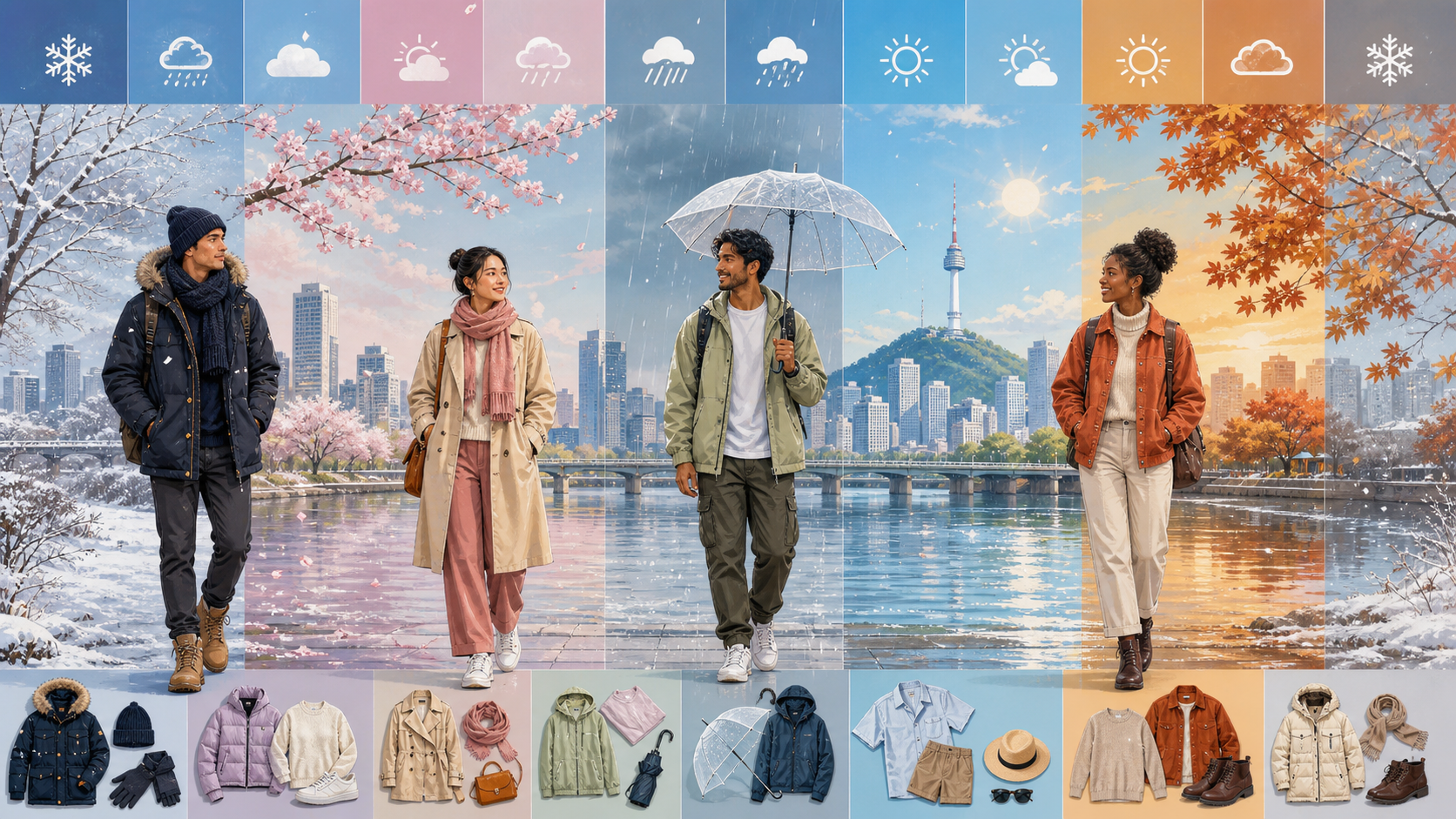
Korea’s four seasons are real—and the difference between August and January is dramatic. This month-by-month guide uses Seoul as the packing baseline, then explains how visitors from hot, temperate and cold countries should adjust. The numbers are climate averages, not a trip forecast, so check the Korea Meteorological Administration again shortly before departure.
Fast packing answer
December–February: insulated coat, thermal base, gloves and shoes with grip. March–May: layers, light jacket and dust protection if sensitive. June–August: breathable quick-dry clothing, umbrella and a thin indoor layer for air-conditioning. September–November: light layers becoming a coat by late November.
Seoul weather and what to wear, January to December
| Month | Typical low–high | Rain or snow | What to wear |
|---|---|---|---|
| January | about −6 to 2°C | Dry overall; snow and icy sidewalks possible | Long insulated coat, thermal base, knit, gloves, scarf, warm socks and grippy shoes |
| February | about −4 to 5°C | Mostly dry; occasional snow or thawing ice | Winter coat and layers; waterproof or grippy footwear remains useful |
| March | about 1 to 11°C | Changeable; cold snaps and some rain | Medium coat or padded jacket, knit, long trousers; removable layers for sunny afternoons |
| April | about 7 to 18°C | Spring showers; large day–night difference | Trench, light jacket or cardigan over a long-sleeve top; compact umbrella |
| May | about 13 to 24°C | Mild with occasional rain | T-shirt or shirt plus a light evening layer; comfortable walking shoes and sun protection |
| June | about 18 to 28°C | Humidity rises; rainy season can begin late month | Breathable clothing, light rain shell, compact umbrella and thin layer for strong indoor air-conditioning |
| July | about 22 to 29°C | Rainiest period; heavy downpours and very high humidity | Quick-dry tops and trousers or shorts, water-resistant shoes, umbrella; avoid heavy denim |
| August | about 22 to 30°C | Hot, humid and stormy; intense rain or typhoon effects possible | Loose breathable clothes, hat, sunscreen, rain protection and a dry spare top |
| September | about 17 to 26°C | Warm early; rain or typhoon influence remains possible | Summer clothes plus a light cardigan or shirt-jacket; umbrella |
| October | about 10 to 20°C | Usually crisp and relatively dry | Long sleeves, knit or sweatshirt and a light jacket; layers for cool evenings |
| November | about 3 to 12°C | Cool and increasingly dry; first snow is possible | Wool coat or light padded jacket, knit and closed shoes; warmer layer late month |
| December | about −3 to 4°C | Cold and dry; snow and ice possible | Insulated winter coat, thermal layer, gloves, scarf and shoes with traction |
Typical ranges are rounded Seoul climate averages. Heat waves, cold waves and concentrated rain can fall well outside the average.
Adjust for the climate you come from
From tropical or hot-humid countries
Examples: Singapore, Malaysia, Indonesia, the Philippines, Thailand, southern Vietnam, tropical India and much of Brazil. Korea’s November–March weather may feel colder than the number suggests, especially with wind. Add one warmer layer than a local packing photo appears to show. In winter, bring thermal underwear and an insulated coat rather than stacking only thin fashion layers.
From hot-dry or mild-winter countries
Examples: Gulf countries, North Africa, parts of southern Europe, southern California and inland Australia. Seoul’s July–August humidity can feel much heavier than dry heat, so choose quick-dry fabrics. Winter wind and very dry indoor heating can also be unfamiliar; pack lip balm and moisturizer with your cold-weather layers.
From temperate four-season countries
Examples: much of the United States, Europe, China and Japan. Familiar layers usually work, but Seoul can have larger day–night swings in spring and autumn. Summer rain may be more concentrated than a gentle all-day drizzle, and winter can combine cold air with strong indoor heating.
From cold or subarctic countries
Examples: Canada, Russia, Mongolia, Scandinavia and northern US states. Seoul winter temperatures may look manageable, but dry wind and long outdoor sightseeing still require gloves and face protection. Pack removable layers because cafés, subways and shops are usually well heated.
From the Southern Hemisphere
Examples: Australia, New Zealand, South Africa, Argentina and Chile. Korea’s seasons are reversed: January is midwinter and August is midsummer. Pack for the Korean month rather than the season you are leaving at home.
Regional adjustments inside Korea
- Busan: generally milder than Seoul in winter, but coastal wind can make it feel colder.
- Jeju: often milder but windier and more changeable; a wind-resistant outer layer is valuable.
- Gangwon and ski areas: colder and snowier than central Seoul; use proper insulated and waterproof gear.
- Inland cities: summer heat can be intense; do not assume every region feels like the coast.
Rain, snow and air-quality essentials
- From late June into July, carry rain protection even when the morning looks clear.
- During heavy rain, waterproof sandals may be slippery; closed water-resistant shoes with grip are safer for long walks.
- Snowfall in Seoul is intermittent, but refrozen pavement can be more disruptive than deep snow.
- Spring can bring yellow dust and fine-dust episodes. Sensitive travelers should monitor the official air-quality reading and carry a well-fitting mask.
- Check heat-wave, heavy-rain, typhoon and cold-wave alerts rather than relying only on the daily temperature icon.
Check again before you fly
Seven to ten days before departure, compare the forecast for every city on your route. Recheck 48 hours before long outdoor days. Useful official references include the Korea Meteorological Administration, Seoul’s official weather page and VISITKOREA’s climate guide.
The featured image is an original VEMORIQ editorial illustration and does not reproduce a commercial campaign or real person.
Community Talk & Local Updates
Visited this place? Share your latest experience with fellow travelers!
The WordPress comment form will appear here. Please keep updates factual, respectful and free of personal medical information.
TRIP-SPECIFIC PACKING CHECK
Multi-city Korea weather check before you fly
Monthly averages choose the category; the current forecast chooses the suitcase. Repeat this check for every city because Seoul, Busan, Jeju and mountain areas can require different layers on the same trip.
Official climate baseline: Korea Tourism Organization describes spring and autumn as mild, summer as hot and humid, and winter as cold and dry, while warning travelers to recheck real-time reports because weather patterns and extremes change. Read the VISITKOREA climate guide.
Questions visitors ask before saving this guide
What is the coldest month in Seoul?
January is normally the coldest month in the climate averages used by this guide, but individual cold waves can fall outside the average. Check the Korea Meteorological Administration forecast shortly before departure.
When is Korea’s rainy season?
The main rainy-season risk commonly overlaps late June and July, while heavy rain and typhoon effects can also occur later in summer and into early autumn. Rain does not follow a fixed daily timetable, so use the live warning and hourly forecast.
Is Busan or Jeju warmer than Seoul in winter?
Busan and Jeju are generally milder than Seoul in winter climate averages, but coastal wind can make them feel colder and Jeju conditions can change quickly. Pack for the cities on your route rather than applying one Seoul outfit nationwide.
Are monthly temperatures a travel forecast?
No. Monthly values describe climate patterns and help choose a packing category. A trip forecast, heat-wave warning, heavy-rain advisory or cold-wave alert must be checked again near the travel date.
Leave a Reply