Spring Korean food guide
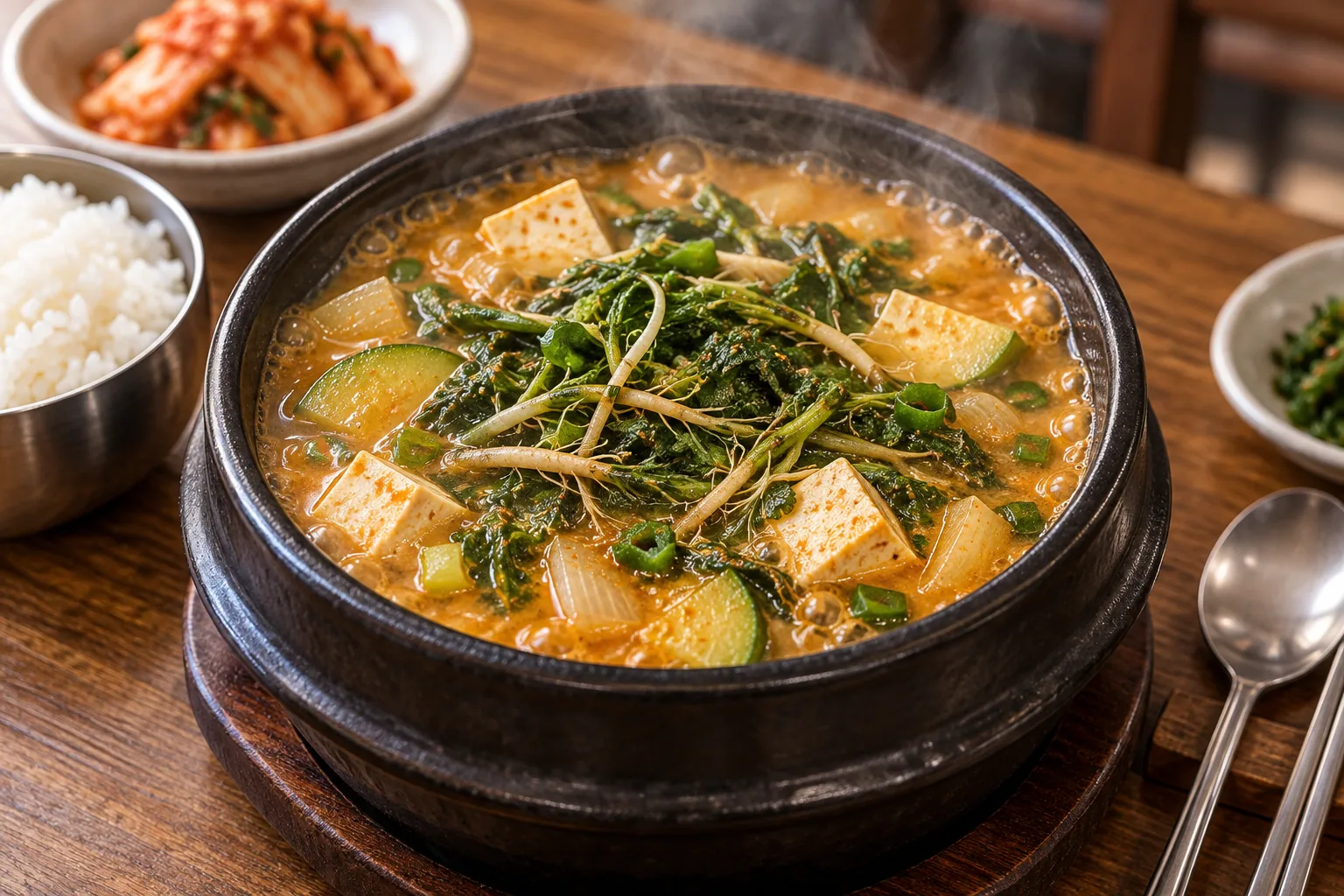
Naengi Doenjang Jjigae · 냉이된장찌개
An early-spring stew that lets naengi—the leaves and fine roots of shepherd’s purse—perfume a gently seasoned doenjang broth. The defining character is not chili heat but the meeting of earthy fermented-soybean savoriness and the herb’s fresh, faintly bitter fragrance.
Flavor & texture
The first impression is the leafy, root-like spring aroma of naengi, followed by doenjang’s nutty, fermented depth. Tofu softens the salinity, zucchini adds mild sweetness and the tender greens keep a pleasant, lightly fibrous bite. A balanced bowl tastes aromatic and savory rather than heavily salty.
Nutrition context
Tofu and fermented soy contribute protein, while naengi and the vegetables add fiber and micronutrients. Exact values change with paste, stock and portion; restaurant doenjang stews can be sodium-rich, so enjoy the solids with rice and do not assume that finishing every drop of broth is necessary.
How it is made
Rinse the leaves and fine roots repeatedly to remove soil, trim damaged portions and keep the tender roots that carry much of the aroma. Build the stock and dissolve a modest amount of doenjang first; simmer firmer vegetables, then add tofu and naengi near the end so the greens soften without losing their spring fragrance. Stock may be anchovy, seafood, meat or plant-based.
Chili heat
Usually mild. Green chili or chili powder may raise the heat; ask for it without chili for a 0/5 bowl.
Main ingredients

Ingredients and preparation vary by restaurant. Confirm allergens and dietary requirements when ordering.
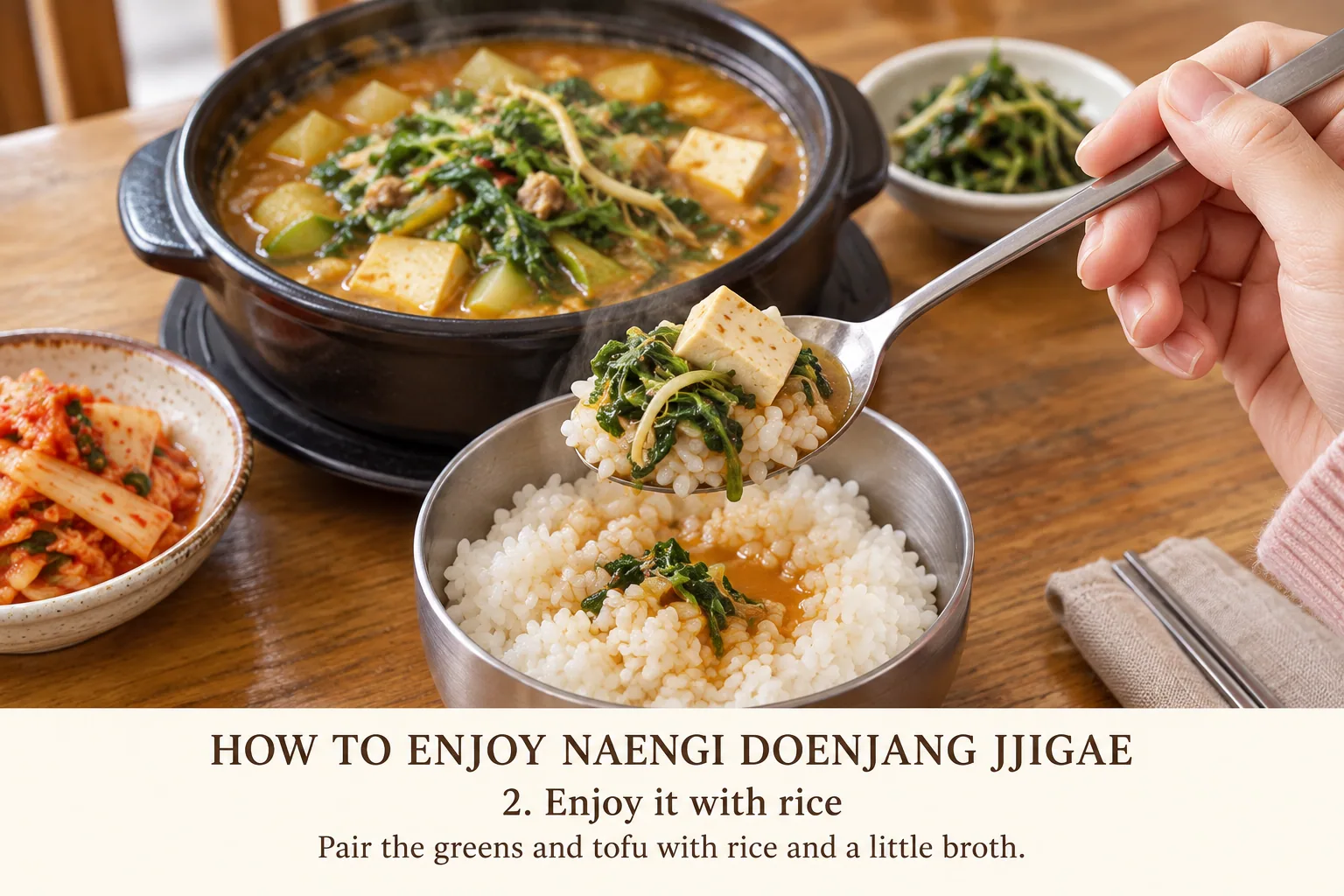
How to enjoy it

Official reference: Korea Tourism Organization: Spring Korean food guide. Ingredients, portions and restaurant preparation vary; confirm allergens and dietary needs with the restaurant.
More from this season
 Dallae Bibimbap · 달래비빔밥Built around dallae, a spring wild chive with a clean onion-garlic aroma, this rice bowl balances warm grain, crisp vegetables and a bright soy-sesame dressing.
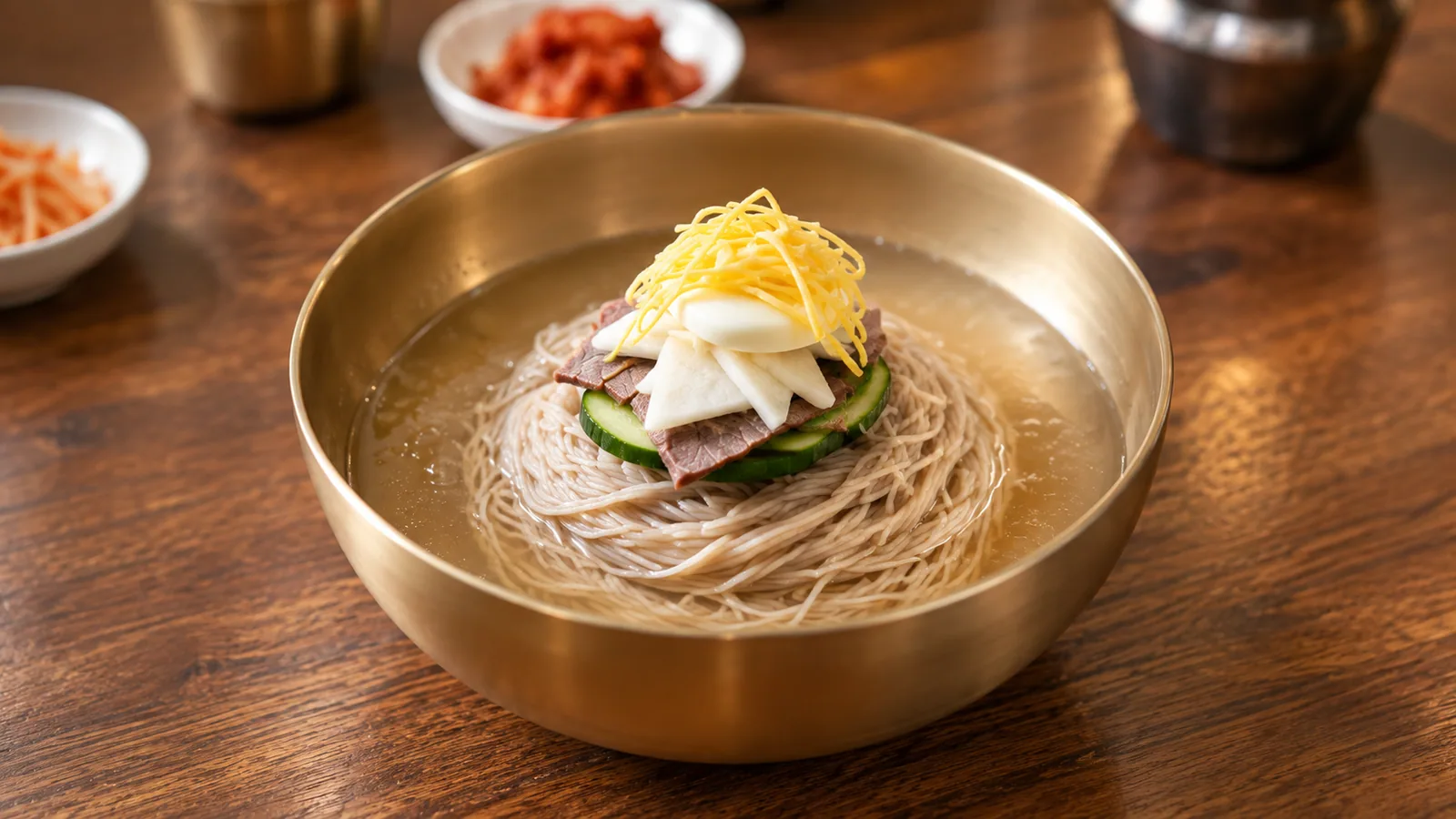 Pyeongyang Naengmyeon · 평양냉면Delicate buckwheat noodles in a restrained meat broth; the pleasure is aroma and aftertaste, not aggressive seasoning.
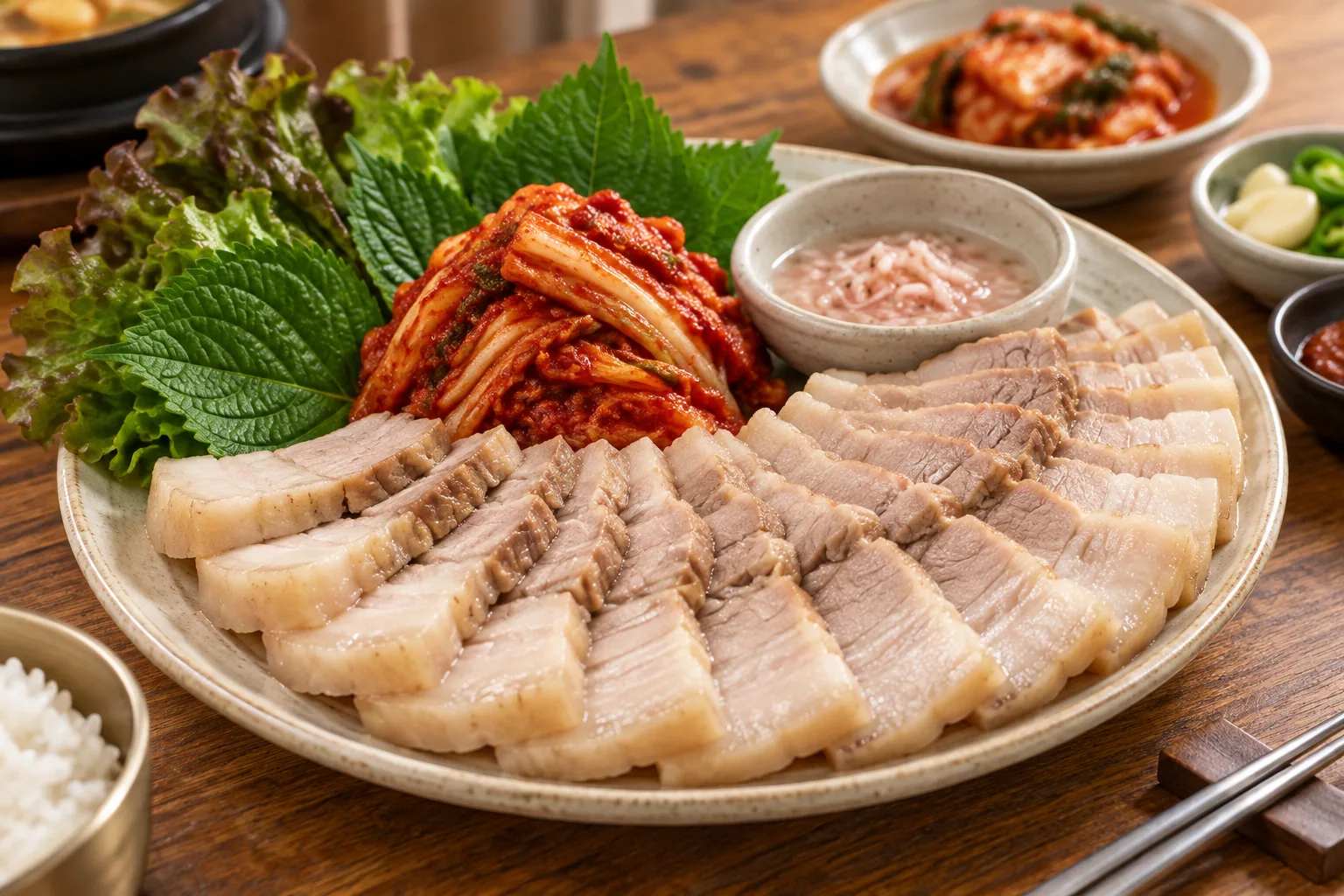 Pork Suyuk · 돼지고기 수육A whole piece of pork is gently cooked in seasoned water, rested and sliced. This guide shows the popular pork-belly version; suyuk can also be made with other pork cuts or beef.
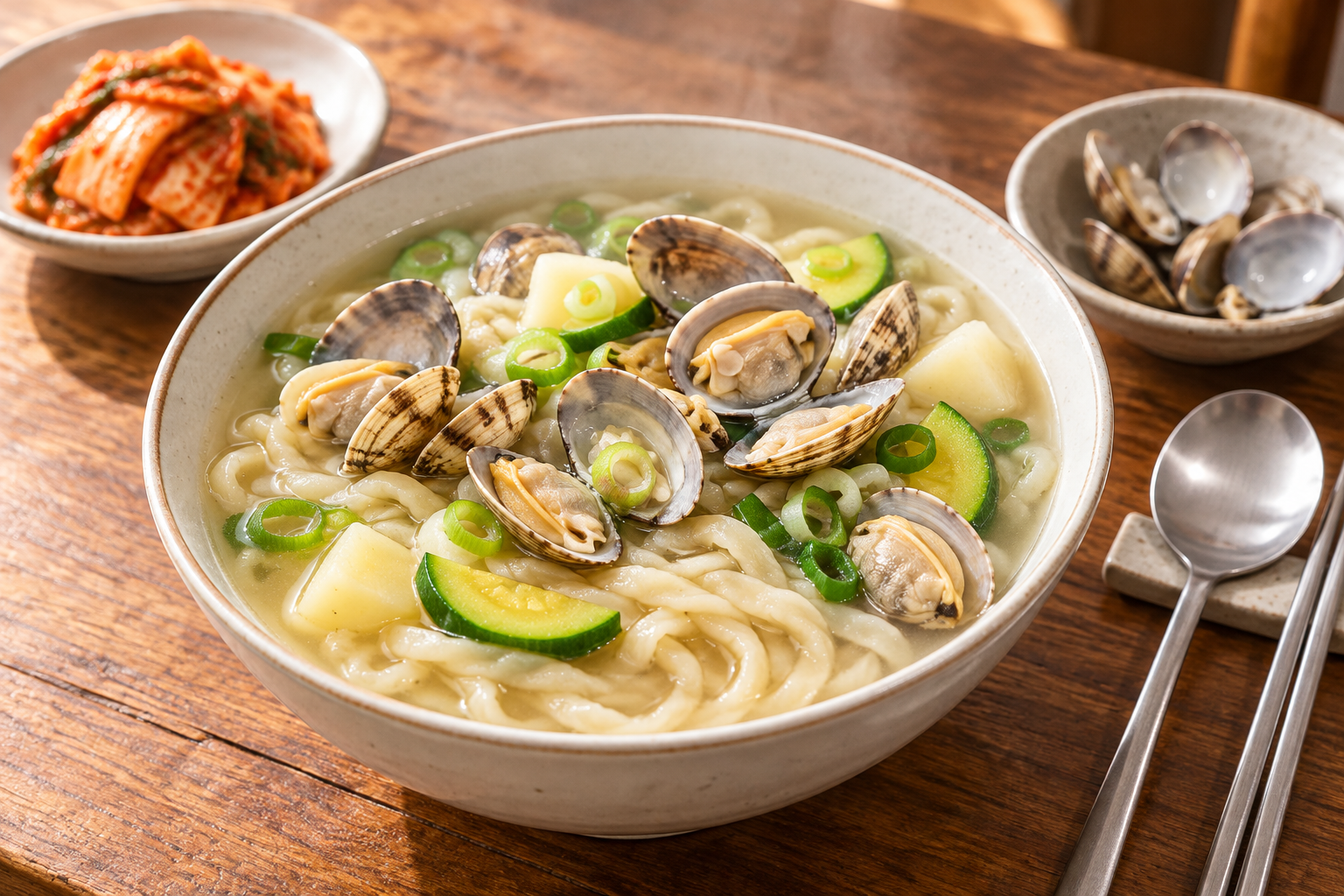 Bajirak Kalguksu · 바지락칼국수A clear, gently briny noodle soup in which hand-cut wheat noodles meet Manila clams. Zucchini, potato, green onion and garlic round out the bowl, although the stock and vegetables vary by restaurant. The best versions taste clean and clam-sweet rather than aggressively seasoned.
HELP IMPROVE THIS GUIDE
Leave a Reply