FIRST-BITE KOREA

Korean Food, Cafes & Dessert Guides

Choose a first Korean meal by flavor, spice level and ordering difficulty. These guides explain what arrives at the table, useful Korean names and practical ways to order. Restaurant hours, menus and sold-out items change; use each linked operator or map listing for the final same-day check.

How this hub is checked: official or primary sources first, original media identified, editorial visualizations labeled, and changing prices, schedules or stock flagged for rechecking.

Latest guides

Korean Food, Cafes & Recipes – VEMORIQ

Korean Food, Cafes & Dessert Guides

Korean Food, Cafes & Recipes

VEMORIQ · FREE EMAIL UPDATES

A little more Korea in your inbox.

Get new posts on Korean travel, food, beauty and culture, with a short preview and a link to the full guide.

Help shape our next guide

We regularly add new guides and improve existing pages, including updates inspired by reader and visitor requests.

Looking for information on Korean dramas, movies, food, cafés, Olive Young cosmetics, K-pop, shopping malls, travel or practical care? Tell us the topic, place or product you would like us to cover.

Request a guide: vemoriq.help@gmail.com

After reviewing your email, we aim to update a relevant page or add a new guide within a few days. Topics that need further research or official confirmation may take longer.

By selecting Subscribe free, you request new-post emails from VEMORIQ. Confirm your email if prompted. Unsubscribe anytime.

Email subscriptions are handled by WordPress.com / Jetpack. Privacy & email details

START WITH A KOREAN GUKBAP BOWL

Compare three Korean soup-and-rice guides

Choose pork, blood sausage or offal, then open the detailed eating guide.

돼지국밥Dwaeji-gukbapPork and rice soup순대국밥Sundae-gukbapBlood sausage and rice soup내장국밥Naejang-gukbapPork offal and rice soup

Open the complete Korean Gukbap Guide →

Crawlable seasonal food directory

Explore every Korean seasonal food guide

Each guide below has a stable URL that can be bookmarked, shared and indexed by search engines.

SpringBajirak Kalguksu · 바지락칼국수A clear, gently briny noodle soup in which hand-cut wheat noodles meet Manila clams. Zucchini, potato, green onion and garlic round out the bowl, although the stock and vegetables vary by restaurant. The best versions taste clean and clam-sweet rather than aggressively seasoned.SummerBoknal & Sambok: Korea’s Summer Food TraditionsUnderstand Chobok, Jungbok and Malbok, the history behind summer nourishing meals and what the illustrated foods represent.Bori Gulbi Jeongsik: Korean Dried Croaker & Green-Tea Rice GuideUnderstand barley-aged dried croaker, what arrives in a Korean set meal, how to eat it with green-tea rice, and what to check before ordering.All-seasonBulgogi · 불고기Tender, sweet-savory marinated beef for an everyday meal or a shared celebration. The photographs show a brothy pan style, with mushrooms and vegetables simmering around the beef.WinterBungeoppang · 붕어빵Bungeoppang is a fish-shaped griddle cake rather than a seafood dish. A thin wheat-based batter surrounds red-bean paste, custard or another filling; the best pieces balance crisp browned edges with a tender inner layer and a hot, smooth center.SummerChogye-guksu · 초계국수Chogye-guksu combines cold chicken broth, shredded chicken and noodles with a bright vinegar-and-mustard accent. The result is savory, tart and cooling, with lean chicken and crisp vegetables in every bite.AutumnChuseok Food & Harvest Table TraditionsExplore songpyeon, harvest gratitude and the difference between a shared Chuseok meal and an ancestral offering table.SpringDallae Bibimbap · 달래비빔밥Built around dallae, a spring wild chive with a clean onion-garlic aroma, this rice bowl balances warm grain, crisp vegetables and a bright soy-sesame dressing.WinterDongji: Winter Solstice, Patjuk & Table TraditionsDiscover why red bean porridge marks the winter solstice, how protective symbolism developed and how to read a modern Dongji table.All-seasonEomuk (Odeng) · 어묵·오뎅Tender fish-cake skewers in savory broth, a warming market-counter snack.AutumnGalbijjim · 갈비찜Galbijjim is beef short ribs slowly braised in a glossy soy-based sauce with Korean radish, carrots and aromatic seasonings. Chestnuts, shiitake mushrooms and Korean pear make it especially fitting for an autumn table and for Chuseok or other family celebrations, although recipes and garnishes vary widely by household and restaurant.All-seasonGalbitang · 갈비탕Galbitang is Korean beef short-rib soup, served with rice and side dishes. This clear-broth version highlights bone-in ribs, radish and scallions, with jujube as a house-style addition. It is a soup, distinct from the reduced, sauce-coated ribs of galbijjim.AutumnGanjang Gejang · 간장게장Ganjang gejang is raw blue crab cured cold in an aromatic soy marinade. The method seasons rather than cooks the crab, preserving a soft, almost custard-like texture in the flesh and roe. Good versions balance marine sweetness, soy savoriness and gentle aromatics; the dish is eaten in small amounts with warm rice, especially when autumn crab is at its best.All-seasonGomtangA clear beef soup style with tender sliced meat: discover gomtang ingredients, restaurant variations and two easy ways to enjoy it.AutumnGrilled Daeha · 대하구이Daeha-gui is large shrimp grilled in the shell, often over a bed of coarse salt, until the flesh turns opaque and springy. It is strongly associated with Korea’s autumn shrimp season, although species, farming method, size and catch area vary. The shell protects the delicate flesh while concentrating a clean, sweet seafood aroma.AutumnGrilled Jeoneo · 전어구이Jeoneo-gui is whole gizzard shad seasoned simply with salt and grilled until the skin turns crisp and aromatic. It is closely associated with Korea’s autumn seafood season, when many diners seek its fuller, oil-rich character; the exact fat level and flavor still vary with catch area, size and timing.All-seasonGyeran-guk · Korean Egg Soup · 계란국Soft egg ribbons and tofu in a mild, clear broth—warm, quick and easy to pair with rice.All-seasonGyeran-jjim · Korean Steamed Egg · 계란찜A hot, fluffy steamed egg custard served in a stone or earthenware bowl, often finished with green onion.All-seasonGyeran-mari · Korean Rolled Omelet · 계란말이Layered rolled omelet with scallion and carrot, sliced into tender spirals and shared while warm.All-seasonHan-sang charimA full Korean table with stone-pot rice, stew, wraps and banchan, explained in six illustrated dining steps.All-seasonHanjeongsikA Korean set meal explained through eight dining scenes, from rice and banchan to grilled fish and a sweet finish.All-seasonHotba & Sausage Skewers · 핫바·소시지꼬치Springy fish-cake bars and savory sausage skewers, with sauces added to taste.WinterHotteok · 호떡Hotteok is a filled yeast pancake cooked on a greased griddle and pressed flat. The classic sweet version hides brown sugar, cinnamon and often seeds or chopped nuts inside a chewy dough.AutumnJapchae · 잡채Japchae combines springy sweet-potato starch noodles with separately cooked vegetables and a glossy soy–sesame seasoning; beef is common but not essential. It is served year-round, yet it belongs naturally on an autumn and Chuseok table because it is a familiar celebration dish designed for sharing rather than a narrowly seasonal ingredient dish.SpringJindallae Hwajeon · 진달래화전A traditional spring rice cake associated with Samjitnal: small discs of glutinous-rice dough are gently pan-seared and decorated with pink jindallae petals. Its appeal is quiet—soft chew, a lightly toasted surface and a delicate floral accent rather than heavy sweetness.SpringJjukumi Bibimbap · 주꾸미비빔밥Spring webfoot octopus is quickly cooked in a sweet-savory chili sauce and arranged over rice with crisp vegetables, roasted seaweed and an optional egg. Mixing distributes the sauce and turns contrasting ingredients into one balanced bite.WinterJokbal · 족발Jokbal is pork trotter slowly cooked in a soy-based braising liquid, cooled just enough to set its texture and sliced for sharing. The dish is eaten year-round, but the warm platter, lettuce wraps and communal table make it especially satisfying on a cold evening.AutumnKkotgetang · 꽃게탕Kkotgetang is a vigorously simmered Korean blue-crab stew whose defining contrast is sweet shellfish meat against a deep, spicy-savory broth. Radish, zucchini, mushrooms, crown daisy and green onion make the pot feel abundant without obscuring the crab. Autumn is a particularly appealing time to seek it out, although catch, sex, size and supply vary by coast and restaurant.All-seasonKkwabaegi & Chapssal Doughnuts · 꽈배기·찹쌀도넛Sugar-coated twists and chewy rice doughnuts: two textures from a Korean market bakery.SummerKongguksu · 콩국수Kongguksu is a summer noodle bowl built around a cold, unsweetened soybean broth. Its appeal is gentle rather than spicy: nutty soy, cool wheat noodles and crisp cucumber make a filling but refreshing meal.All-seasonKongnamul Gukbap · 콩나물국밥Soybean sprouts and rice meet a savory broth in this everyday Korean bowl. The version pictured includes egg and cooked squid, with salted shrimp served alongside; toppings and the way the egg is served vary by restaurant.All-seasonKorean-style shabu-shabuA shared hot pot of thin beef, vegetables and mushrooms, finished with noodles or rice according to the restaurant.WinterMaesaengi-guk · 매생이국Maesaengi-guk is a cool-season soup built around maesaengi, a very fine green seaweed harvested along Korea’s southern coast. Many restaurant and home versions pair it with oysters, although beef, anchovy-kelp or other broths are also used. Its appeal is subtle: a clear marine aroma, soft strands and a bowl that feels light while staying deeply warming.All-seasonMiyeokguk · 미역국Tender seaweed in a clean, savory broth, commonly cooked with beef, shellfish or other seafood. A birthday tradition that is also an everyday home dish.SummerMul Naengmyeon · 물냉면Mul naengmyeon is the broad family of Korean cold noodles served in chilled broth. Compared with the deliberately restrained Pyeongyang style, many restaurant versions are brighter and more immediately refreshing, using a sweeter or tangier broth with crisp cucumber, pear and pickled radish.SummerMulhoe · 물회Mulhoe is a coastal raw-fish dish served with crisp vegetables in an icy, spicy-sour broth. Fish species and seasoning change by region and season, so the menu or staff should identify what is in the bowl.SpringNaengi Doenjang Jjigae · 냉이된장찌개An early-spring stew that lets naengi—the leaves and fine roots of shepherd’s purse—perfume a gently seasoned doenjang broth. The defining character is not chili heat but the meeting of earthy fermented-soybean savoriness and the herb’s fresh, faintly bitter fragrance.WinterPatjuk · 팥죽Patjuk is Korean red-bean porridge, traditionally associated with Dongji, the winter solstice. Beans may be mashed smooth, partly strained or left more textured, and some versions contain small glutinous-rice balls called saealsim. It is not always sweet: home and restaurant bowls may be seasoned with salt, sugar, both or neither until served.SpringPork Suyuk · 돼지고기 수육A whole piece of pork is gently cooked in seasoned water, rested and sliced. This guide shows the popular pork-belly version; suyuk can also be made with other pork cuts or beef.All-seasonPpyeo-haejanggukTender pork around the backbone, leafy greens and a spicy, savory broth: learn the ingredients and how to enjoy the bowl comfortably.SummerPyeongyang Naengmyeon · 평양냉면Delicate buckwheat noodles in a restrained meat broth; the pleasure is aroma and aftertaste, not aggressive seasoning.WinterRoasted Sweet Potato & Chestnut · 군고구마·군밤Two single-ingredient winter snacks with different textures. Slow roasting changes sweet potato into a soft, moist and honeyed bite, while chestnuts become gently sweet, nutty and pleasantly crumbly.SummerSamgyetang · 삼계탕Samgyetang is a whole young chicken simmered with glutinous rice, ginseng, garlic and jujube until the meat is tender and the rice enriches the broth. Koreans famously eat this steaming dish during the hottest Boknal days—a cultural expression of “fighting heat with heat,” not a medical guarantee.WinterSeollal Food & Table TraditionsWhy Koreans welcome the Lunar New Year with tteokguk, and how to understand the family table, ancestral rites and holiday scenes.All-seasonSeolleongtangMilky Korean beef bone soup: learn the ingredients, how to season it, and how to enjoy beef, rice and kkakdugi.All-seasonSogogi Haejangguk · 소고기해장국Sogogi haejangguk is a hearty Korean beef soup eaten with rice. The bowl pictured uses a lighter broth with sliced beef, cabbage leaves and soybean sprouts. Haejangguk is often translated as “hangover soup,” a cultural meal name rather than a promise of a medical effect.All-seasonSsambap · 쌈밥Rice, leafy greens and savory accompaniments brought together in a small wrap. Ssambap is a way to enjoy a meal, with each bite built to your taste; the photographs show a beef-based serving.WinterSulguk · 술국Sulguk literally means “soup for drinking” and is also used for hearty hangover-soup styles. There is no single universal recipe: a shop may serve beef-bone broth with beef, pork, offal, blood curd, kimchi, bean sprouts or soybean paste. The safest guide is to confirm the broth and contents before ordering.All-seasonSundubu-jjigaeSilky soft tofu in a bubbling seafood stew: learn the ingredients, heat options and two simple ways to enjoy it.WinterTteok-mandu-guk · 떡만두국Tteok-mandu-guk combines two familiar Korean soups: tteokguk, made with sliced rice cakes, and manduguk, made with dumplings. It is especially common around Seollal but is served throughout winter and year-round. Beef broth is frequent, while anchovy, chicken and other house broths also occur; dumpling fillings differ widely by region and restaurant.WinterTteokguk · 떡국Tteokguk is sliced garaetteok simmered in broth and traditionally eaten for Seollal, the Korean Lunar New Year. Beef broth is common, but anchovy, seafood, pheasant, chicken and plant-based versions exist. Egg strips, beef, green onion and seaweed are frequent garnishes; mandu may be added for tteok-manduguk.

THE KOREAN YEAR, TOLD THROUGH FOOD

Holiday & Seasonal Tables

Explore Seollal, Chuseok, Boknal and Dongji through their histories, signature foods and illustrated tables. Each guide opens as its own complete page, with related dishes to explore next.

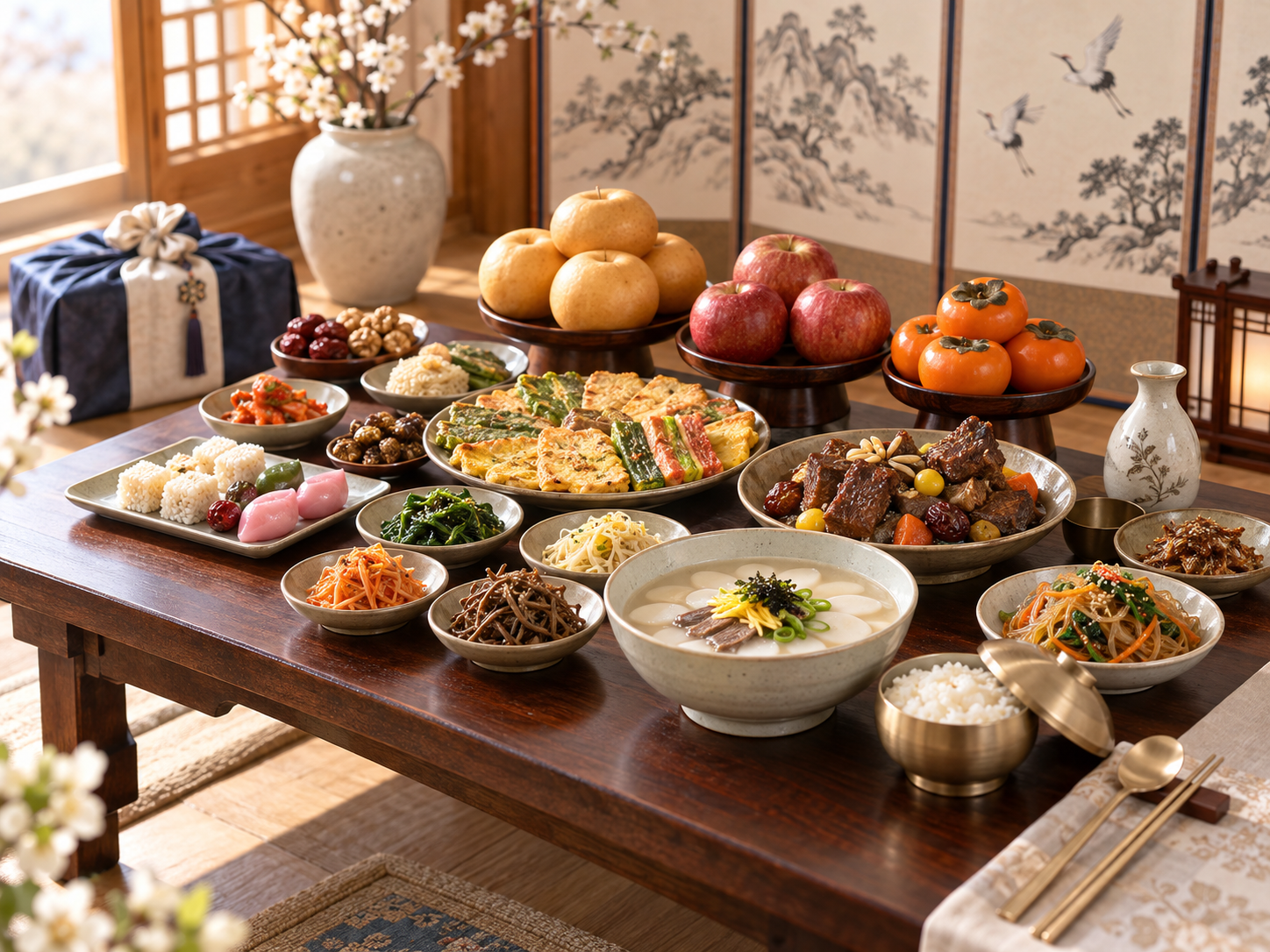
설날 상차림
설날 상차림 · winter

Seollal Food & Table Traditions

Why Koreans welcome the Lunar New Year with tteokguk, and how to understand the family table, ancestral rites and holiday scenes.

Read the full cultural guide →
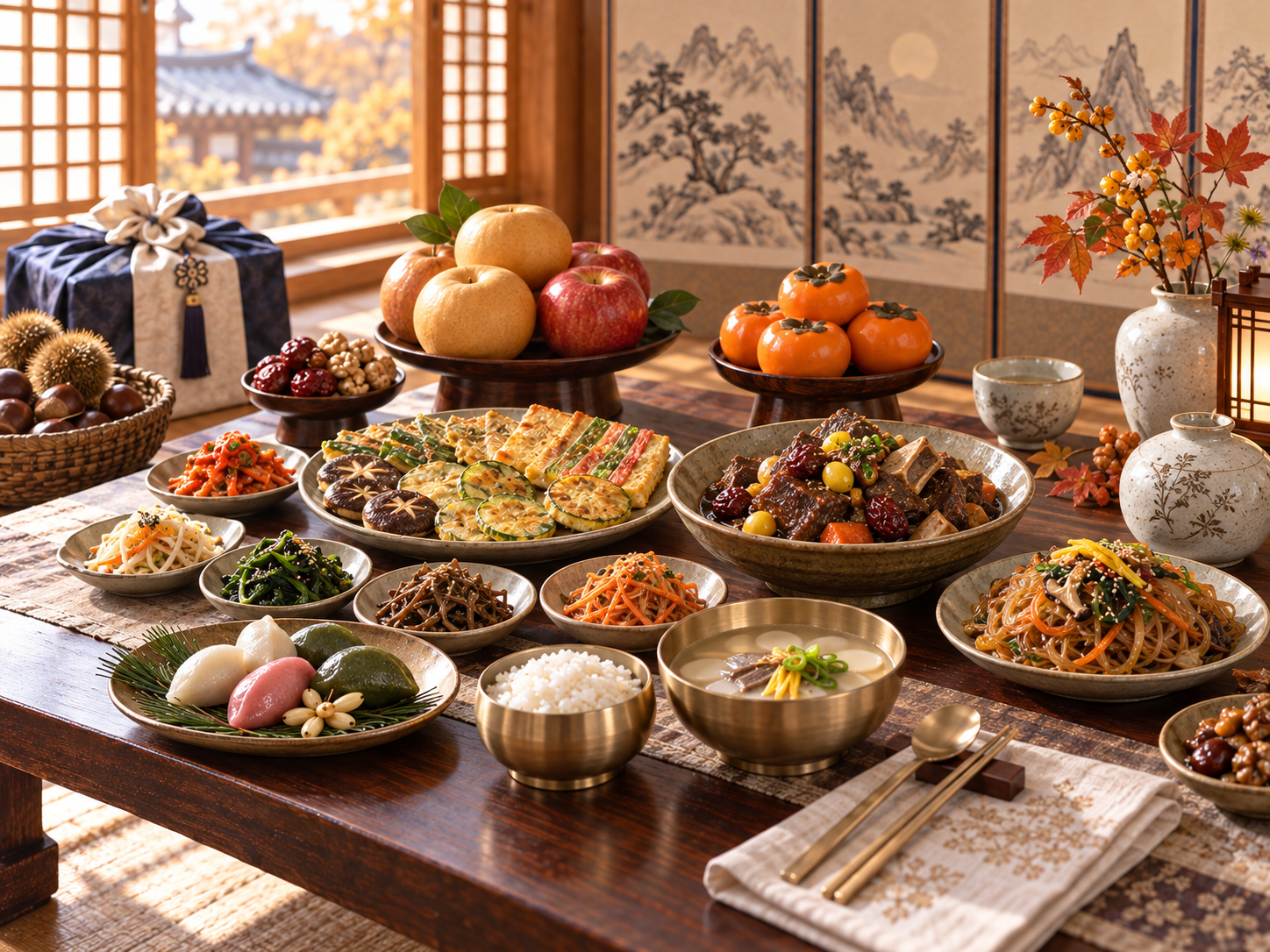
추석 상차림
추석 상차림 · autumn

Chuseok Food & Harvest Table Traditions

Explore songpyeon, harvest gratitude and the difference between a shared Chuseok meal and an ancestral offering table.

Read the full cultural guide →
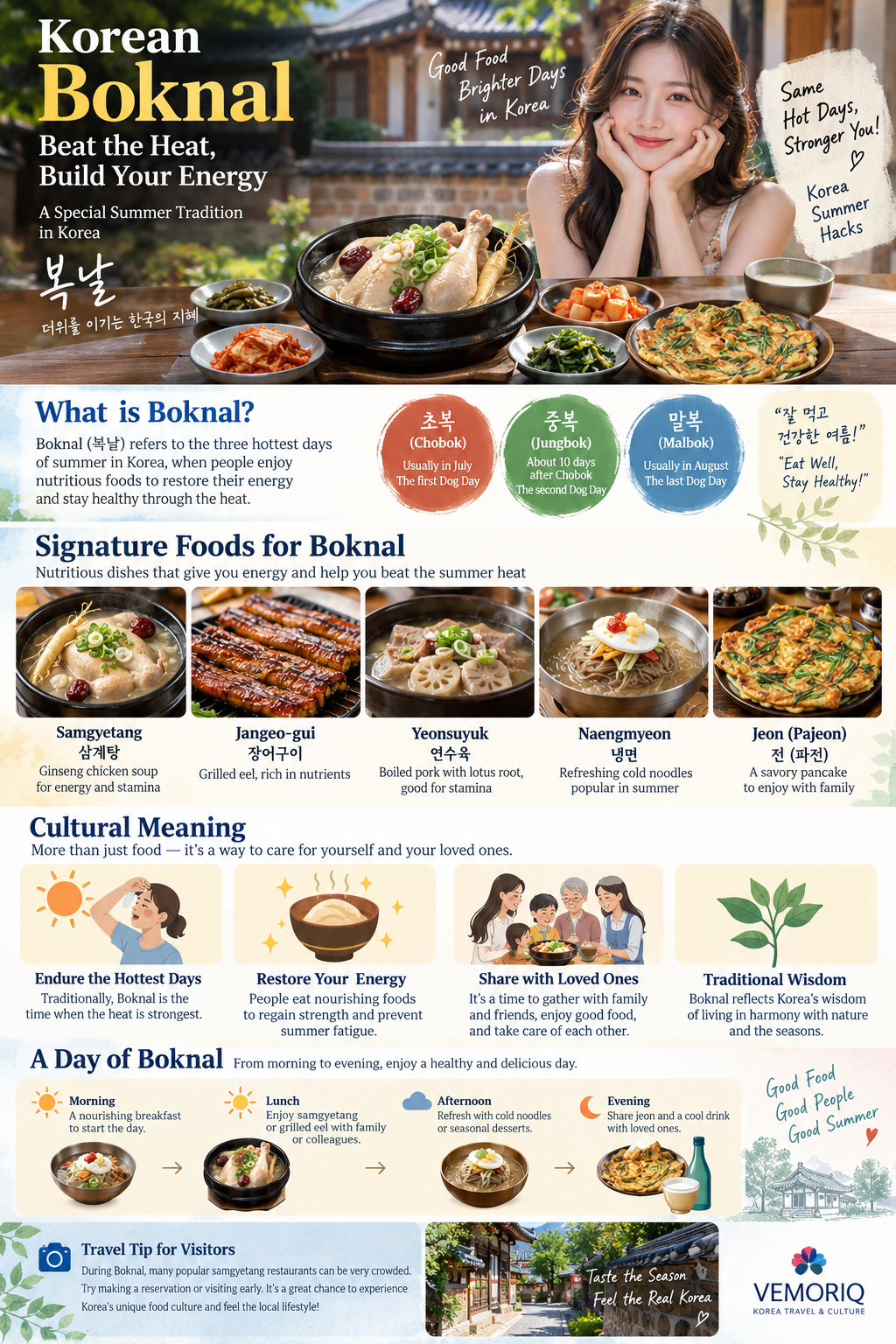
복날 · 삼복
복날 · 삼복 · summer

Boknal & Sambok: Korea’s Summer Food Traditions

Understand Chobok, Jungbok and Malbok, the history behind summer nourishing meals and what the illustrated foods represent.

Read the full cultural guide →
동지 상차림
동지 상차림 · winter

Dongji: Winter Solstice, Patjuk & Table Traditions

Discover why red bean porridge marks the winter solstice, how protective symbolism developed and how to read a modern Dongji table.

Read the full cultural guide →

AI-assisted editorial illustrations. Household customs and menus vary; the guides distinguish historical practice from artistic interpretation.