
Winter Korean food guide
Tteokguk · 떡국
Tteokguk is sliced garaetteok simmered in broth and traditionally eaten for Seollal, the Korean Lunar New Year. Beef broth is common, but anchovy, seafood, pheasant, chicken and plant-based versions exist. Egg strips, beef, green onion and seaweed are frequent garnishes; mandu may be added for tteok-manduguk.
Flavor & texture
The rice cakes are mild, softly chewy and lightly sweet from the rice itself. Broth supplies most of the savoriness, while egg and beef add richness, green onion freshness and seaweed a roasted marine note. The rice cakes should be tender through the center without dissolving into the soup.
Nutrition context
Rice cakes provide most of the carbohydrate and energy; beef and egg add protein, while garnishes add smaller amounts of micronutrients. A large rice-cake portion can be dense and filling, and broth sodium varies considerably. Gluten suitability depends on broth, soy sauce, dumplings and cross-contact—not only on the rice cakes.
How it is made
Thin rice-cake slices are rinsed and sometimes soaked, then simmered only until tender. The cook seasons the broth and adds garnishes at the end so the soup stays clear. Overcooking makes the broth overly starchy and the rice cakes very soft; packaged rice cakes should be stored and prepared according to their label.
Chili heat
Usually 0/5. Chile heat comes from kimchi or added red pepper, not the classic soup itself.
Main ingredients

Ingredients and preparation vary by restaurant. Confirm allergens and dietary requirements when ordering.
How to enjoy it


Reference: Korea Tourism Organization: Tteokguk. Nutrition varies by recipe, portion and restaurant.
More from this season
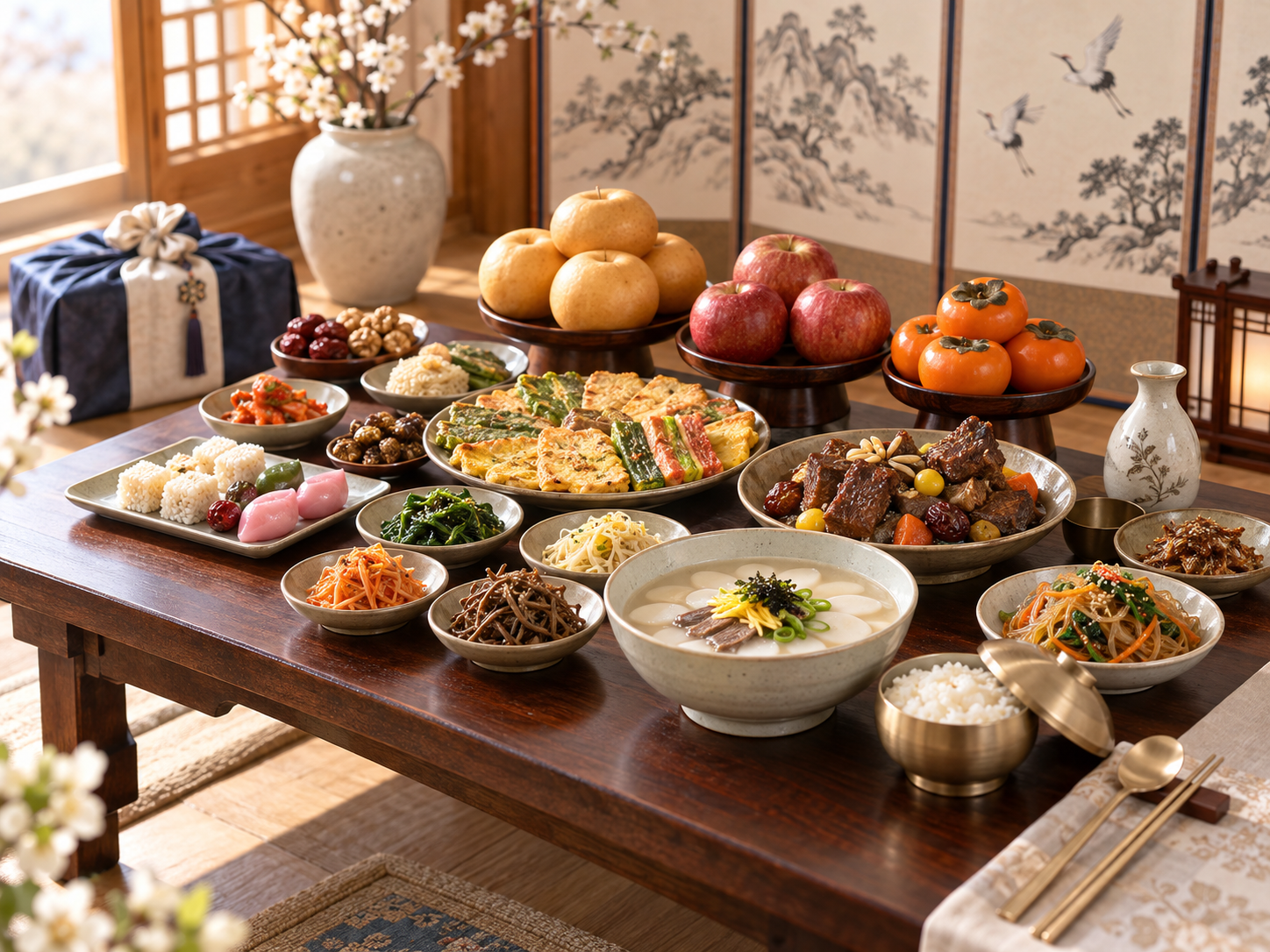 Seollal Food & Table TraditionsWhy Koreans welcome the Lunar New Year with tteokguk, and how to understand the family table, ancestral rites and holiday scenes.
 Dongji: Winter Solstice, Patjuk & Table TraditionsDiscover why red bean porridge marks the winter solstice, how protective symbolism developed and how to read a modern Dongji table.
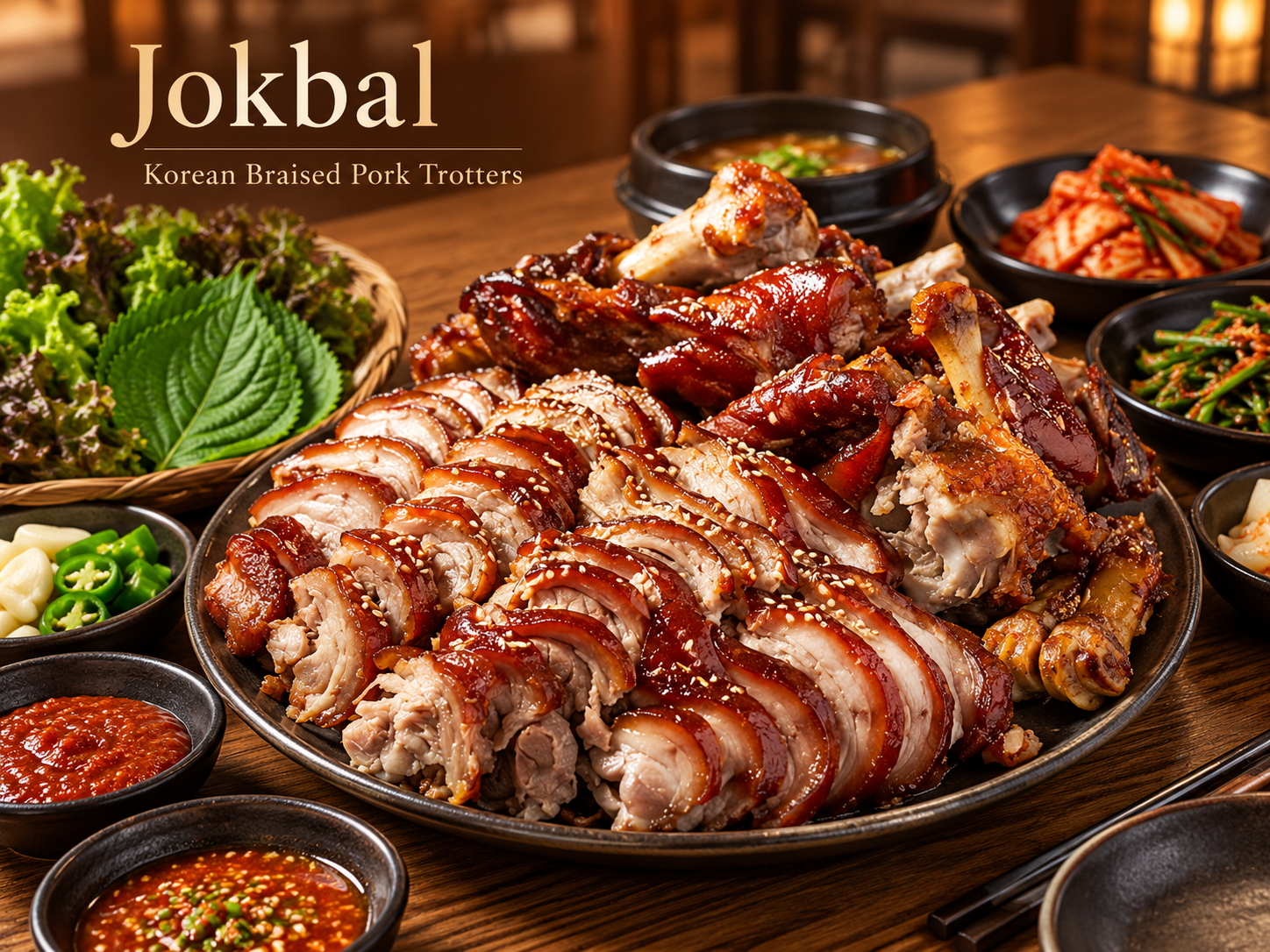 Jokbal · 족발Jokbal is pork trotter slowly cooked in a soy-based braising liquid, cooled just enough to set its texture and sliced for sharing. The dish is eaten year-round, but the warm platter, lettuce wraps and communal table make it especially satisfying on a cold evening.
 Sulguk · 술국Sulguk literally means “soup for drinking” and is also used for hearty hangover-soup styles. There is no single universal recipe: a shop may serve beef-bone broth with beef, pork, offal, blood curd, kimchi, bean sprouts or soybean paste. The safest guide is to confirm the broth and contents before ordering.
HELP IMPROVE THIS GUIDE
Leave a Reply