KOREAN FOOD CULTURE · 동지 상차림
Dongji: Winter Solstice, Patjuk & Table Traditions
Discover why red bean porridge marks the winter solstice, how protective symbolism developed and how to read a modern Dongji table.
When: Winter solstice, usually December 21–22
Signature food: Patjuk · red bean porridge with saealsim

Understanding Dongji
Dongji is the winter solstice and the twenty-second of the traditional twenty-four solar terms. In Korea it brings the shortest daylight period and longest night of the year, usually around December 21 or 22. It follows the sun’s seasonal cycle rather than a fixed lunar-month date. As the days begin to lengthen afterward, the turning point became a meaningful occasion for renewal.
Origins and historical context
Dongji was also known as a “little New Year.” Historical customs joined the seasonal change with household wishes for safety and well-being. Red bean porridge could be offered in rites and placed or sprinkled in parts of the home before being shared. These practices belong to folk belief and varied between communities. They should not be treated as actions every contemporary Korean household performs.
Why these foods matter
The red color of the beans was traditionally believed to drive away harmful spirits. Patjuk therefore carried a protective meaning beyond its role as food. That belief explains the symbolism; it is not evidence that red beans have supernatural or disease-preventing powers. Today, enjoying or sharing a bowl can preserve a sense of seasonal connection without recreating an old household rite.
Historical context: Korea.net / National Folk Museum: Dongji and the little New Year.
Read the foods on the table
Patjuk
Red adzuki beans form the base. Texture varies from relatively smooth to visibly bean-rich, and rice may be included. Some versions are mildly seasoned, while sweet dessert-style danpatjuk is a different expectation; ask which version is served before adding sugar or salt.
Saealsim
The pale round pieces are rice-dough balls whose name evokes small bird eggs. Their chewy texture contrasts with the bean base. They are part of the porridge in these illustrations, not a separate mandatory evening course.
Winter accompaniments
The supplied table includes greens, jeon, kimchi, fruit, chestnuts and dried persimmons. These suggest a welcoming winter meal, but they are not a fixed Dongji ritual menu. Patjuk is the strongest seasonal reference.
The supplied images, explained
1. Patjuk at the center
The first image places porridge and white rice balls among savory sides and fruit. It presents a generous meal for visual storytelling. A simple individual bowl can express the same seasonal custom without recreating the full spread.
2. A warm winter table

3. The longest night, told through food

How to experience it respectfully
A porridge shop or seasonal cultural program can offer an approachable introduction. Check current opening times, menus and event announcements directly; an old museum program is historical evidence, not a listing for this year. If a host offers patjuk, ask how that household seasons it. A sweet café version and a home-style bowl may taste different. Understand the serving in front of you rather than judging it against one image.
Tasting and practical food notes
Stir carefully and taste a small spoonful after it cools: thick porridge retains heat. Take manageable bites of the chewy rice balls. Add seasoning only after checking whether it is sweetened or salted. Beans and rice contribute different nutrients, but the balance depends on proportions, toppings and sugar. Nuts, sesame, dairy or other additions may appear in modern versions, so ask about the recipe if you have an allergy.
Questions visitors often ask
Is Dongji always December 22?
No. It is the winter solstice, so verify the date for the particular year instead of fixing it permanently to one Gregorian date.
Is every Dongji table a large ceremonial feast?
No. The illustrations show expanded winter spreads. A bowl of patjuk is the principal food association; additional dishes are optional.
Does patjuk have to be a sweet dessert?
No. Seasoning and texture vary. Ask whether the serving is a meal-style porridge or a sweetened dessert.
Explore the individual dishes
Other holiday and seasonal tables
Sources and editorial notes
- Korea.net / National Folk Museum: Dongji and the little New Year
- Korea.net: historical Dongji observances
- National Folk Museum: sharing Dongji patjuk
Prepared by the VEMORIQ Editorial Desk · Updated October 2, 2026. Historical sources inform the cultural explanation; the image commentary is VEMORIQ editorial interpretation. Illustrations are not documentary photographs or authoritative ritual diagrams. Family practice, recipes and menus vary. Confirm the relevant year’s calendar and current venue information before visiting.
More from this season
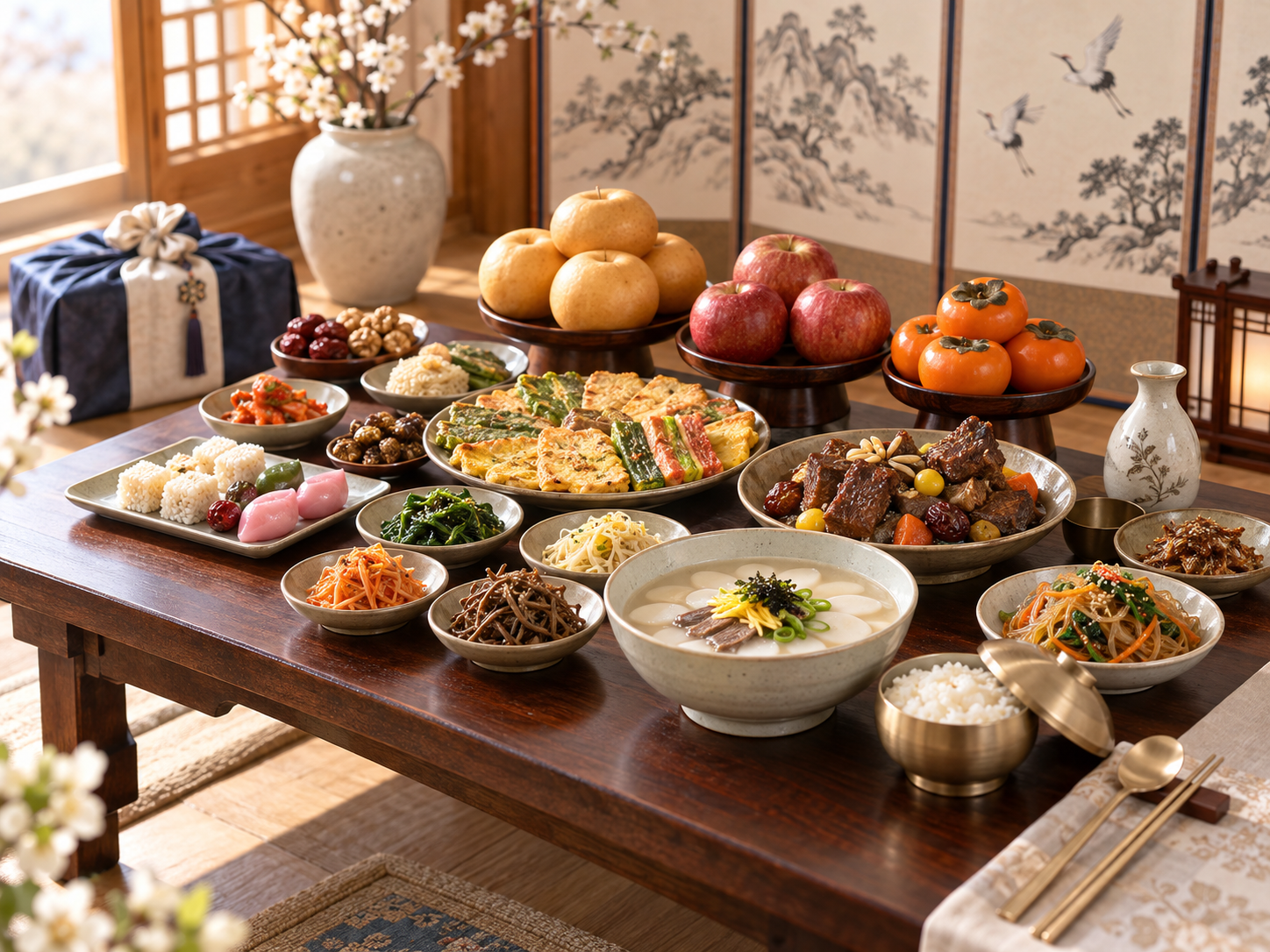 Seollal Food & Table TraditionsWhy Koreans welcome the Lunar New Year with tteokguk, and how to understand the family table, ancestral rites and holiday scenes.
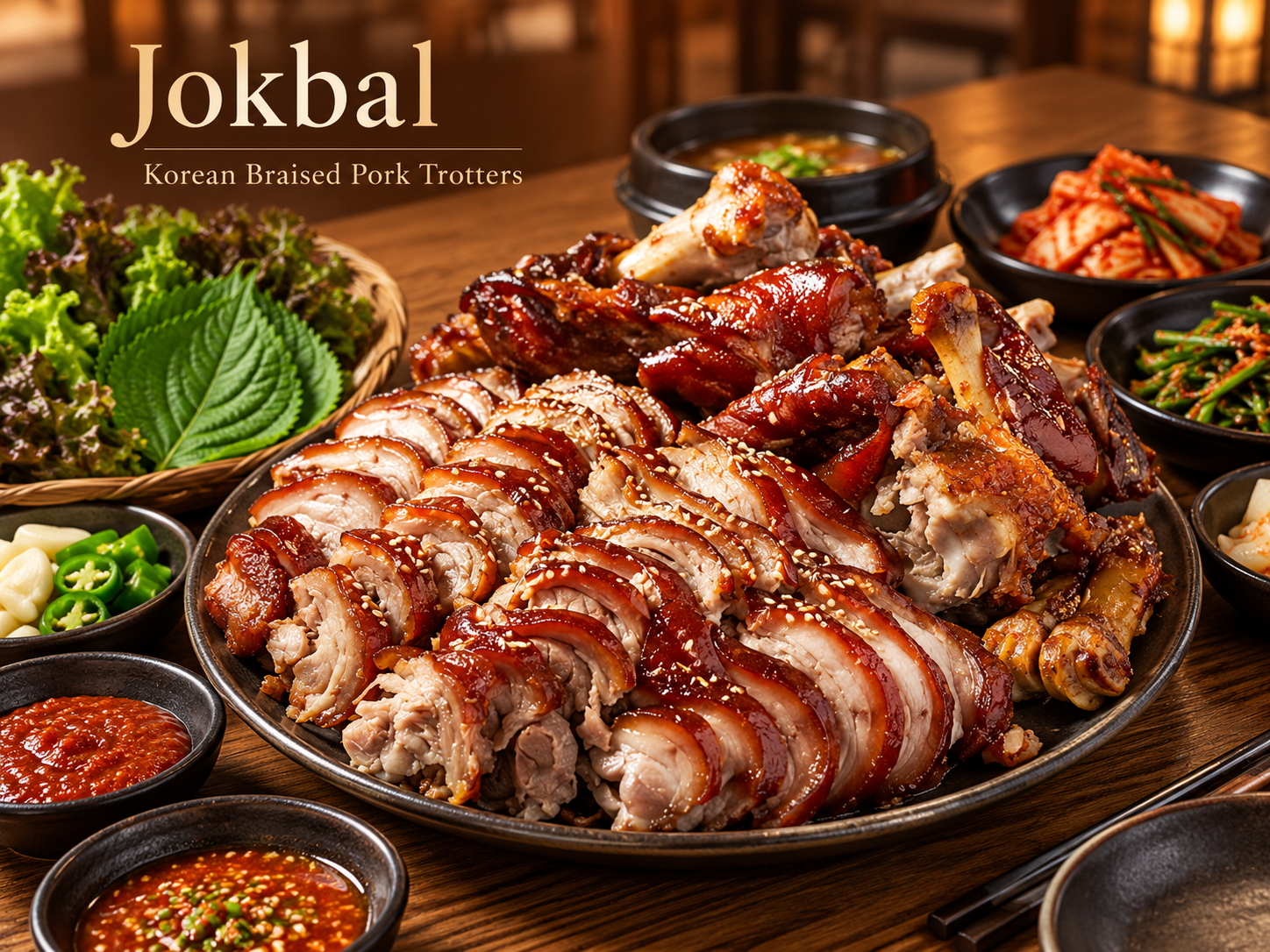 Jokbal · 족발Jokbal is pork trotter slowly cooked in a soy-based braising liquid, cooled just enough to set its texture and sliced for sharing. The dish is eaten year-round, but the warm platter, lettuce wraps and communal table make it especially satisfying on a cold evening.
 Sulguk · 술국Sulguk literally means “soup for drinking” and is also used for hearty hangover-soup styles. There is no single universal recipe: a shop may serve beef-bone broth with beef, pork, offal, blood curd, kimchi, bean sprouts or soybean paste. The safest guide is to confirm the broth and contents before ordering.
 Tteokguk · 떡국Tteokguk is sliced garaetteok simmered in broth and traditionally eaten for Seollal, the Korean Lunar New Year. Beef broth is common, but anchovy, seafood, pheasant, chicken and plant-based versions exist. Egg strips, beef, green onion and seaweed are frequent garnishes; mandu may be added for tteok-manduguk.
Official reference: Korea Tourism Organization: Korean food guide. Ingredients, portions and restaurant preparation vary; confirm allergens and dietary needs with the restaurant.
HELP IMPROVE THIS GUIDE
Leave a Reply