KOREAN FOOD CULTURE · 추석 상차림
Chuseok Food & Harvest Table Traditions
Explore songpyeon, harvest gratitude and the difference between a shared Chuseok meal and an ancestral offering table.
When: 15th day of the eighth lunar month
Signature food: Songpyeon · filled rice cakes

Understanding Chuseok
Chuseok, also called Hangawi, falls on the fifteenth day of the eighth lunar month. It is a major Korean holiday associated with the harvest, family reunions and remembrance. The lunar date remains the same, but the Gregorian date changes. Food gives the season a tangible form: rice becomes filled cakes, seasonal produce appears on the table and shared dishes turn a gathering into a meal.
Origins and historical context
One historical account frequently connected with Chuseok is the Gabae weaving contest recorded in the Samguk sagi for the reign of Silla’s King Yuri. Women competed in teams and the contest ended with food and festivities. It is an important written association, but a brief origin story cannot explain every later Chuseok practice. Agricultural rhythms, household customs and ancestral remembrance developed together over time. Today, families may observe charye, visit ancestral graves in seongmyo, share a meal or celebrate in other ways.
Why these foods matter
Songpyeon links the holiday to rice and the season’s produce. The small filled rice cakes are traditionally steamed with pine needles, which contribute fragrance. Making and sharing them can also bring generations together around a practical task. Harvest gratitude is the central connection; attractive shapes express that connection without requiring one design or filling. Chuseok is sometimes described as “Korean Thanksgiving” to help visitors, but it has its own history and customs.
Historical context: Academy of Korean Studies: Chuseok and Gabae.
Read the foods on the table
Songpyeon
Rice-flour dough encloses fillings such as sesame, beans or chestnut. The half-moon shape is familiar, while colors and regional forms vary. Exterior color does not reliably identify the filling, so ask the maker if you have allergies.
Jeon and galbijjim
Pan-fried vegetable, fish or meat pieces and braised ribs can form the rich center of a festive meal. These foods are also eaten at other celebrations; their presence does not by itself identify a ritual table.
Namul, japchae, fruit and nuts
The illustrated greens, noodles, pears, apples, persimmons and chestnuts suggest variety and abundance. Availability and selection depend on the region, household and harvest timing.
The supplied images, explained
1. A shared harvest meal
The first image shows songpyeon at the front, with jeon, braised ribs, japchae, greens and fruit. It is an editorial meal illustration, not an authenticated historic menu. The pale soup should not be read as proof that tteokguk is a defining Chuseok dish; the clearest holiday marker here is songpyeon.
2. An arranged holiday table

3. From remembrance to sharing

How to experience it respectfully
For a home invitation, ask whether a memorial observance is included and follow the host’s lead. Request permission before photographing a shrine, ritual or family members. At the table, begin with small servings and ask what is inside an unfamiliar rice cake. Check the current holiday hours and order deadlines of food shops or restaurants. A photograph of an abundant table does not guarantee the same menu or unlimited refills.
Tasting and practical food notes
Try songpyeon in small bites, allowing for its dense, chewy texture. Enjoy warm jeon with a light dip, then balance richer meat with rice or vegetables. An assortment can contain sesame, nuts, soy, wheat, egg, fish and shellfish across separate dishes. Check fillings, coatings and stock rather than removing a visible garnish. Portions and recipes vary too much for a photograph-based calorie estimate.
Questions visitors often ask
Is songpyeon always filled with sweet sesame?
No. Sesame is common, but beans, chestnuts and other fillings occur. Ask the maker; color is not a dependable guide.
Does every household perform charye?
No. Practices differ by belief, family preference and circumstance. Remembrance is one aspect of the holiday, not a requirement imposed on every meal.
Explore the individual dishes
Other holiday and seasonal tables
Sources and editorial notes
Prepared by the VEMORIQ Editorial Desk · Updated October 2, 2026. Historical sources inform the cultural explanation; the image commentary is VEMORIQ editorial interpretation. Illustrations are not documentary photographs or authoritative ritual diagrams. Family practice, recipes and menus vary. Confirm the relevant year’s calendar and current venue information before visiting.
More from this season
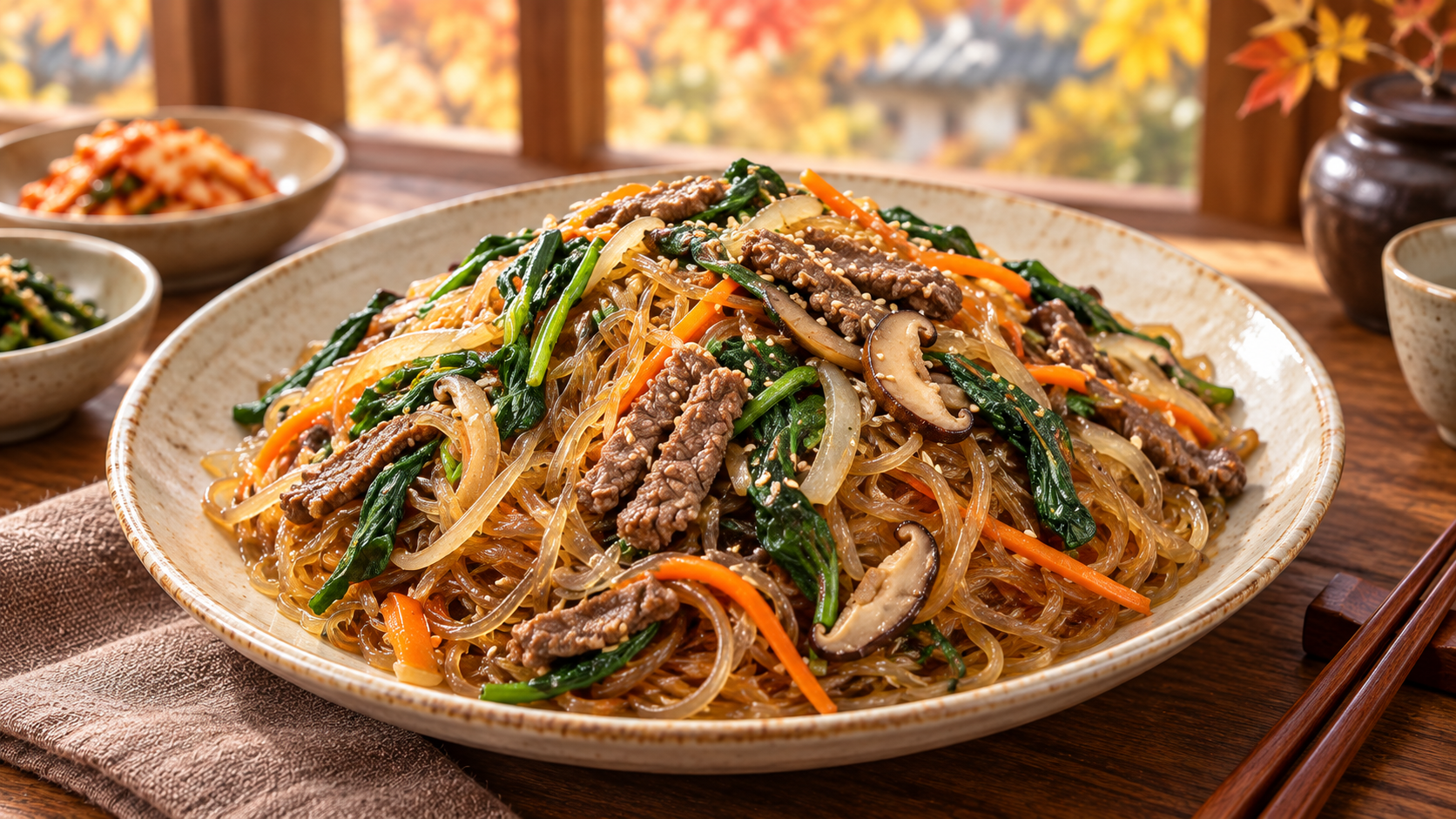 Japchae · 잡채Japchae combines springy sweet-potato starch noodles with separately cooked vegetables and a glossy soy–sesame seasoning; beef is common but not essential. It is served year-round, yet it belongs naturally on an autumn and Chuseok table because it is a familiar celebration dish designed for sharing rather than a narrowly seasonal ingredient dish.
 Kkotgetang · 꽃게탕Kkotgetang is a vigorously simmered Korean blue-crab stew whose defining contrast is sweet shellfish meat against a deep, spicy-savory broth. Radish, zucchini, mushrooms, crown daisy and green onion make the pot feel abundant without obscuring the crab. Autumn is a particularly appealing time to seek it out, although catch, sex, size and supply vary by coast and restaurant.
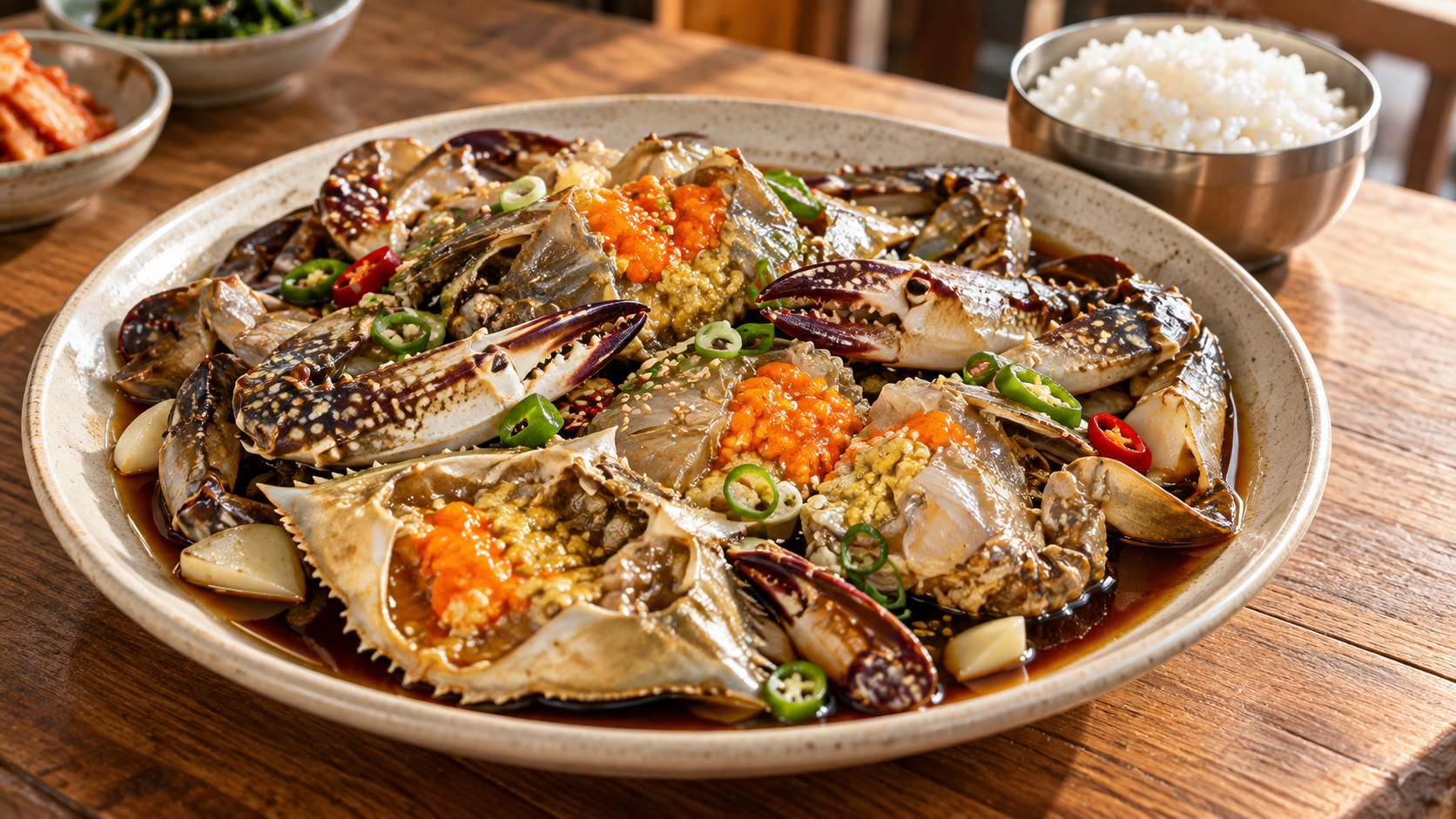 Ganjang Gejang · 간장게장Ganjang gejang is raw blue crab cured cold in an aromatic soy marinade. The method seasons rather than cooks the crab, preserving a soft, almost custard-like texture in the flesh and roe. Good versions balance marine sweetness, soy savoriness and gentle aromatics; the dish is eaten in small amounts with warm rice, especially when autumn crab is at its best.
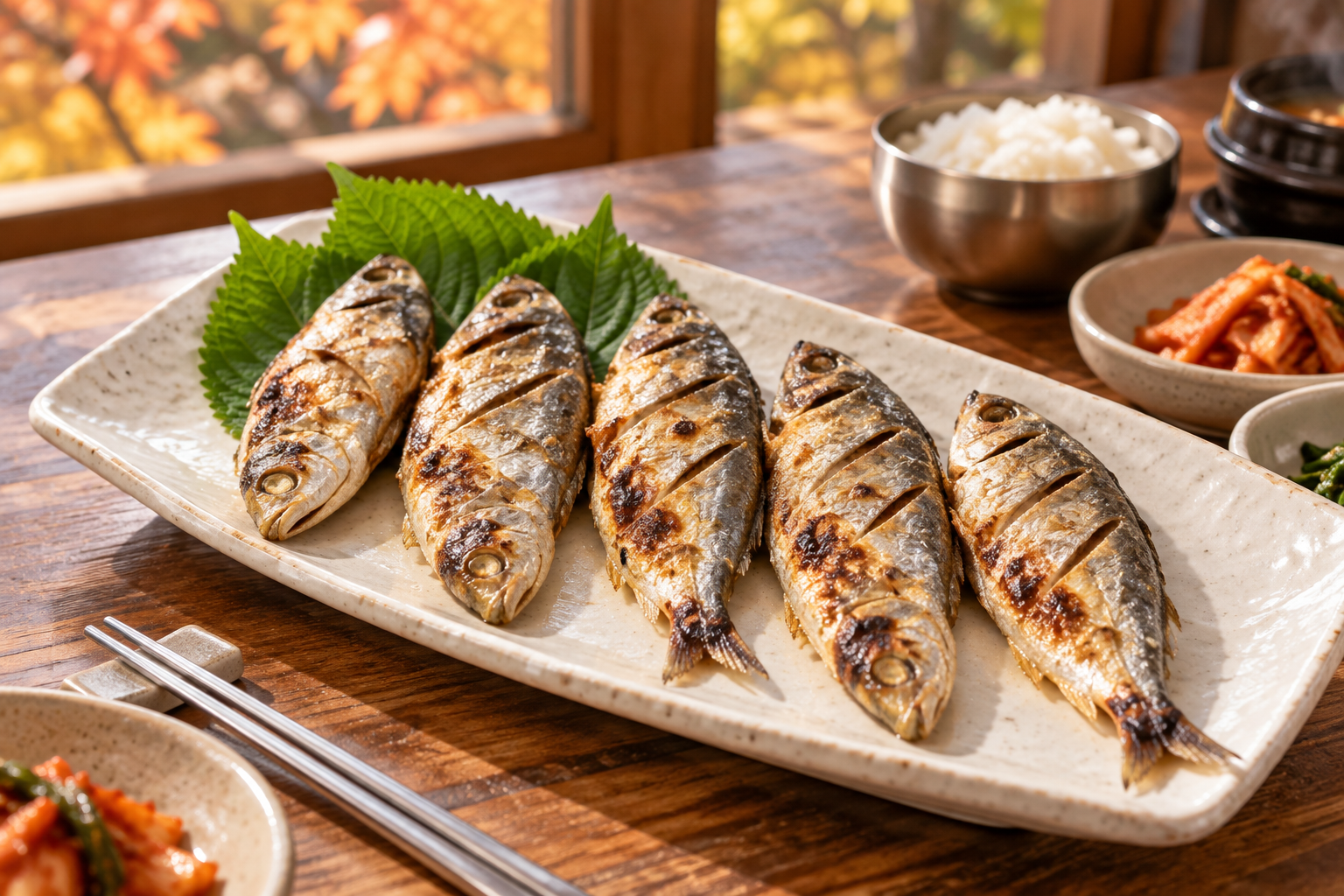 Grilled Jeoneo · 전어구이Jeoneo-gui is whole gizzard shad seasoned simply with salt and grilled until the skin turns crisp and aromatic. It is closely associated with Korea’s autumn seafood season, when many diners seek its fuller, oil-rich character; the exact fat level and flavor still vary with catch area, size and timing.
Official reference: Korea Tourism Organization: Korean food guide. Ingredients, portions and restaurant preparation vary; confirm allergens and dietary needs with the restaurant.
HELP IMPROVE THIS GUIDE
Leave a Reply