
Autumn Korean food guide
Galbijjim · 갈비찜
Galbijjim is beef short ribs slowly braised in a glossy soy-based sauce with Korean radish, carrots and aromatic seasonings. Chestnuts, shiitake mushrooms and Korean pear make it especially fitting for an autumn table and for Chuseok or other family celebrations, although recipes and garnishes vary widely by household and restaurant.
Flavor & texture
Long, gentle braising turns the beef tender while the sauce layers savory soy, mild sweetness from pear and onion, garlic and a restrained sesame aroma. Radish and mushrooms absorb the braising liquid; carrots and chestnuts bring softer sweetness. A balanced version tastes rounded and deeply savory rather than simply sugary.
Nutrition context
Beef short ribs provide protein, iron, zinc and vitamin B12. They can also contain substantial fat, including saturated fat, while soy sauce and a reduced braising liquid raise sodium and sugar or sweetened pear adds carbohydrate. Vegetables add some fiber and micronutrients, but the overall profile depends strongly on rib trimming, serving size and how much sauce is eaten.
How it is made
Trim obvious surface fat, soak or briefly blanch the ribs when the recipe calls for it, then rinse away residue. Braise gently with soy sauce, garlic, pear and aromatics until the connective tissue softens; add radish, carrots, chestnuts and mushrooms in stages so they keep their shape. Finish by reducing the sauce to a light glaze, and cook the beef fully without a hard boil that can toughen it.
Chili heat
Traditional soy-braised galbijjim is not chili-hot. Chili garnish or spicy galbijjim variations are separate preparations.
Main ingredients

Ingredients and preparation vary by restaurant. Confirm allergens and dietary requirements when ordering.
How to enjoy it
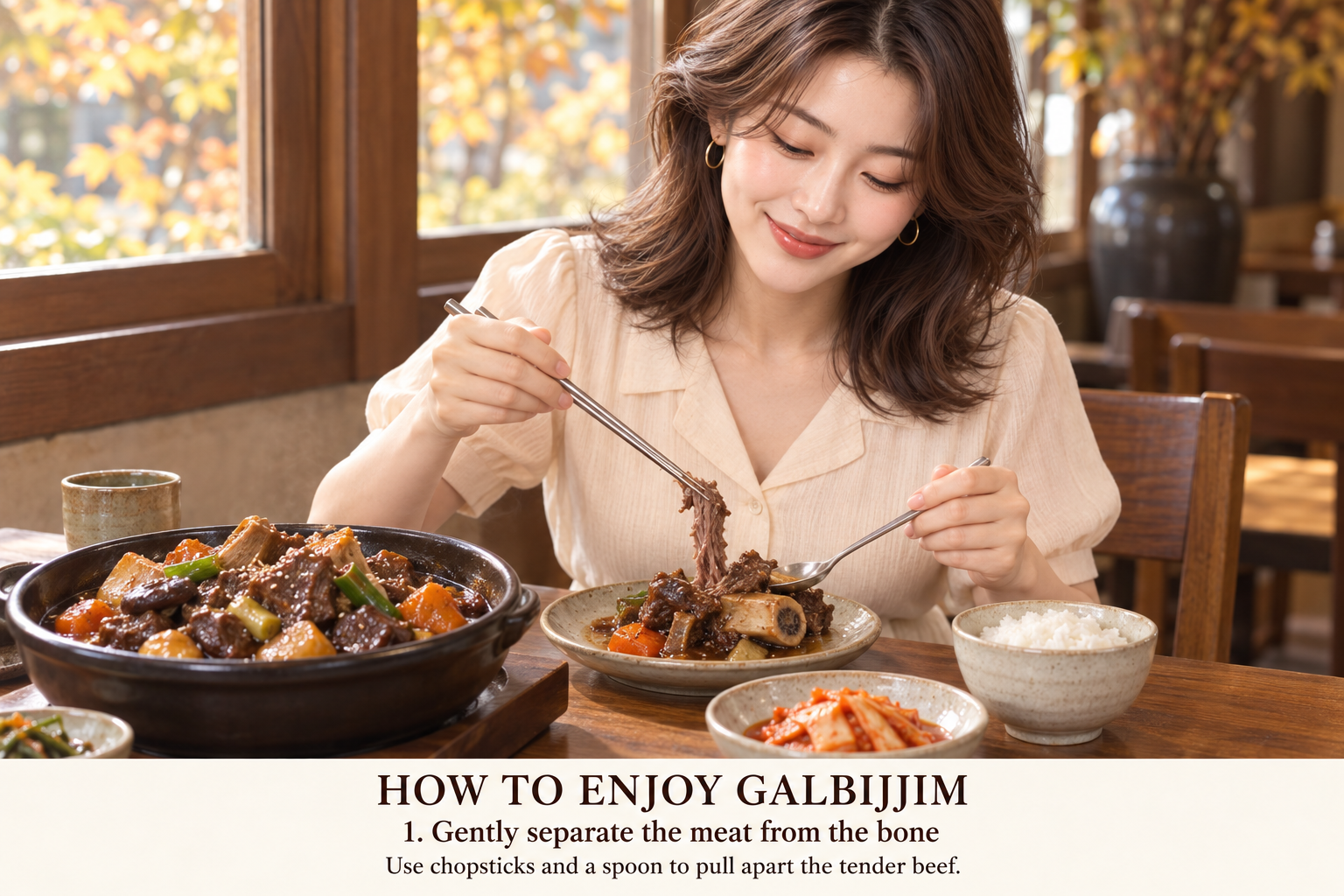
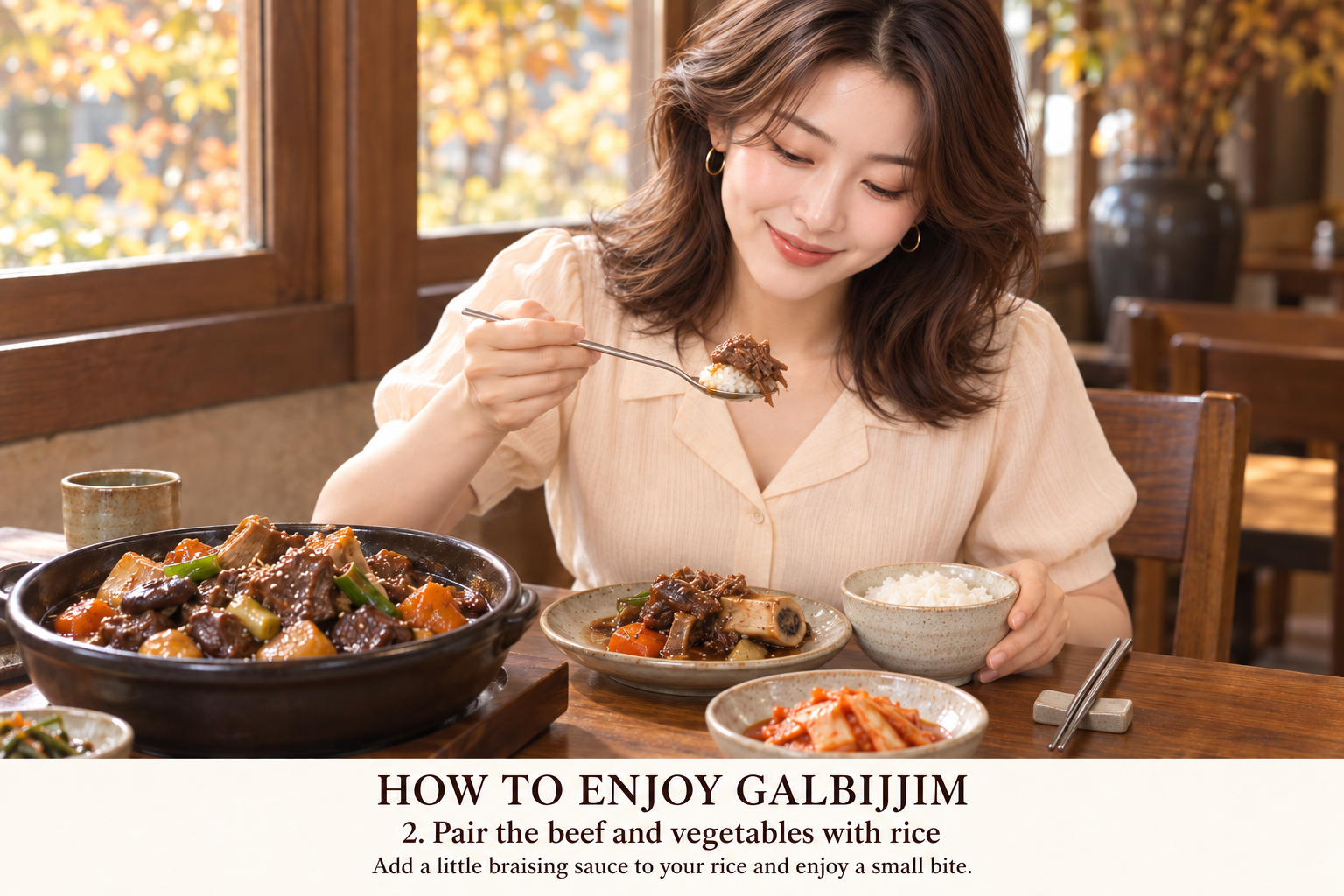
Official reference: Korea Tourism Organization: Autumn Korean food guide. Ingredients, portions and restaurant preparation vary; confirm allergens and dietary needs with the restaurant.
More from this season
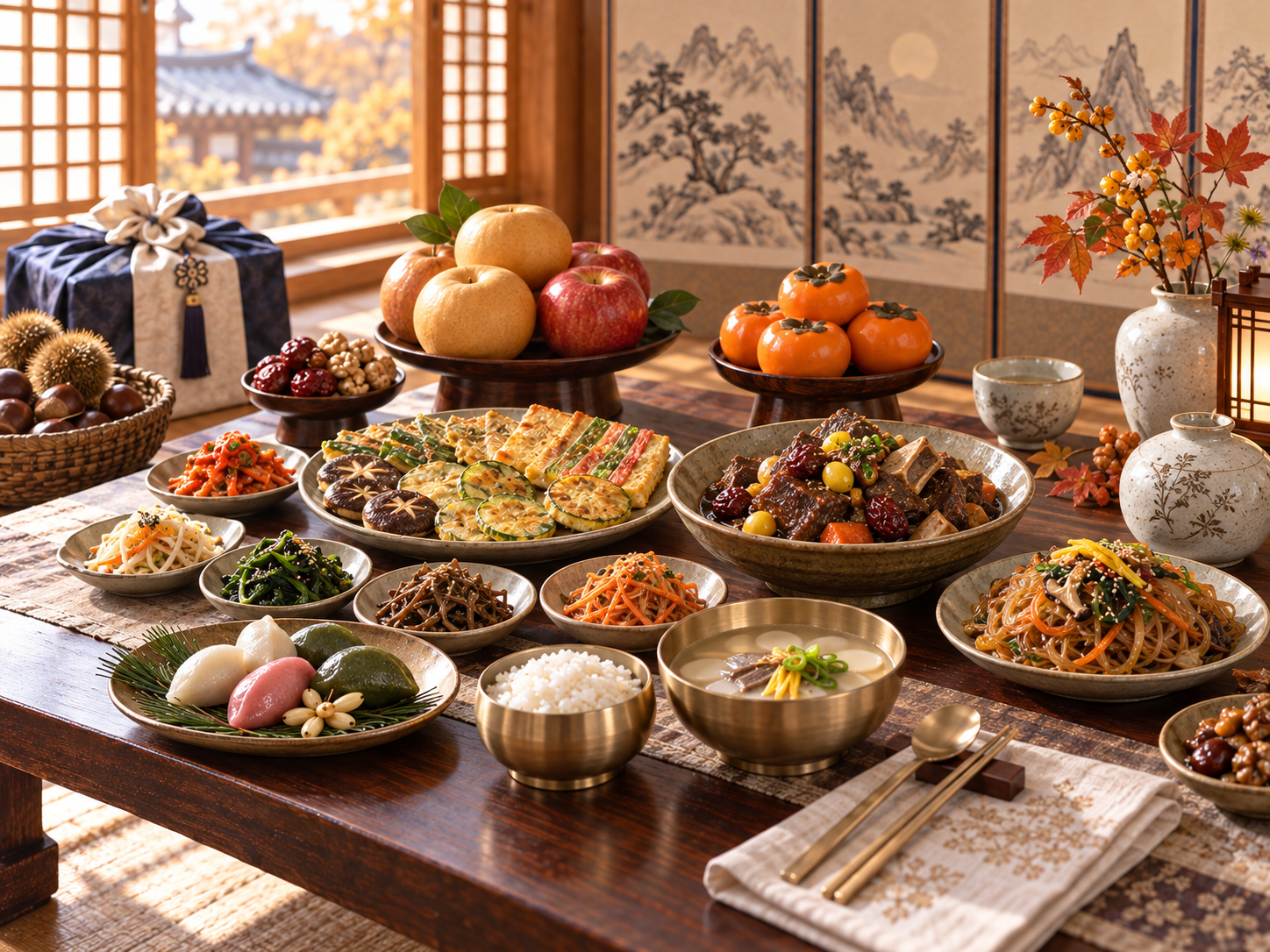 Chuseok Food & Harvest Table TraditionsExplore songpyeon, harvest gratitude and the difference between a shared Chuseok meal and an ancestral offering table.
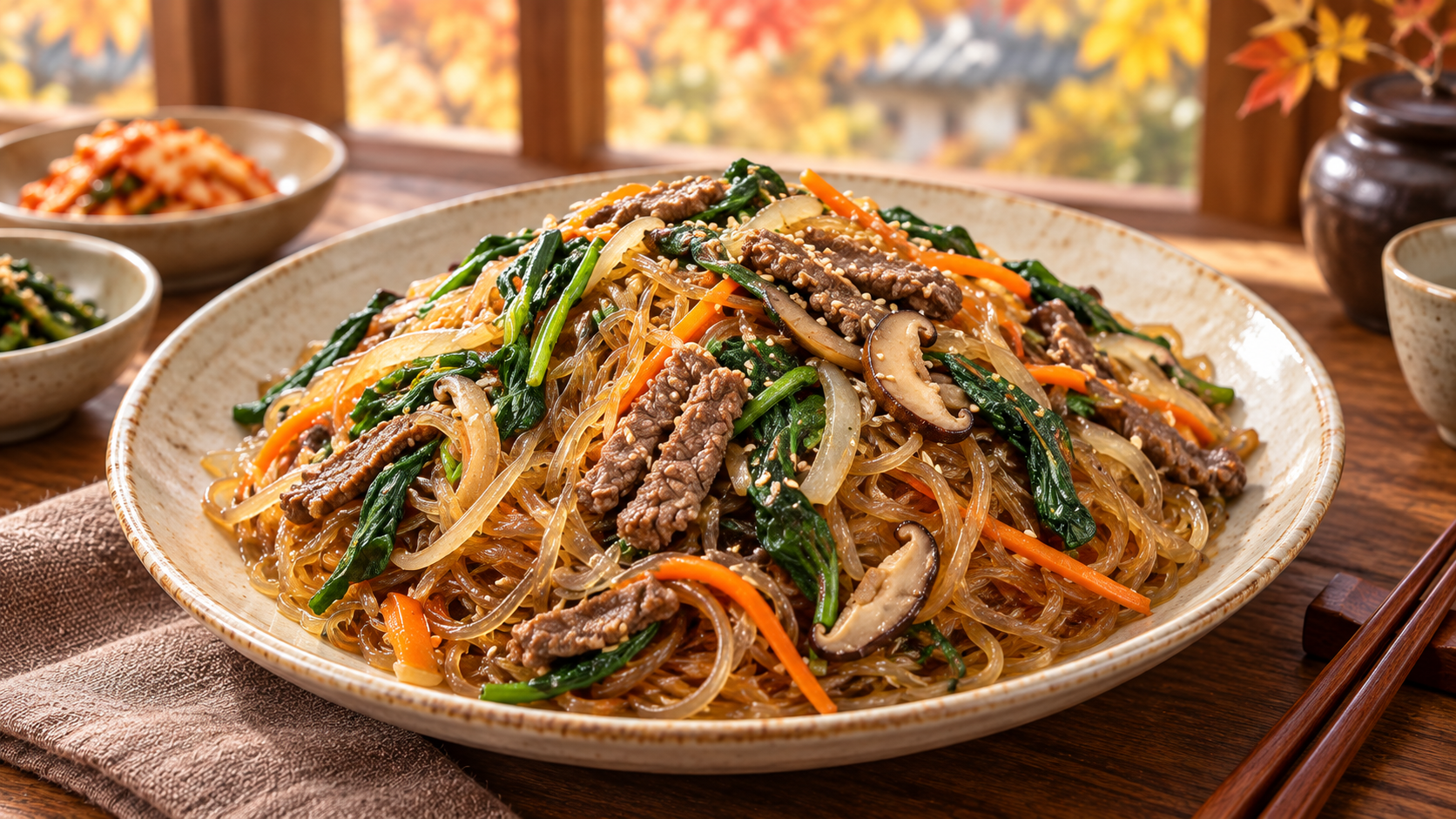 Japchae · 잡채Japchae combines springy sweet-potato starch noodles with separately cooked vegetables and a glossy soy–sesame seasoning; beef is common but not essential. It is served year-round, yet it belongs naturally on an autumn and Chuseok table because it is a familiar celebration dish designed for sharing rather than a narrowly seasonal ingredient dish.
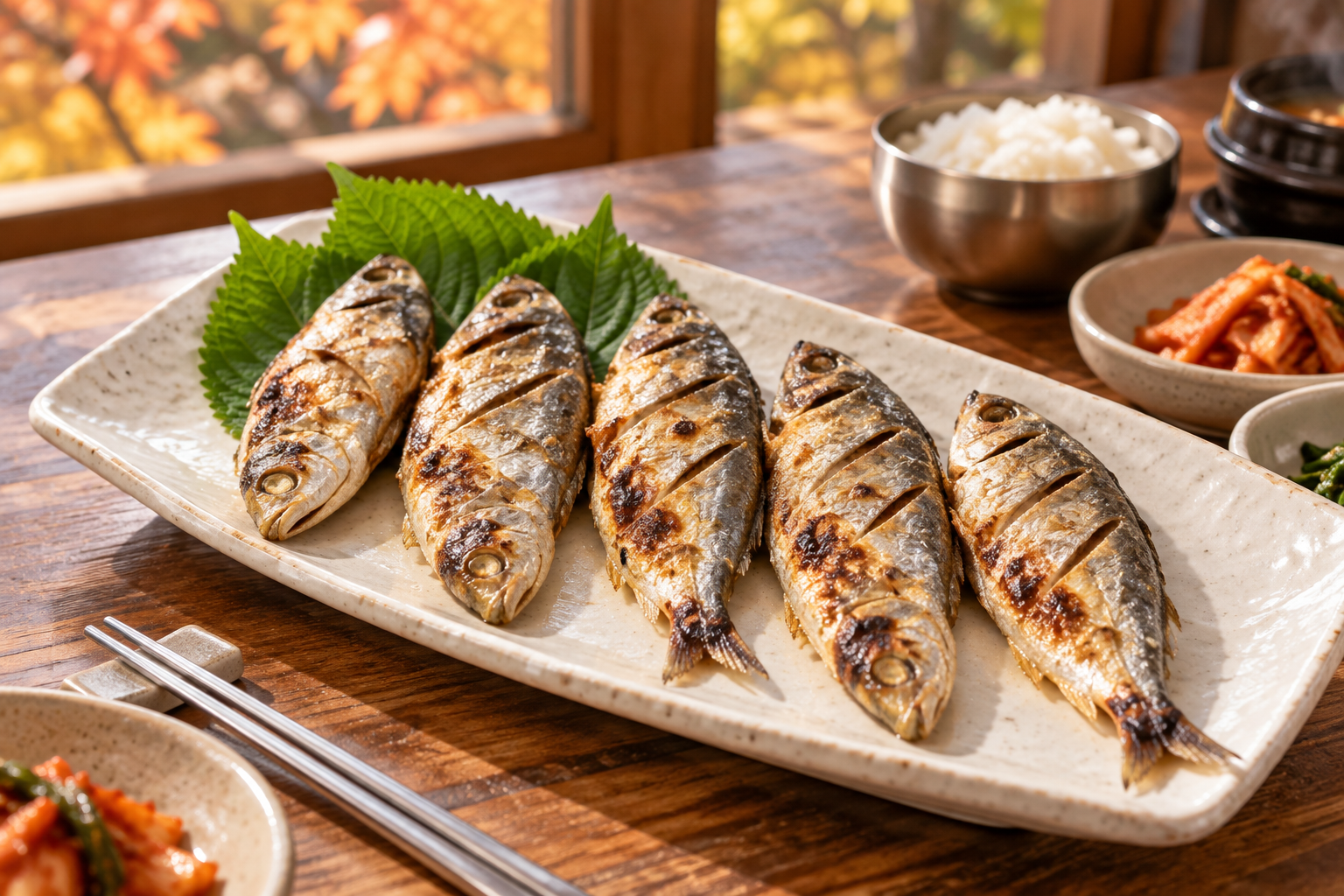 Grilled Jeoneo · 전어구이Jeoneo-gui is whole gizzard shad seasoned simply with salt and grilled until the skin turns crisp and aromatic. It is closely associated with Korea’s autumn seafood season, when many diners seek its fuller, oil-rich character; the exact fat level and flavor still vary with catch area, size and timing.
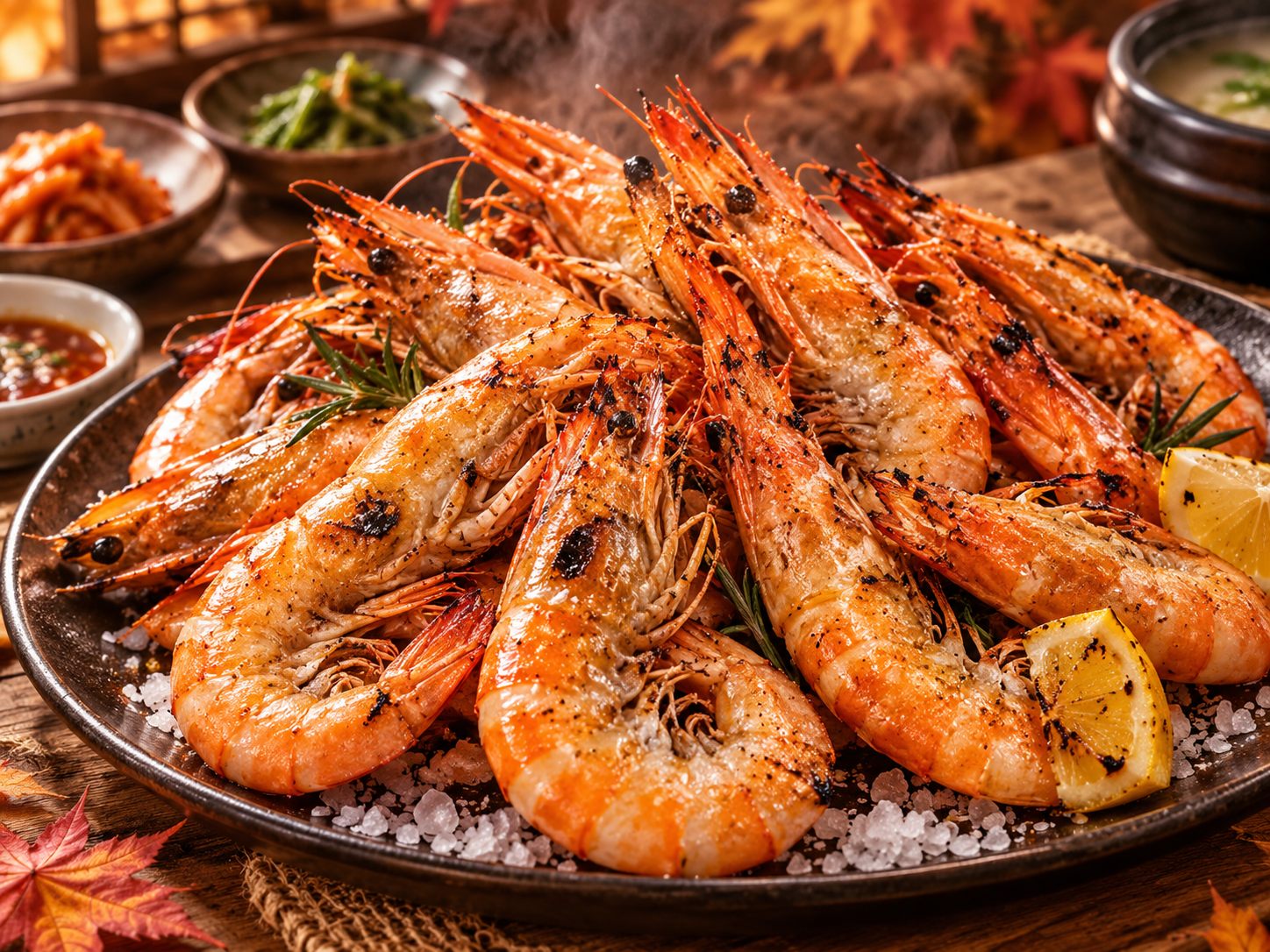 Grilled Daeha · 대하구이Daeha-gui is large shrimp grilled in the shell, often over a bed of coarse salt, until the flesh turns opaque and springy. It is strongly associated with Korea’s autumn shrimp season, although species, farming method, size and catch area vary. The shell protects the delicate flesh while concentrating a clean, sweet seafood aroma.
HELP IMPROVE THIS GUIDE
Leave a Reply