Autumn Korean food guide
Ganjang Gejang · 간장게장
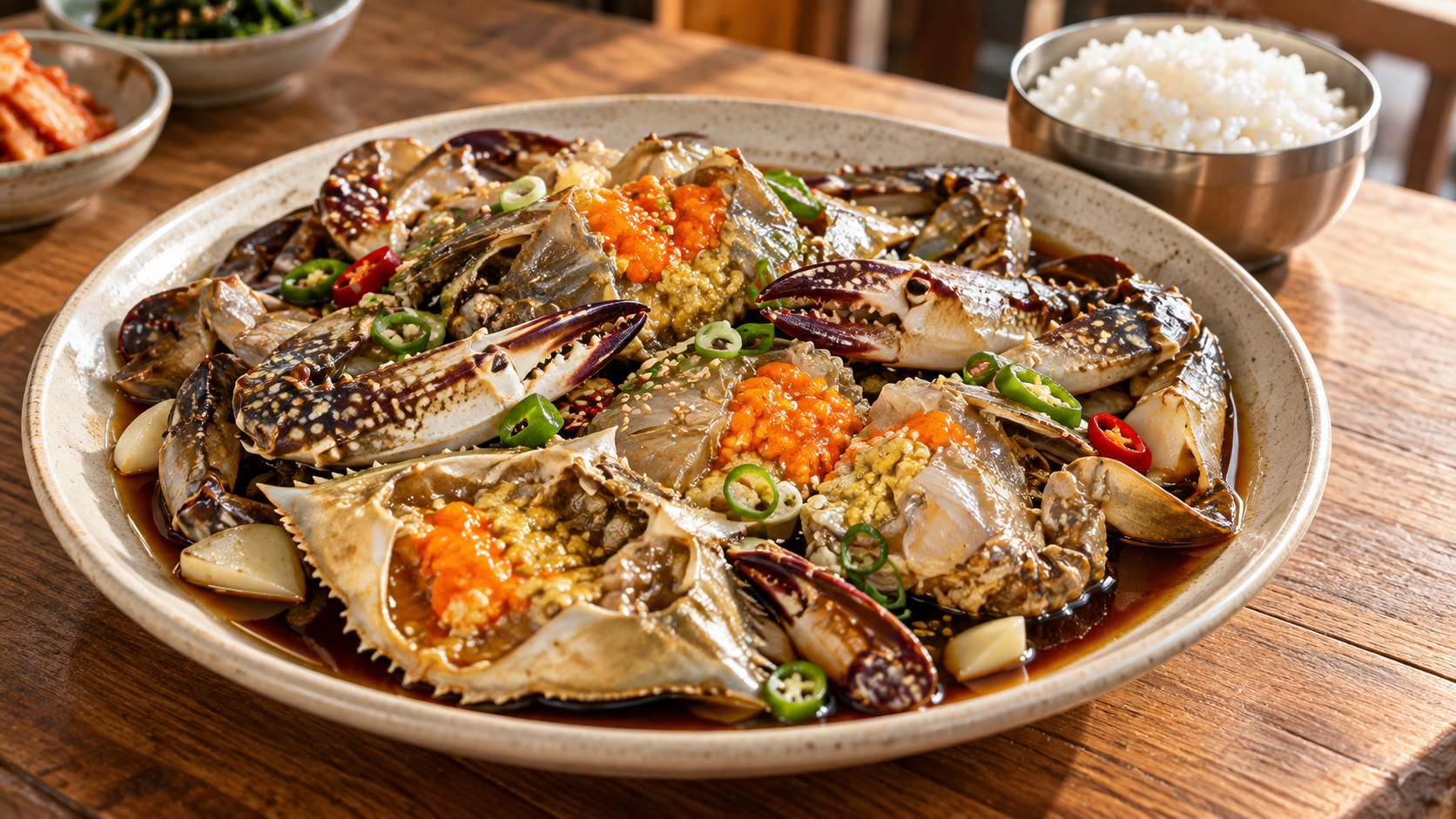
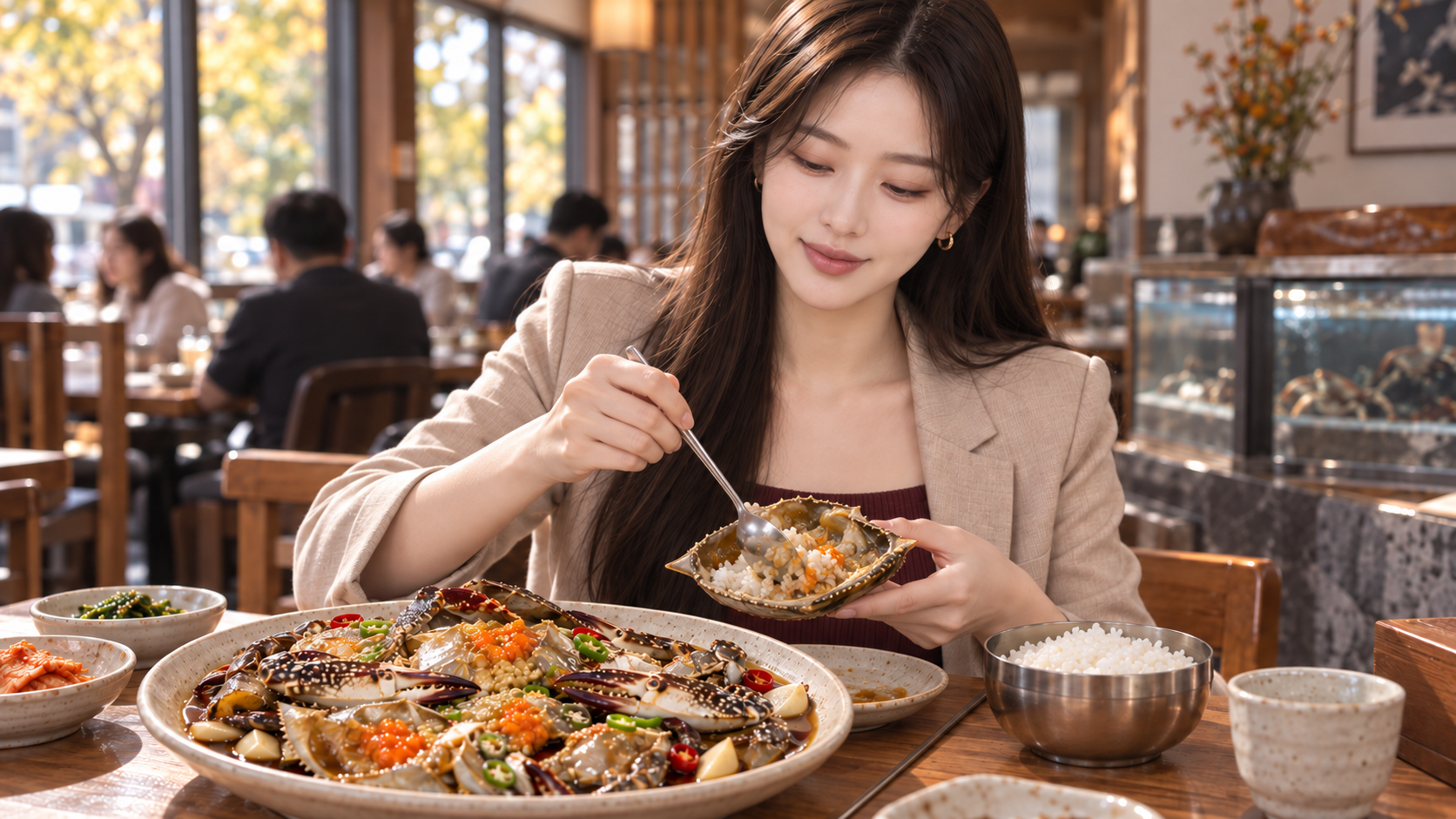
Ganjang gejang is raw blue crab cured cold in an aromatic soy marinade. The method seasons rather than cooks the crab, preserving a soft, almost custard-like texture in the flesh and roe. Good versions balance marine sweetness, soy savoriness and gentle aromatics; the dish is eaten in small amounts with warm rice, especially when autumn crab is at its best.
Flavor & texture
The flesh is cool, silky and saline-sweet, while roe and internal juices can be richer and more concentrated. Soy sauce, kelp, ginger, garlic and onion build depth without turning the marinade harsh. Fresh chile may add brightness, but classic ganjang gejang is not primarily a hot dish. The texture is intentionally raw and very different from steamed crab.
Nutrition context
Crab contributes protein, vitamin B12, selenium and zinc; roe adds richness and changes the fat and cholesterol profile. The soy marinade can contribute substantial sodium, and values vary greatly with crab size, soaking time and the amount of sauce eaten. Pairing modest portions with rice and using the marinade sparingly is more meaningful than quoting one fixed nutrition number.
How it is made
Very fresh crab is cleaned and kept cold while an aromatic soy mixture is boiled separately, then cooled completely before contact with the crab. Restaurants may recook and cool the marinade during curing. Because the crab remains raw, strict sourcing, refrigeration, clean handling and short holding times are essential; soy marinade is not a substitute for cooking.
Chili heat
Typically 0/5. Sliced green or red chile can add a mild bite, but the defining intensity comes from soy and raw crab rather than chili heat.
Main ingredients

Ingredients and preparation vary by restaurant. Confirm allergens and dietary requirements when ordering.
How to enjoy it

Official reference: Korea Tourism Organization: Autumn Korean food guide. Ingredients, portions and restaurant preparation vary; confirm allergens and dietary needs with the restaurant.
More from this season
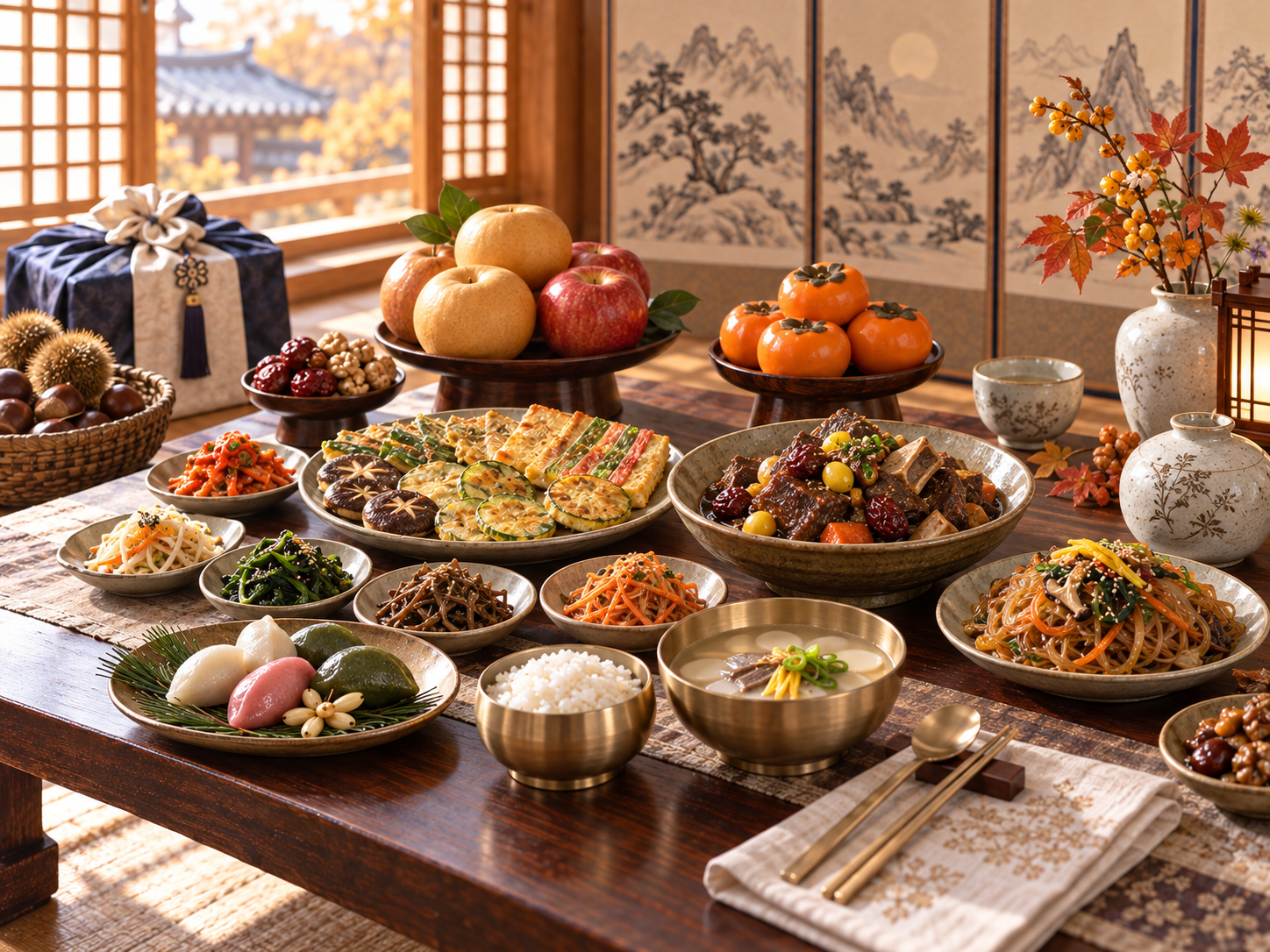 Chuseok Food & Harvest Table TraditionsExplore songpyeon, harvest gratitude and the difference between a shared Chuseok meal and an ancestral offering table.
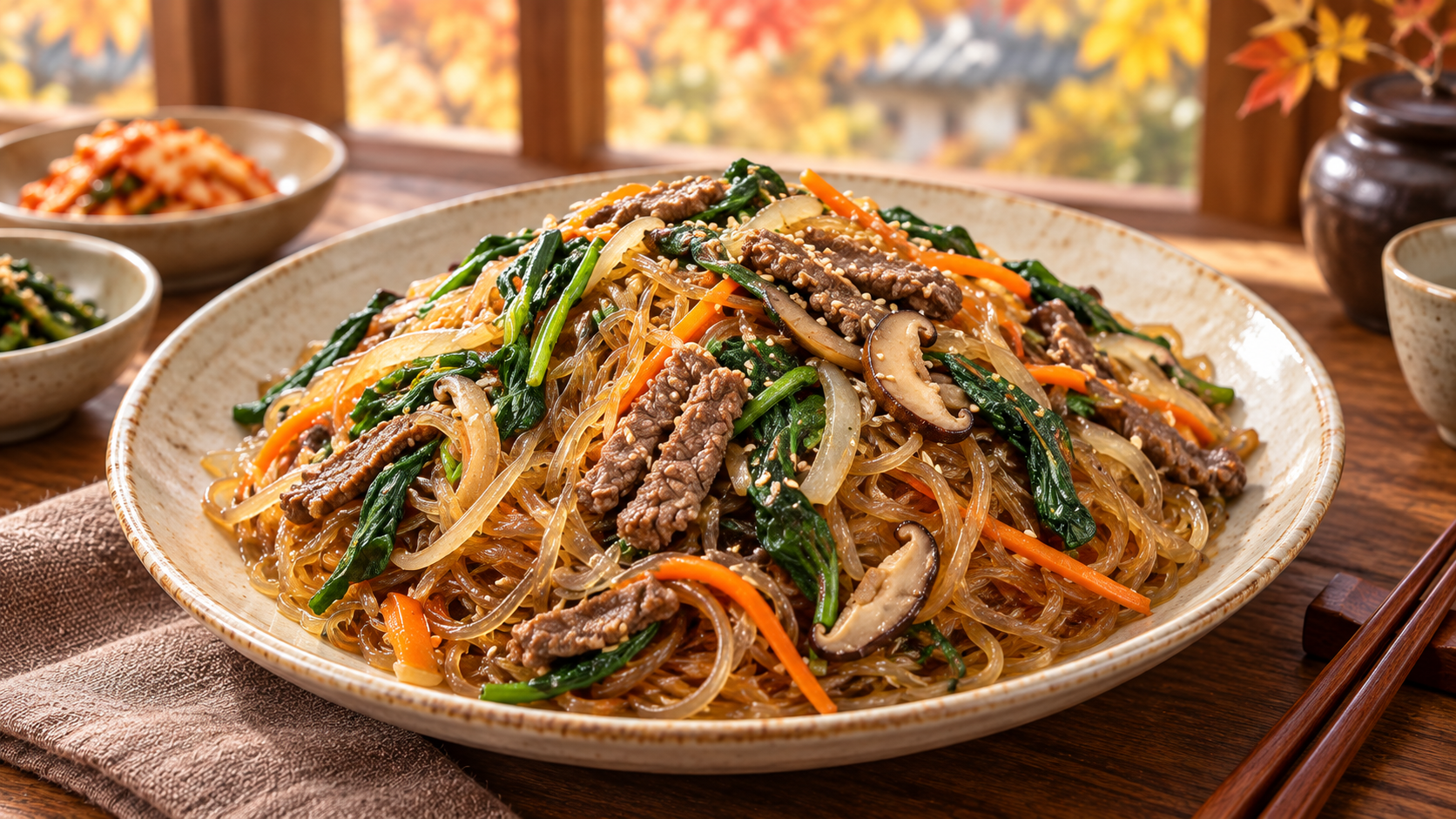 Japchae · 잡채Japchae combines springy sweet-potato starch noodles with separately cooked vegetables and a glossy soy–sesame seasoning; beef is common but not essential. It is served year-round, yet it belongs naturally on an autumn and Chuseok table because it is a familiar celebration dish designed for sharing rather than a narrowly seasonal ingredient dish.
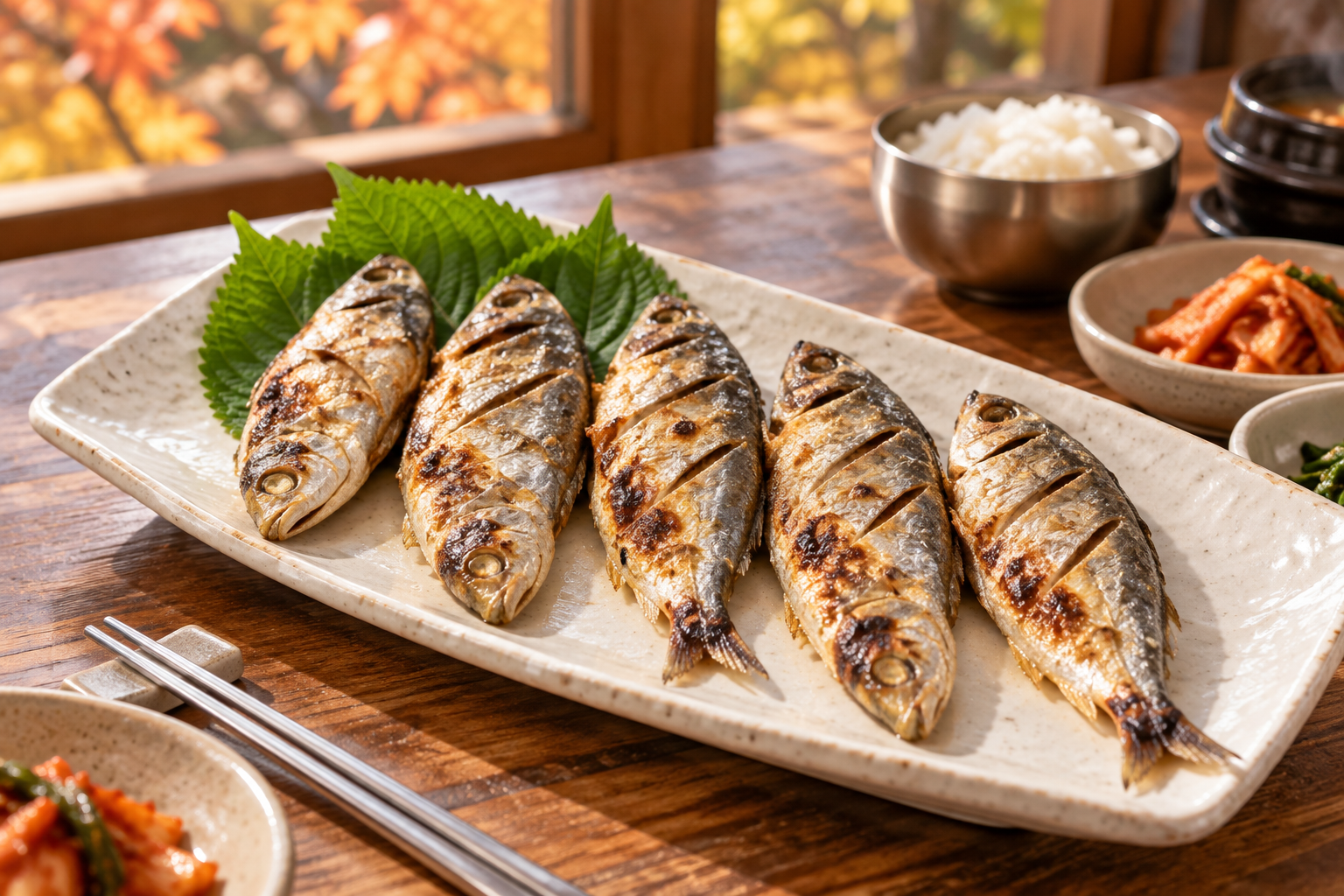 Grilled Jeoneo · 전어구이Jeoneo-gui is whole gizzard shad seasoned simply with salt and grilled until the skin turns crisp and aromatic. It is closely associated with Korea’s autumn seafood season, when many diners seek its fuller, oil-rich character; the exact fat level and flavor still vary with catch area, size and timing.
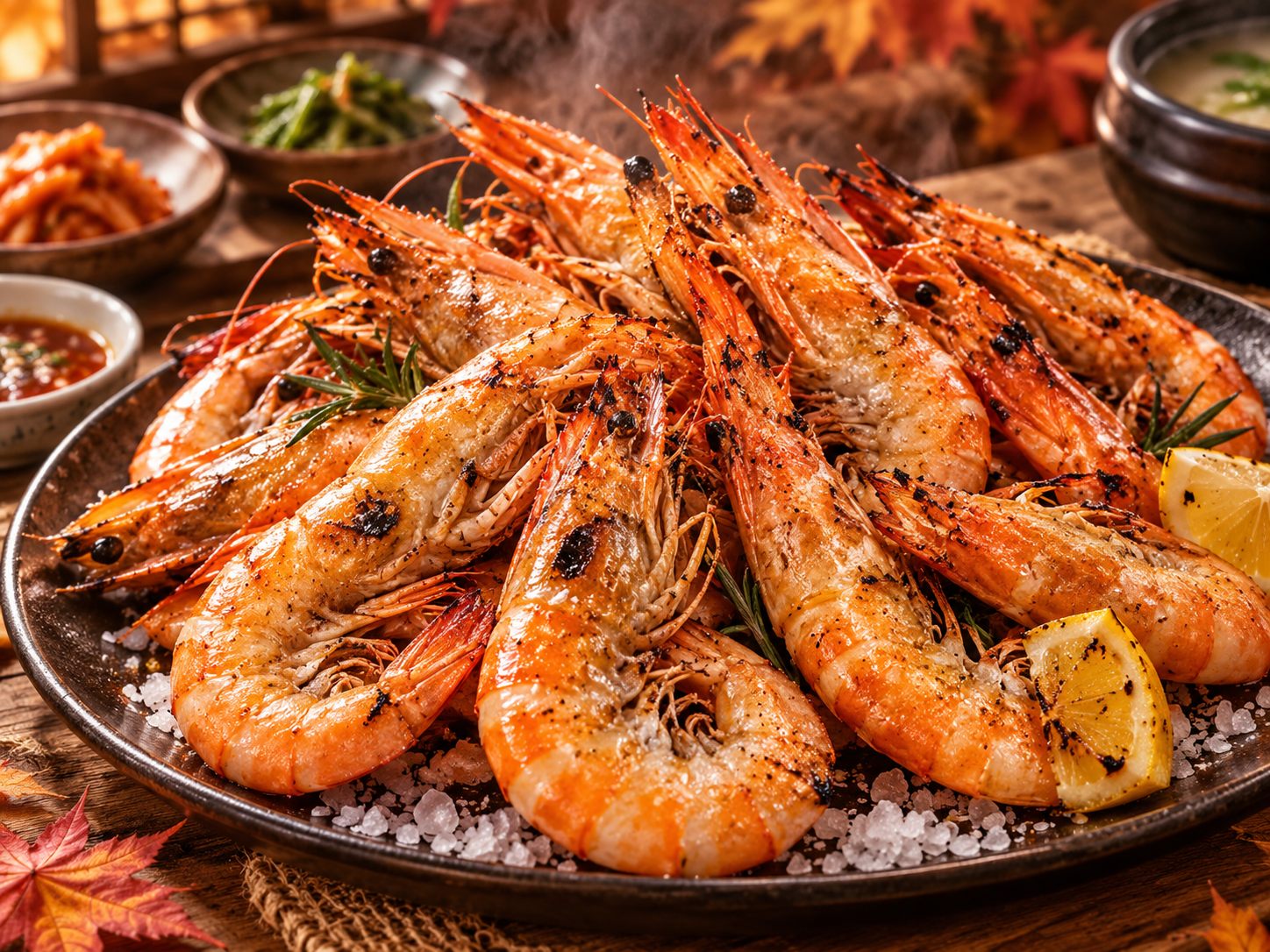 Grilled Daeha · 대하구이Daeha-gui is large shrimp grilled in the shell, often over a bed of coarse salt, until the flesh turns opaque and springy. It is strongly associated with Korea’s autumn shrimp season, although species, farming method, size and catch area vary. The shell protects the delicate flesh while concentrating a clean, sweet seafood aroma.
HELP IMPROVE THIS GUIDE
Leave a Reply