KOREAN FOOD CULTURE · 복날 · 삼복
Boknal & Sambok: Korea’s Summer Food Traditions
Understand Chobok, Jungbok and Malbok, the history behind summer nourishing meals and what the illustrated foods represent.
When: Three traditional calendar days in July–August
Signature food: Samgyetang · chicken and ginseng soup
Reading the illustration: Boknal dates follow a traditional calendar; they are not necessarily the three hottest measured days. The poster’s stamina language describes cultural hopes, not proven medical benefits. Its daily menu is illustrative.

Understanding Boknal
Boknal refers to each of the three traditional summer days collectively called Sambok: Chobok, Jungbok and Malbok. They mark the season culturally associated with intense heat. They are calculated calendar dates, not a forecast identifying the three hottest measured days of a particular year. Unlike Seollal and Chuseok, Boknal is not a family holiday built around one standard ceremonial table.
Origins and historical context
The calendar uses gyeong days in the traditional cycle of heavenly stems. Chobok is the third gyeong day after the summer solstice, Jungbok the fourth, and Malbok the first after Ipchu, the solar term marking the beginning of autumn. Chobok and Jungbok are ten days apart; the next gap can be ten or twenty days. These rules explain why the dates move in the modern calendar and why Malbok can still feel thoroughly summery.
Why these foods matter
The custom of bokdarim—eating a substantial meal around the hottest season—belongs to a history of coping with heat and demanding seasonal work. The National Folk Museum discusses Sambok in relation to agricultural labor and traces the development of chicken-and-ginseng dishes over time. Modern samgyetang should not be presented as an unchanged recipe eaten identically since antiquity. Its current prominence is part of a continuing food culture.
Historical context: Academy of Korean Studies: Boknal calendar.
Read the foods on the table
Samgyetang
The poster’s central bowl shows a small whole chicken with garnishes associated with ginseng chicken soup. Glutinous rice, garlic, jujube and ginseng are familiar ingredients, though restaurant recipes differ. Broth, meat and rice come together in one hot serving.
Grilled eel
Jangeo-gui is another contemporary nourishing-meal choice. Grilled eel can be served with a sweet or savory sauce and accompaniments. It is an option, not a required companion to samgyetang.
Cold noodles and other dishes
Naengmyeon offers a contrasting summer experience. The poster also includes jeon and a pork-and-lotus-root dish labeled yeonsuyuk. Treat these as suggested meal examples; they are not equally established signature foods of Boknal throughout Korea.
The supplied images, explained
1. Reading the Boknal poster accurately
The supplied poster combines the three days, several dishes and a sample morning-to-evening menu. Its “three hottest days” wording is cultural shorthand, not a meteorological guarantee. The schedule is an editorial suggestion, not a traditional sequence everyone follows. Claims about restoring stamina or preventing summer fatigue describe the poster’s theme and traditional hopes; they are not proven health outcomes for a particular dish.
How to experience it respectfully
Choose a meal you enjoy rather than ordering everything shown. For samgyetang on a Boknal date, check current queue or reservation arrangements and portion size. Ask whether ginseng liquor is offered separately; you can decline it. Broth, chicken size, rice filling and additional ingredients can differ from the illustration. Confirm any ingredient you need to avoid before ordering.
Tasting and practical food notes
Let the soup cool, then separate the cooked chicken carefully and watch for small bones. Taste before adding salt. Try the rice with a little broth and alternate with side dishes. With eel, check each bite for fine bones and add sauce sparingly. Food provides nourishment, but hot soup is not a treatment for heat illness or a substitute for appropriate heat precautions.
Questions visitors often ask
Is “fighting heat with heat” a medical rule?
No. Iyeolchiyeol is a cultural expression often used to explain hot foods in summer. It does not mean that very hot soup prevents heat illness.
Must I eat samgyetang on all three days?
No. People may enjoy one special meal, choose another food or not mark the dates. The custom is flexible.
Are all three days exactly ten days apart?
No. The first two are ten days apart, while Jungbok and Malbok can be twenty days apart. Check the calendar for the relevant year.
Explore the individual dishes
Other holiday and seasonal tables
Sources and editorial notes
- Academy of Korean Studies: Boknal calendar
- National Folk Museum: samgyetang cultural history
- Korea Tourism Organization: contemporary summer foods
Prepared by the VEMORIQ Editorial Desk · Updated October 2, 2026. Historical sources inform the cultural explanation; the image commentary is VEMORIQ editorial interpretation. Illustrations are not documentary photographs or authoritative ritual diagrams. Family practice, recipes and menus vary. Confirm the relevant year’s calendar and current venue information before visiting.
More from this season
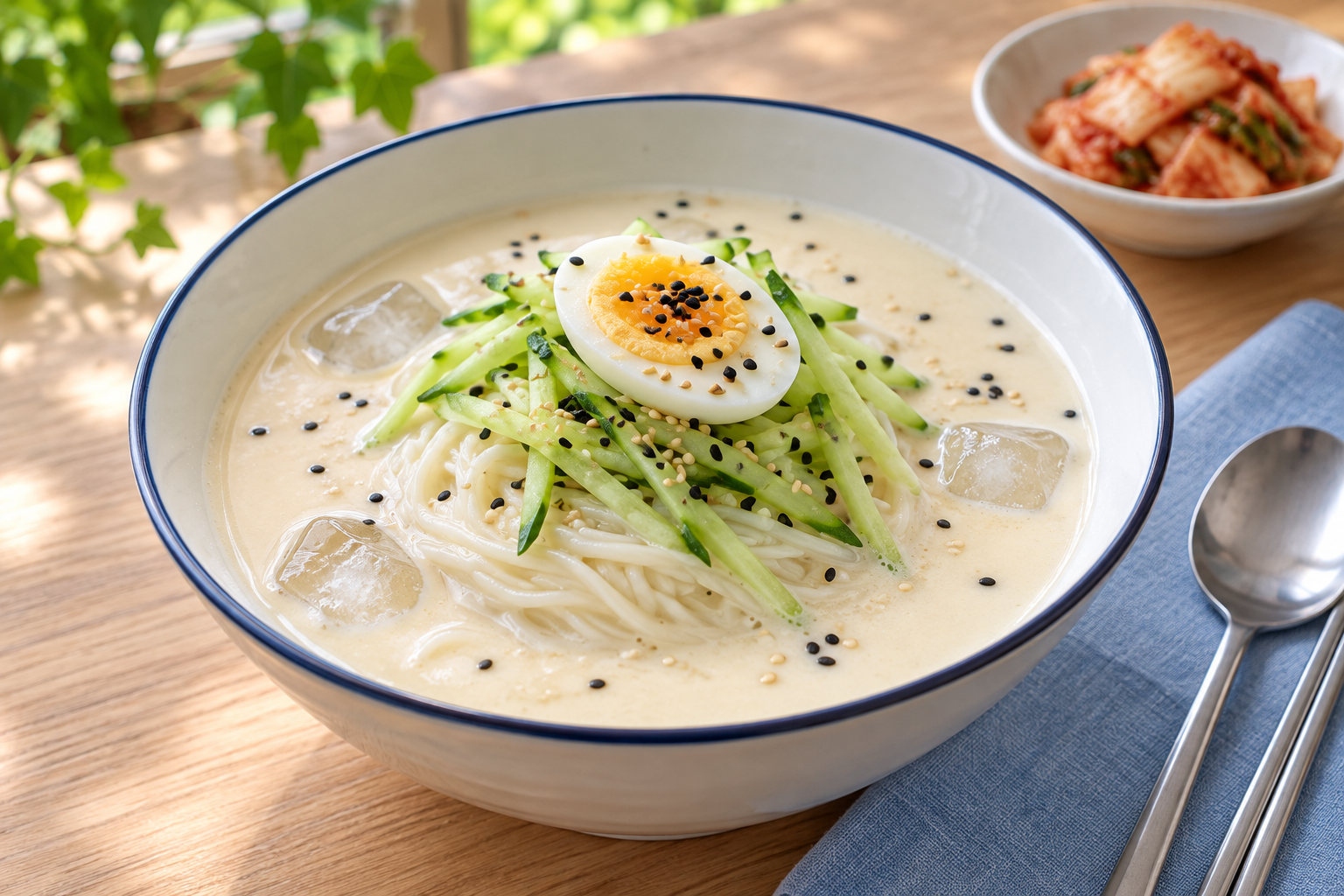 Kongguksu · 콩국수Kongguksu is a summer noodle bowl built around a cold, unsweetened soybean broth. Its appeal is gentle rather than spicy: nutty soy, cool wheat noodles and crisp cucumber make a filling but refreshing meal.
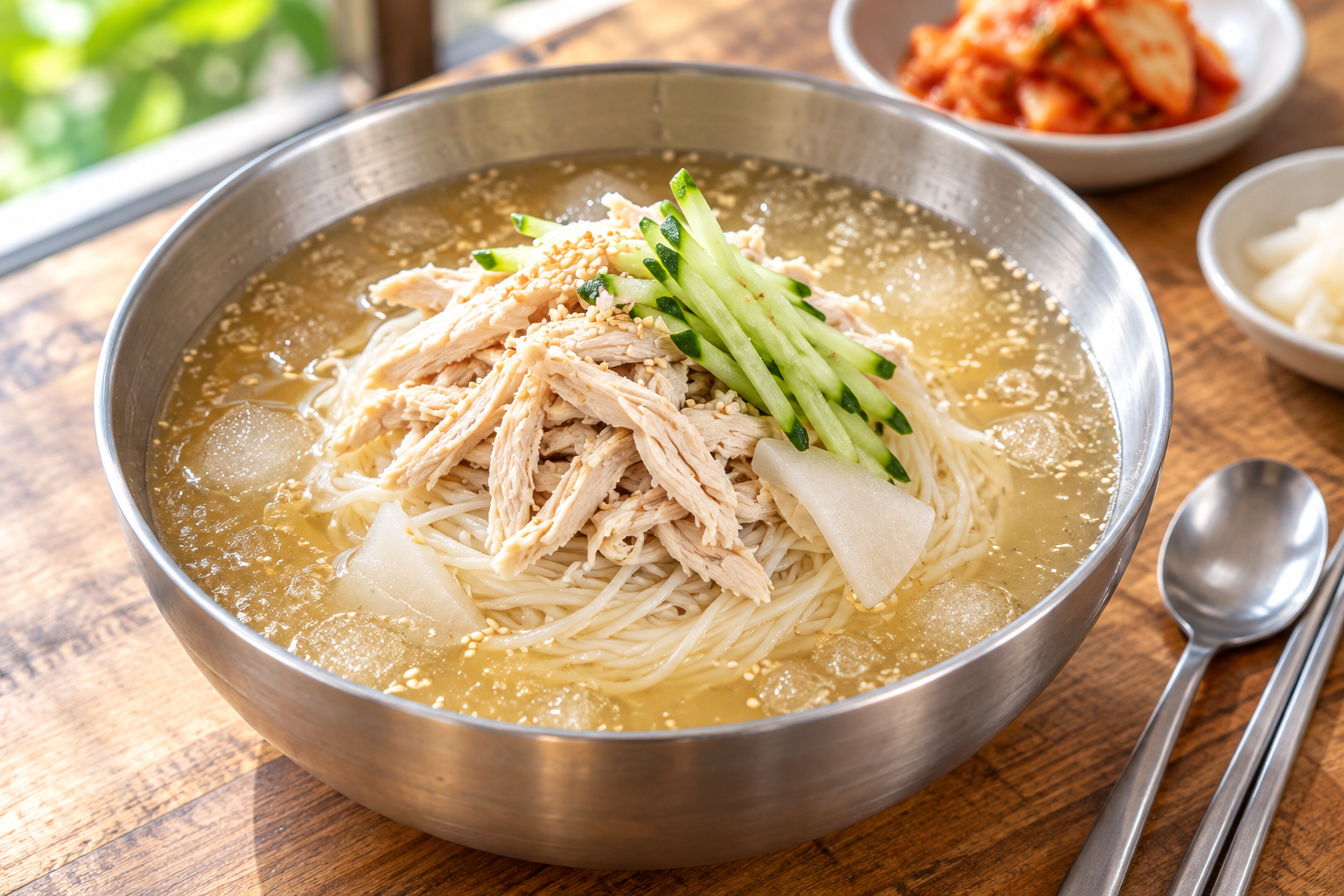 Chogye-guksu · 초계국수Chogye-guksu combines cold chicken broth, shredded chicken and noodles with a bright vinegar-and-mustard accent. The result is savory, tart and cooling, with lean chicken and crisp vegetables in every bite.
 Mulhoe · 물회Mulhoe is a coastal raw-fish dish served with crisp vegetables in an icy, spicy-sour broth. Fish species and seasoning change by region and season, so the menu or staff should identify what is in the bowl.
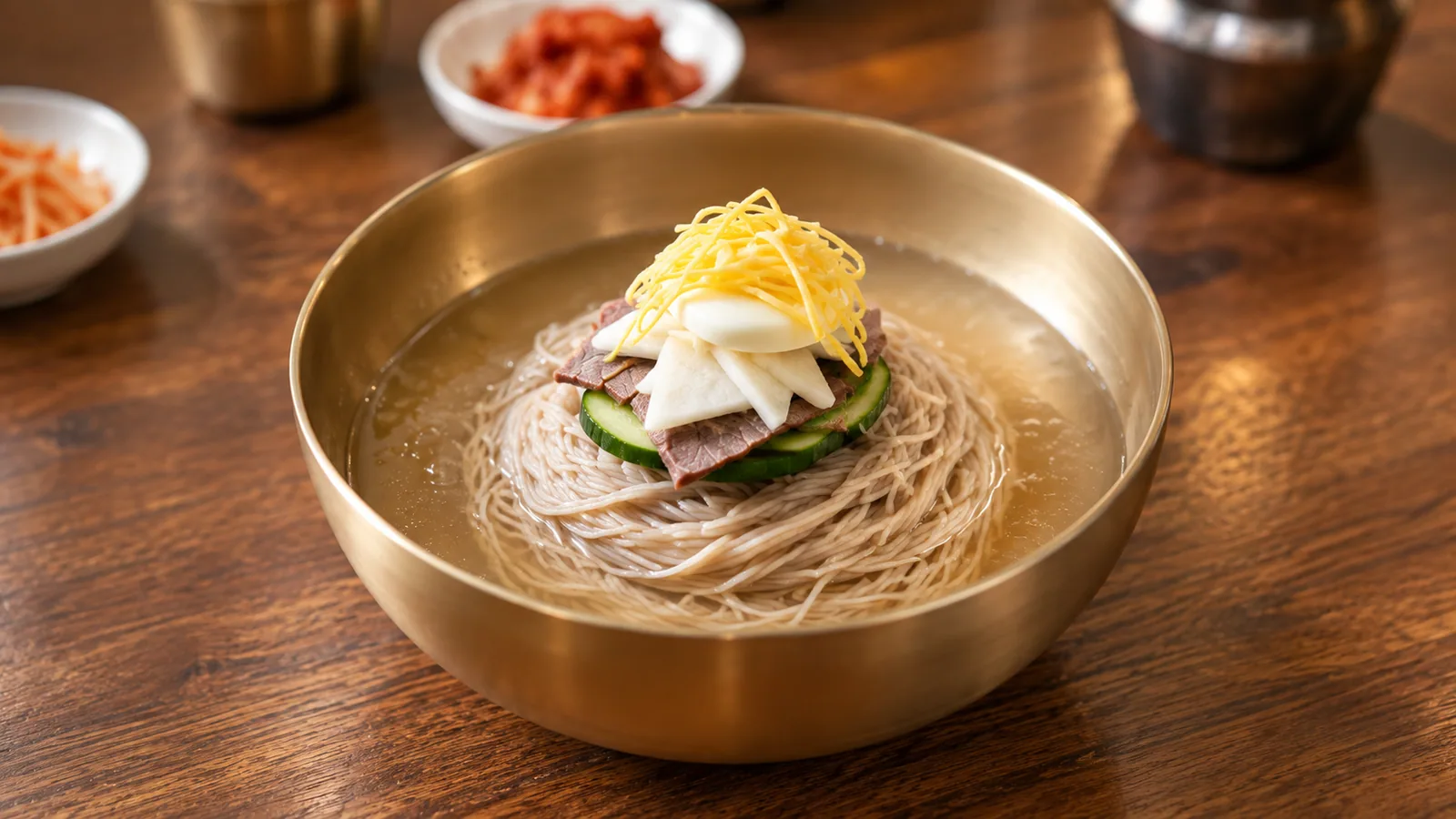 Pyeongyang Naengmyeon · 평양냉면Delicate buckwheat noodles in a restrained meat broth; the pleasure is aroma and aftertaste, not aggressive seasoning.
Official reference: Korea Tourism Organization: Korean food guide. Ingredients, portions and restaurant preparation vary; confirm allergens and dietary needs with the restaurant.
HELP IMPROVE THIS GUIDE
Leave a Reply