Winter Korean food guide
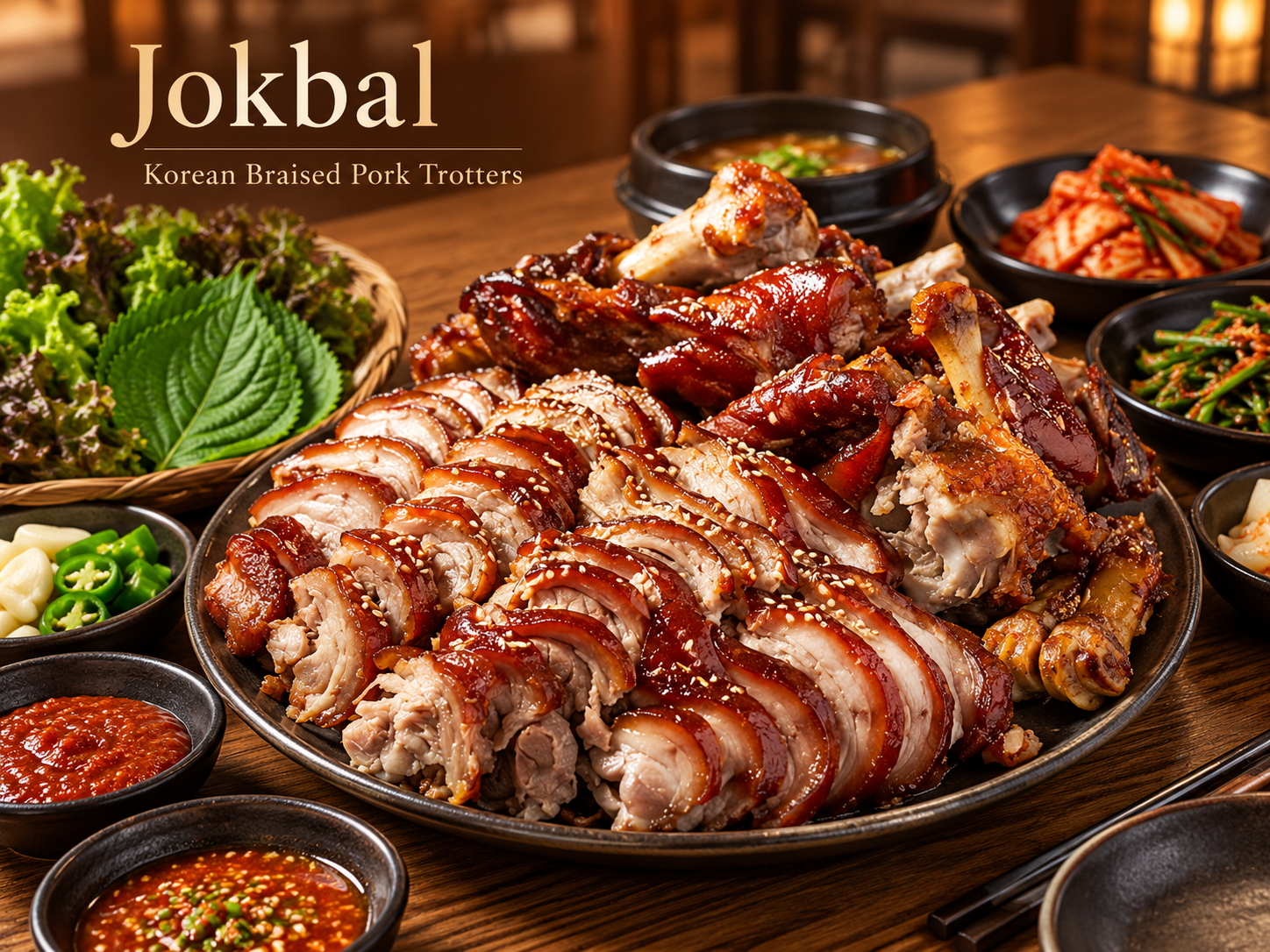
Jokbal · 족발
Jokbal is pork trotter slowly cooked in a soy-based braising liquid, cooled just enough to set its texture and sliced for sharing. The dish is eaten year-round, but the warm platter, lettuce wraps and communal table make it especially satisfying on a cold evening.
Flavor & texture
The lean meat should be moist and savory, while the skin and connective tissue feel supple and pleasantly springy rather than rubbery. Soy sauce supplies salt and umami; ginger, garlic and house aromatics add warmth. Spicy jokbal is a separate, chile-forward variation.
Nutrition context
Pork contributes complete protein, iron, zinc and B vitamins. Skin and connective tissue contain collagen, while fat content varies by cut and trimming, and the braising liquid plus saeujeot and ssamjang can make the meal sodium-rich. Exact values depend on the cut, trimming, sauce and portion, so treat a shared platter as several servings rather than a single portion.
How it is made
The trotters are thoroughly cleaned, simmered until the meat and connective tissue soften, then braised with soy sauce and aromatics. Resting before slicing helps the skin and meat hold together. Restaurant recipes may add sugar, spice, licorice, fruit or other proprietary ingredients.
Chili heat
Classic jokbal is normally 0/5 for chile heat; spicy jokbal can be 3–5/5.
Main ingredients
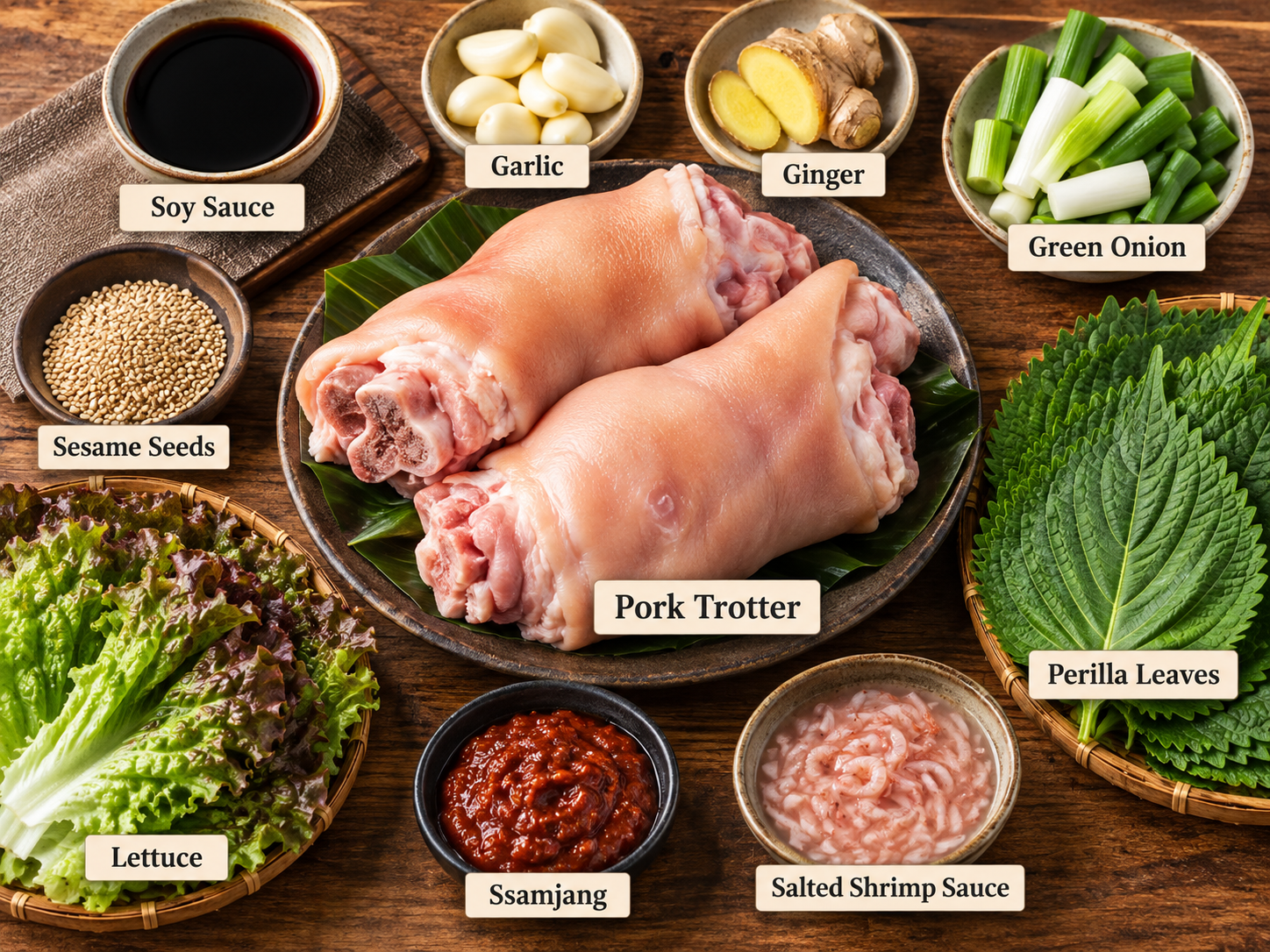
Pork trotters are braised with soy sauce, garlic, ginger and green onion. Lettuce, perilla leaves, ssamjang and salted shrimp sauce are serving accompaniments rather than universal braising ingredients. Sesame may be added as a garnish. Recipes vary by restaurant; check sauces and garnishes as well as the pork.
How to enjoy it
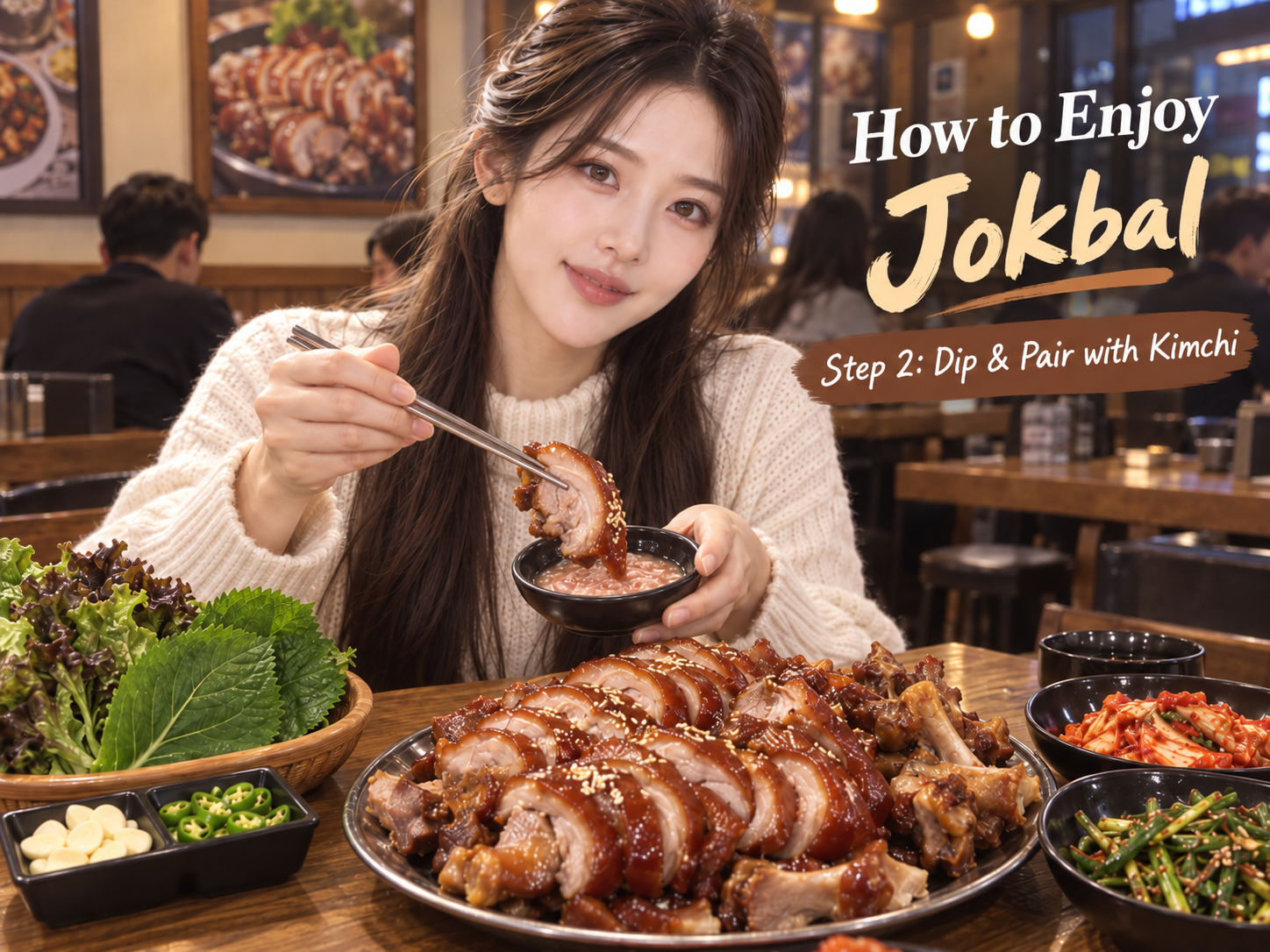
Ordering tips. Ask how many people the small, medium or large platter serves and whether rice or noodles are included. For the classic mild version, ask for “일반 족발” rather than “불족발” (spicy jokbal). Use serving tongs for the shared platter, choose boneless slices for wraps and leave bones on a separate plate.

Reference: Korea Tourism Organization: Jokbal. Nutrition varies by recipe, portion and restaurant.
More from this season
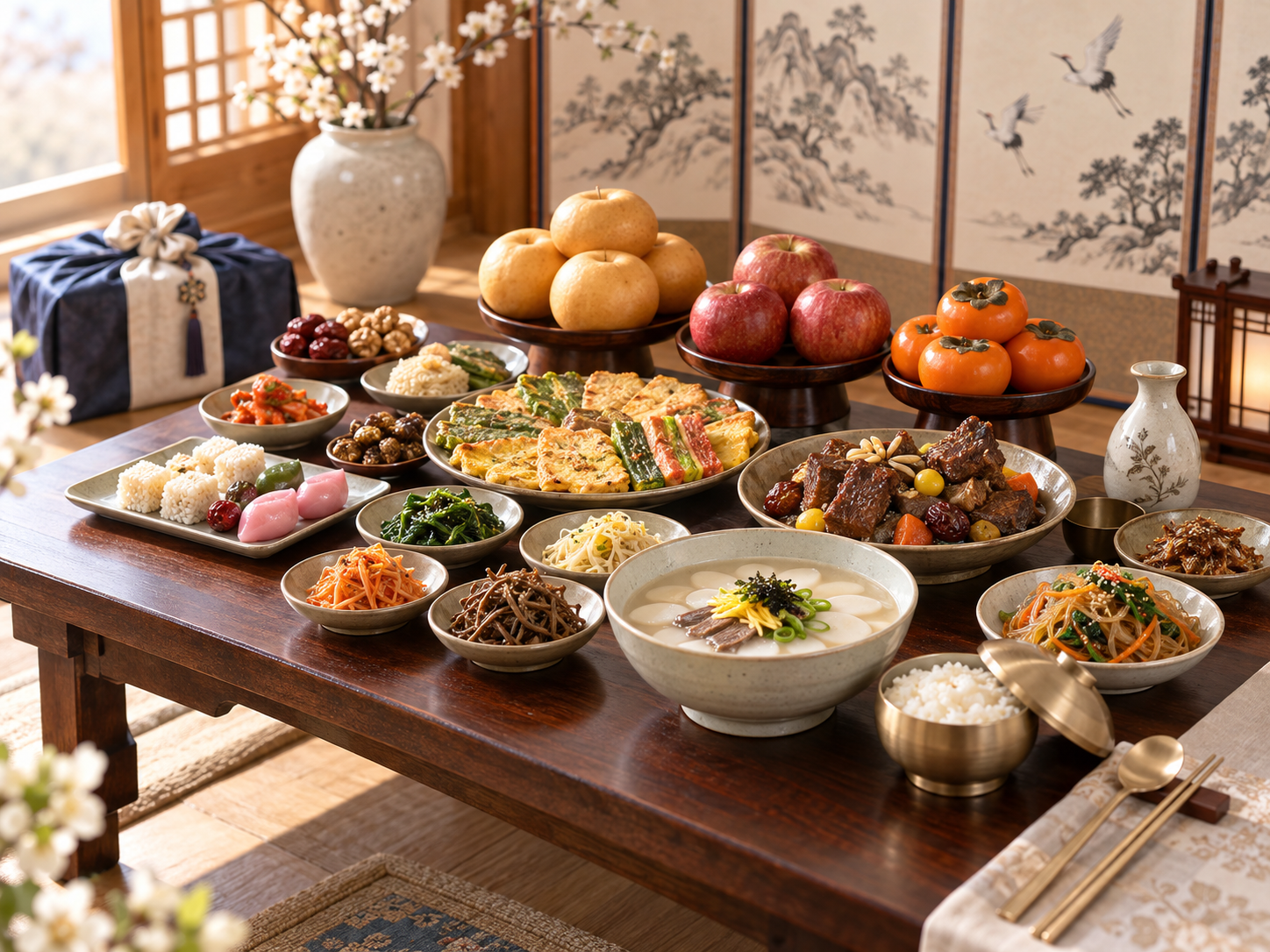 Seollal Food & Table TraditionsWhy Koreans welcome the Lunar New Year with tteokguk, and how to understand the family table, ancestral rites and holiday scenes.
 Dongji: Winter Solstice, Patjuk & Table TraditionsDiscover why red bean porridge marks the winter solstice, how protective symbolism developed and how to read a modern Dongji table.
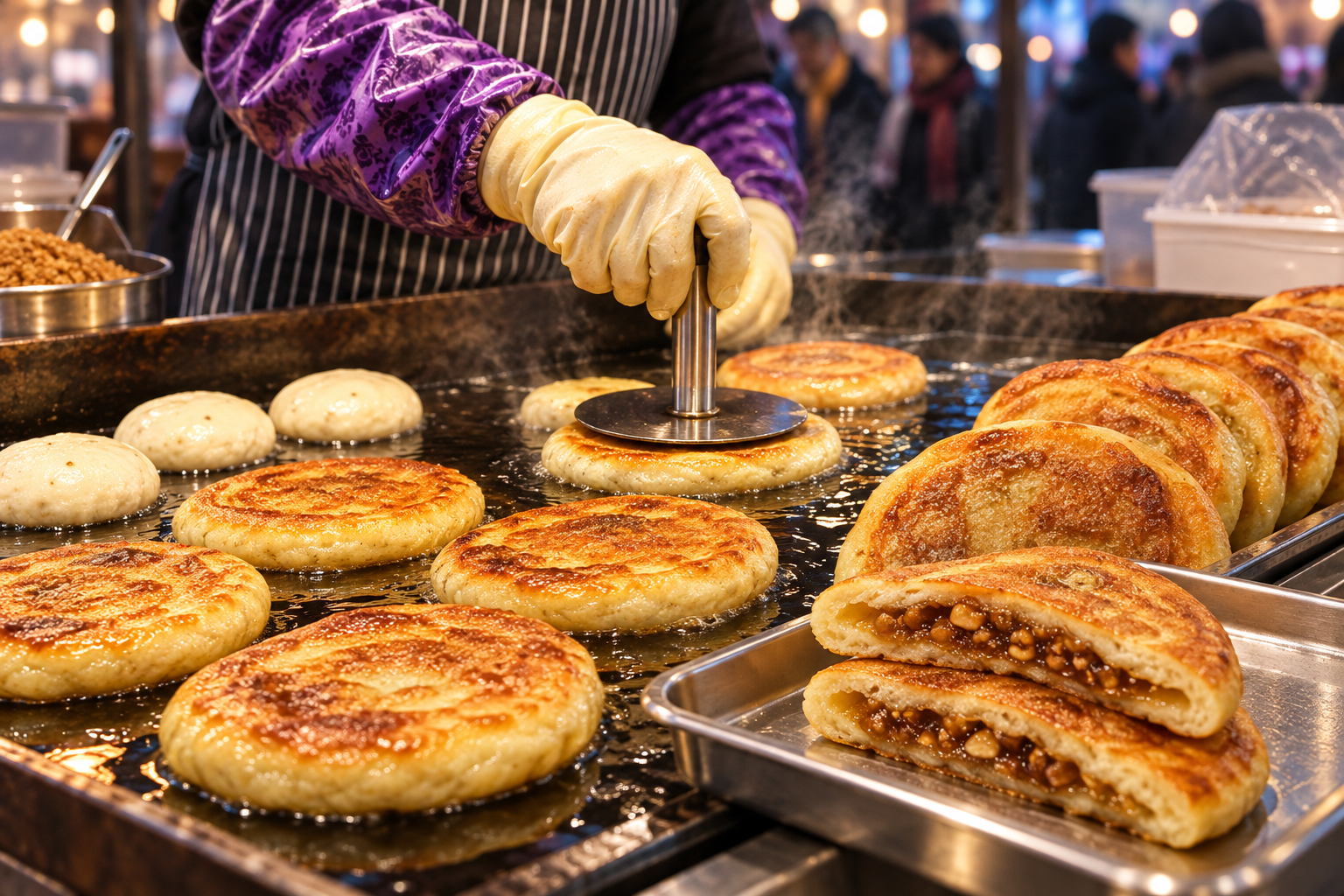 Hotteok · 호떡Hotteok is a filled yeast pancake cooked on a greased griddle and pressed flat. The classic sweet version hides brown sugar, cinnamon and often seeds or chopped nuts inside a chewy dough.
 Sulguk · 술국Sulguk literally means “soup for drinking” and is also used for hearty hangover-soup styles. There is no single universal recipe: a shop may serve beef-bone broth with beef, pork, offal, blood curd, kimchi, bean sprouts or soybean paste. The safest guide is to confirm the broth and contents before ordering.
HELP IMPROVE THIS GUIDE
Leave a Reply