
Winter Korean food guide
Sulguk · 술국
Sulguk literally means “soup for drinking” and is also used for hearty hangover-soup styles. There is no single universal recipe: a shop may serve beef-bone broth with beef, pork, offal, blood curd, kimchi, bean sprouts or soybean paste. The safest guide is to confirm the broth and contents before ordering.
Flavor & texture
A bone-based version is creamy, savory and full-bodied; doenjang adds fermented depth, while kimchi or red seasoning can bring acidity and chile heat. Offal offers a pronounced aroma and varied textures. A balanced bowl tastes rich but clean, with fresh green onion lifting the finish.
Nutrition context
Meat and offal can provide protein, iron, zinc and vitamin B12; the amount varies with the bowl. Broth, soybean paste, kimchi and table seasoning may contribute substantial sodium. “Hangover soup” is a cultural name, not a medical treatment, and it does not reverse alcohol intoxication or dehydration.
How it is made
The stock is simmered separately, then cooked meat or offal and vegetables are heated in the broth to order. Seasoning style varies widely. Organ meats and blood curd must be handled and cooked thoroughly; travelers should choose a busy, well-managed restaurant and eat the soup piping hot.
Chili heat
Often 1–3/5, but red-seasoned and chile-heavy versions can be hotter. Ask for the red seasoning on the side when possible.
Main ingredients

Ingredients and preparation vary by restaurant. Confirm allergens and dietary requirements when ordering.
How to enjoy it


Reference: Korea Tourism Organization: Haejangguk / Sulguk. Nutrition varies by recipe, portion and restaurant.
More from this season
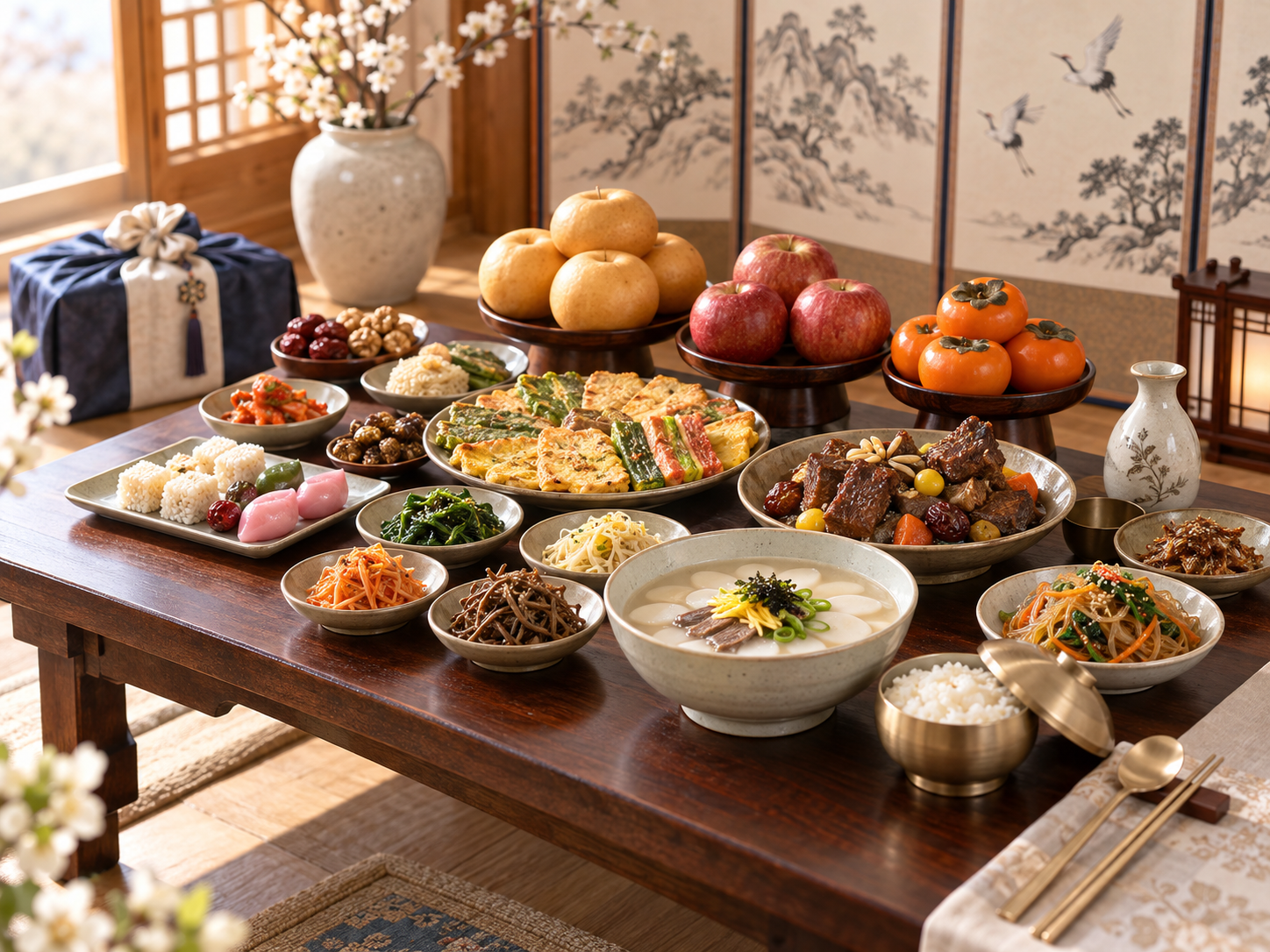 Seollal Food & Table TraditionsWhy Koreans welcome the Lunar New Year with tteokguk, and how to understand the family table, ancestral rites and holiday scenes.
 Dongji: Winter Solstice, Patjuk & Table TraditionsDiscover why red bean porridge marks the winter solstice, how protective symbolism developed and how to read a modern Dongji table.
 Tteok-mandu-guk · 떡만두국Tteok-mandu-guk combines two familiar Korean soups: tteokguk, made with sliced rice cakes, and manduguk, made with dumplings. It is especially common around Seollal but is served throughout winter and year-round. Beef broth is frequent, while anchovy, chicken and other house broths also occur; dumpling fillings differ widely by region and restaurant.
 Patjuk · 팥죽Patjuk is Korean red-bean porridge, traditionally associated with Dongji, the winter solstice. Beans may be mashed smooth, partly strained or left more textured, and some versions contain small glutinous-rice balls called saealsim. It is not always sweet: home and restaurant bowls may be seasoned with salt, sugar, both or neither until served.
HELP IMPROVE THIS GUIDE
Leave a Reply