
Winter Korean food guide
Tteok-mandu-guk · 떡만두국
Tteok-mandu-guk combines two familiar Korean soups: tteokguk, made with sliced rice cakes, and manduguk, made with dumplings. It is especially common around Seollal but is served throughout winter and year-round. Beef broth is frequent, while anchovy, chicken and other house broths also occur; dumpling fillings differ widely by region and restaurant.
Flavor & texture
The broth is usually mild and savory. Rice cakes bring a smooth, resilient chew, while mandu add a tender wrapper and a juicy filling that may include pork, beef, tofu, kimchi or vegetables. Egg strips, green onion and roasted gim add richness, freshness and a light marine aroma without making the classic bowl spicy.
Nutrition context
Rice cakes and dumpling wrappers make this a carbohydrate-dense meal; protein depends on the dumpling filling, broth, meat and egg garnish. Vegetables and tofu in the filling can broaden the nutrient profile, while broth and dipping seasonings can raise sodium. Portion and recipe differences are large, so fixed calorie claims are not reliable.
How it is made
The cook prepares and seasons the broth, then simmers rice-cake slices until flexible and cooks the dumplings gently so their wrappers stay intact. Egg, green onion and gim are added near serving. Timing matters: overcooked rice cakes soften excessively, while crowded or vigorously boiling dumplings can split.
Chili heat
Usually 0/5. Kimchi-filled mandu or red seasoning can make some versions hotter.
Main ingredients

Ingredients and preparation vary by restaurant. Confirm allergens and dietary requirements when ordering.
How to enjoy it
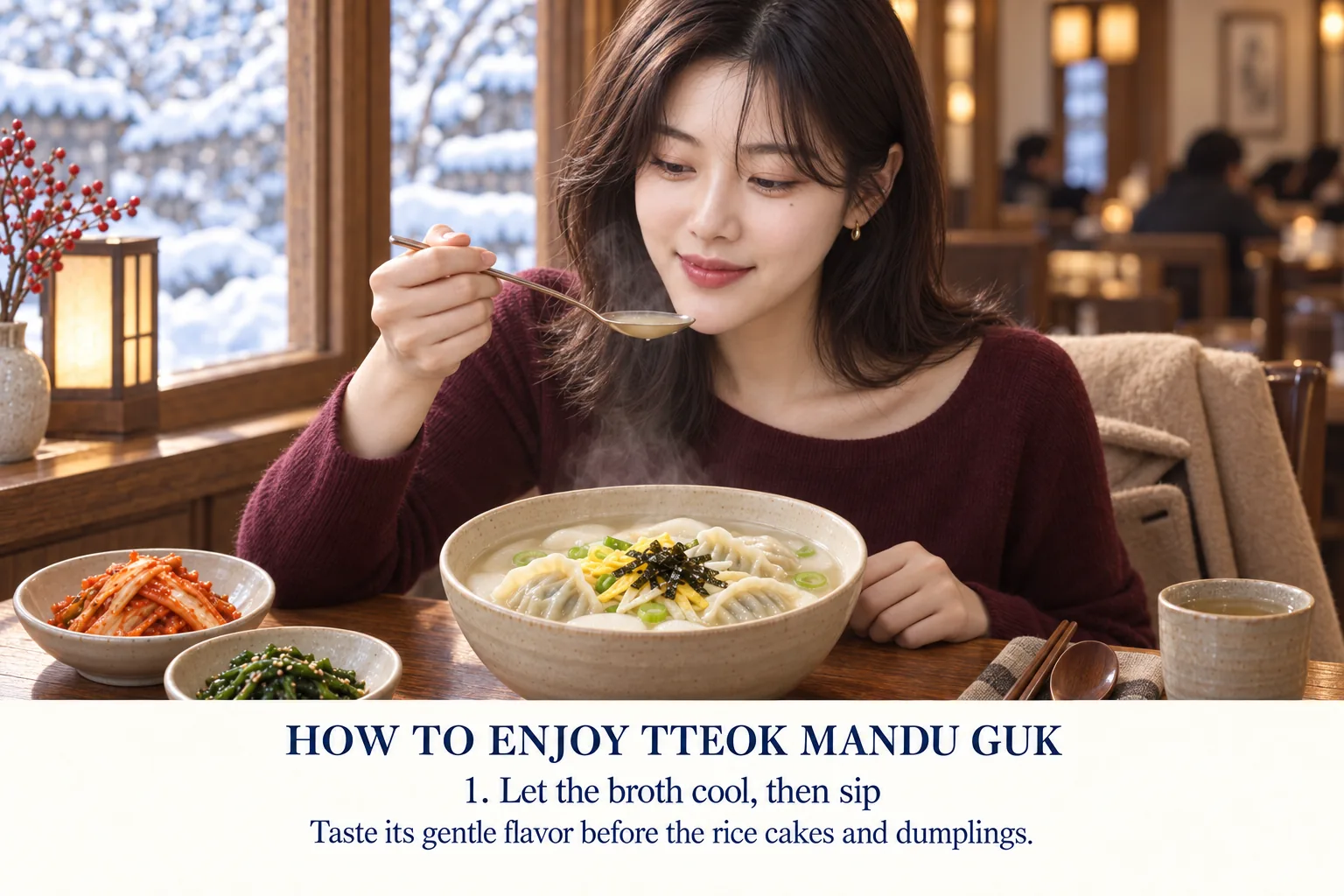
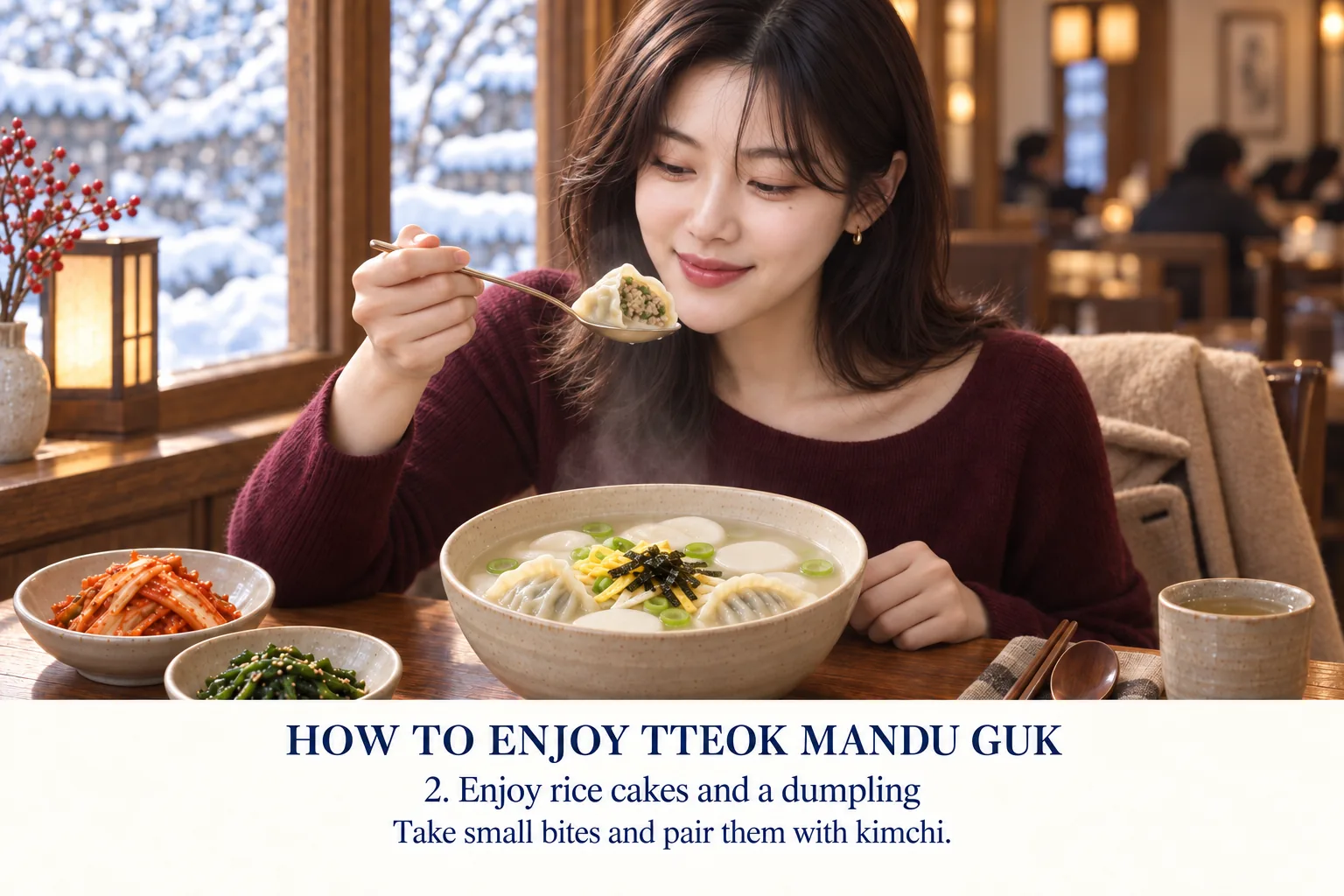
Reference: Korea Tourism Organization: Tteokguk and Seollal food context. Nutrition varies by recipe, portion and restaurant.
More from this season
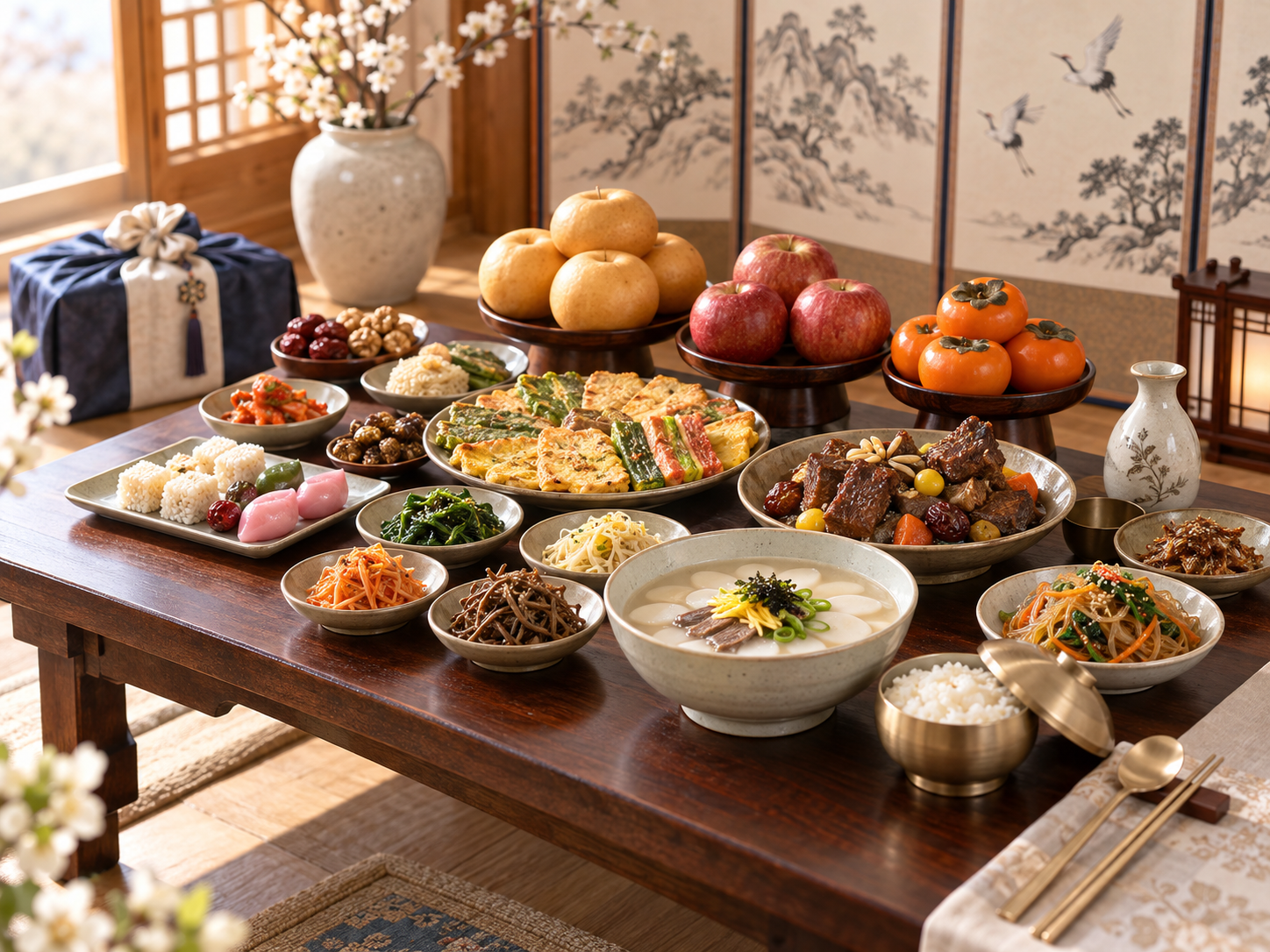 Seollal Food & Table TraditionsWhy Koreans welcome the Lunar New Year with tteokguk, and how to understand the family table, ancestral rites and holiday scenes.
 Dongji: Winter Solstice, Patjuk & Table TraditionsDiscover why red bean porridge marks the winter solstice, how protective symbolism developed and how to read a modern Dongji table.
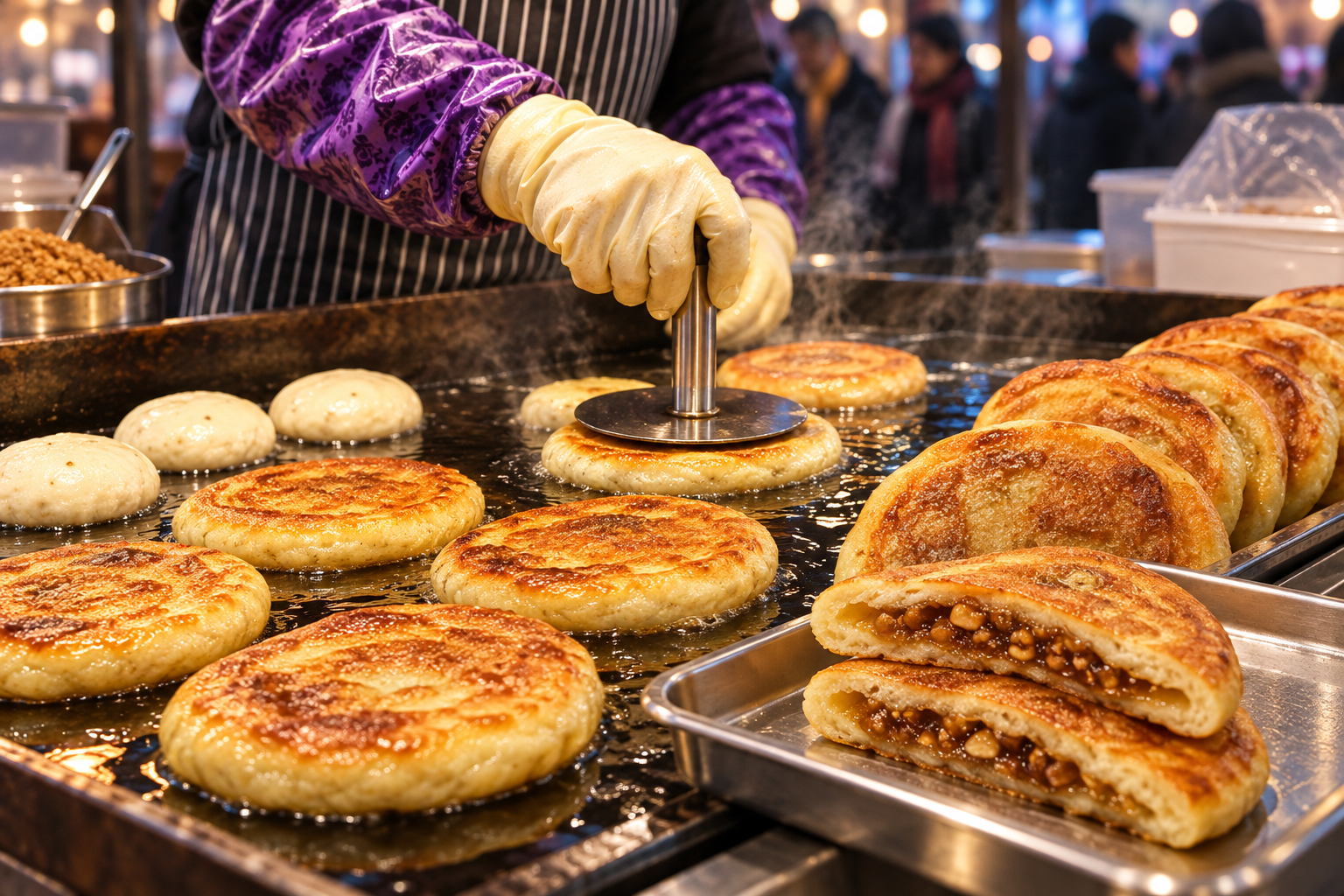 Hotteok · 호떡Hotteok is a filled yeast pancake cooked on a greased griddle and pressed flat. The classic sweet version hides brown sugar, cinnamon and often seeds or chopped nuts inside a chewy dough.
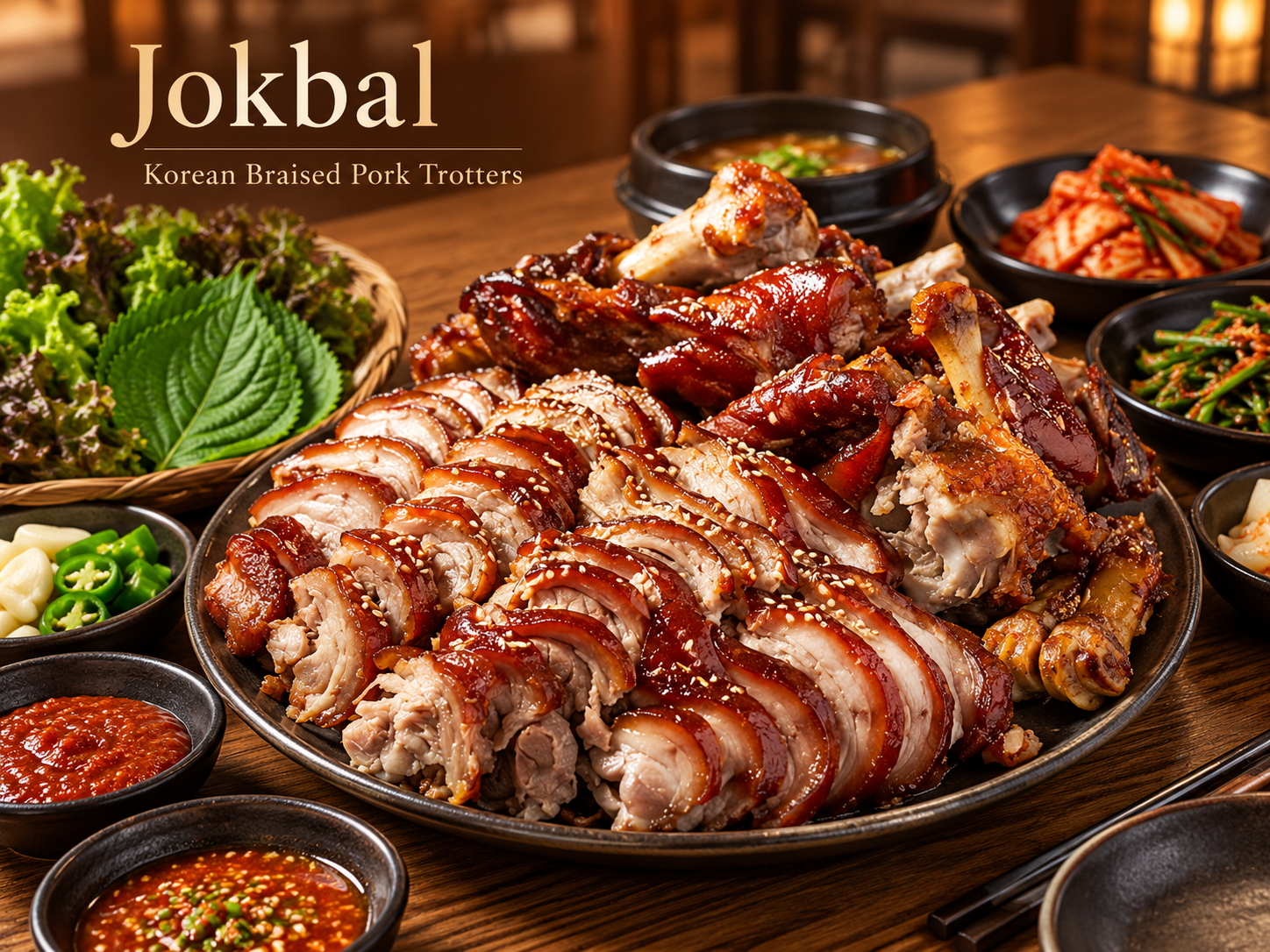 Jokbal · 족발Jokbal is pork trotter slowly cooked in a soy-based braising liquid, cooled just enough to set its texture and sliced for sharing. The dish is eaten year-round, but the warm platter, lettuce wraps and communal table make it especially satisfying on a cold evening.
HELP IMPROVE THIS GUIDE
Leave a Reply