
Winter Korean food guide
Patjuk · 팥죽
Patjuk is Korean red-bean porridge, traditionally associated with Dongji, the winter solstice. Beans may be mashed smooth, partly strained or left more textured, and some versions contain small glutinous-rice balls called saealsim. It is not always sweet: home and restaurant bowls may be seasoned with salt, sugar, both or neither until served.
Flavor & texture
Red beans give the porridge an earthy, nutty flavor and deep burgundy color. The body ranges from spoonably smooth to rustic and grainy, while saealsim add a soft, elastic chew. Sweet versions taste dessert-like; lightly salted versions emphasize the bean’s savory depth. Neither style is inherently spicy.
Nutrition context
Red beans can provide plant protein, dietary fiber, folate and minerals. Rice, rice flour and saealsim add carbohydrate and energy, while optional sugar changes the final sweetness and energy density. Nutrition varies with straining, added grain, serving size and seasoning, so the bowl should not be assigned one universal profile.
How it is made
Dried red beans are soaked or simmered until soft, then mashed or strained according to the desired texture. The bean liquid and pulp are cooked with rice or rice flour until thick; saealsim are added and cooked through. Frequent stirring prevents scorching, and the dense porridge retains heat long after leaving the stove.
Chili heat
0/5. Patjuk is not chile-spiced; “heat” here is the serving temperature, which can remain high beneath the surface.
Main ingredients

Ingredients and preparation vary by restaurant. Confirm allergens and dietary requirements when ordering.
How to enjoy it


Reference: Korea Tourism Organization: Korean food and seasonal culture portal. Nutrition varies by recipe, portion and restaurant.
More from this season
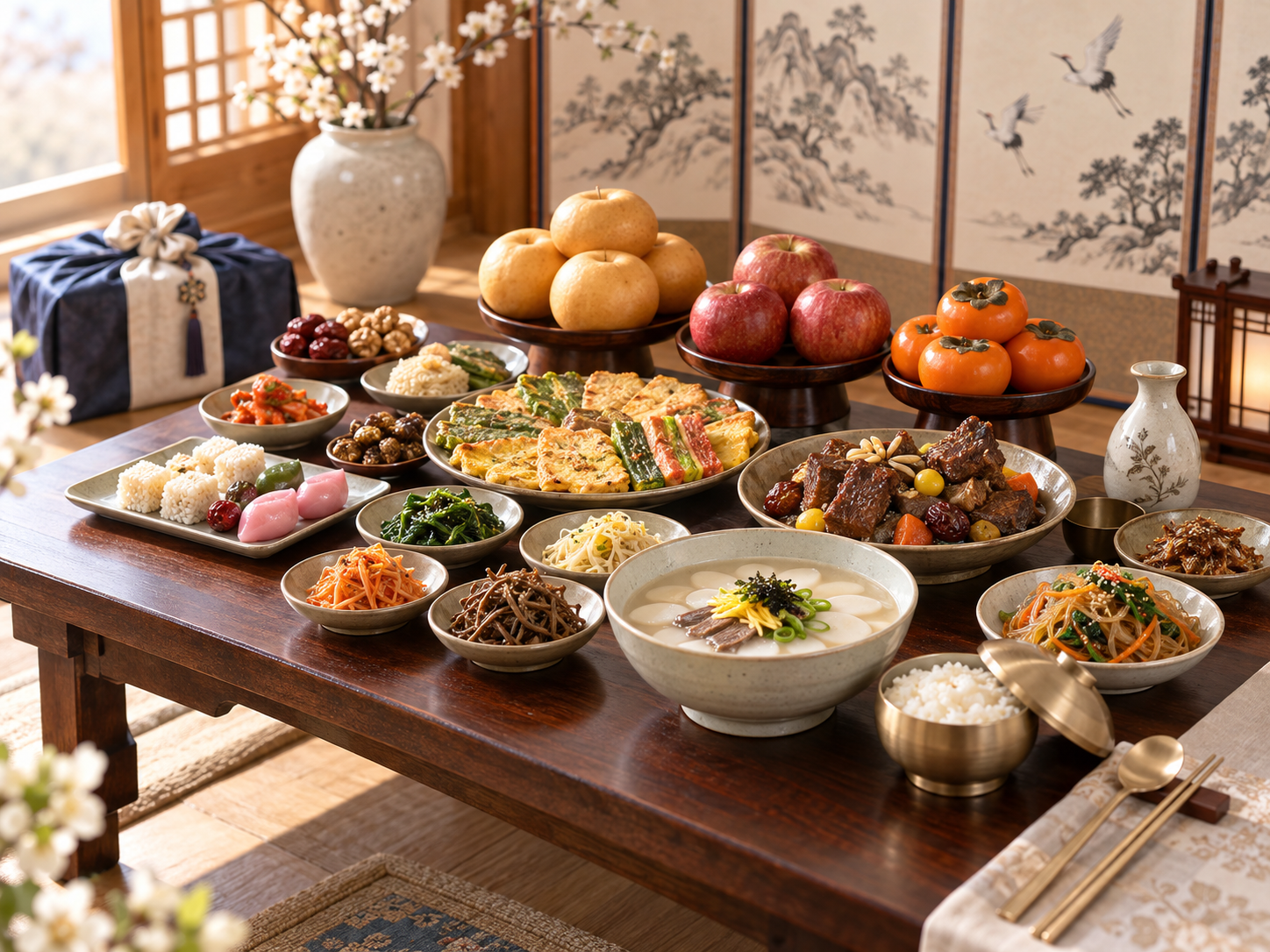 Seollal Food & Table TraditionsWhy Koreans welcome the Lunar New Year with tteokguk, and how to understand the family table, ancestral rites and holiday scenes.
 Dongji: Winter Solstice, Patjuk & Table TraditionsDiscover why red bean porridge marks the winter solstice, how protective symbolism developed and how to read a modern Dongji table.
 Maesaengi-guk · 매생이국Maesaengi-guk is a cool-season soup built around maesaengi, a very fine green seaweed harvested along Korea’s southern coast. Many restaurant and home versions pair it with oysters, although beef, anchovy-kelp or other broths are also used. Its appeal is subtle: a clear marine aroma, soft strands and a bowl that feels light while staying deeply warming.
 Tteok-mandu-guk · 떡만두국Tteok-mandu-guk combines two familiar Korean soups: tteokguk, made with sliced rice cakes, and manduguk, made with dumplings. It is especially common around Seollal but is served throughout winter and year-round. Beef broth is frequent, while anchovy, chicken and other house broths also occur; dumpling fillings differ widely by region and restaurant.
HELP IMPROVE THIS GUIDE
Leave a Reply