YEAR-ROUND SOUP GUIDE · 설렁탕
Seolleongtang: ingredients, nutrition & how to enjoy it
Milky Korean beef bone soup: learn the ingredients, how to season it, and how to enjoy beef, rice and kkakdugi.

What is Seolleongtang?
Seolleongtang is a Korean beef soup recognized by its pale, opaque broth and gently savory flavor. The serving illustrated here combines sliced beef, scallions and thin noodles in a hot stone bowl, with rice and two kinds of kimchi beside it. This is a meal built around contrasts: soft beef, smooth broth, fresh onion and crunchy radish. Its unshowy appearance is part of the appeal; you can appreciate the broth before deciding how much seasoning it needs.
Cultural context and restaurant variations
The Korea Tourism Organization describes seolleongtang as a Seoul specialty that became familiar across Korea. The name is sometimes connected to stories about the Seonnongdan agricultural rites, but such origin stories should not be presented as a securely established account of the dish’s invention. For a visitor, the useful point is its place in everyday soup dining: a bowl that can be enjoyed throughout the year, rather than a food restricted to one festival.
How the soup is made
Bones and selected beef cuts are cooked in water, and the broth is strained before serving. Prolonged cooking produces the familiar opaque appearance; milk is not the defining ingredient. Kitchens differ in their mixture of bones and meat, cooking time, fat removal and final seasoning. Thin wheat noodles may sit beneath the sliced beef, but they are not compulsory. Ask about the particular serving instead of assuming every white soup follows one recipe.
Main ingredients

Beef bones and broth
The long-cooked bone stock gives this style its characteristic opaque appearance. The image identifies bones and water as the base. Color alone does not establish its exact richness or nutritional composition.
Sliced beef
Brisket is shown in the ingredient illustration. Restaurants may use shank or other cuts as well, and some offer additional cuts on a separate menu. Ask for the actual contents if you prefer a particular texture.
Scallions, salt and pepper
Scallions add freshness; salt and black pepper adjust the final flavor. They may be placed on the table or already added in the kitchen. Taste first: a full spoon of salt is not a recommended serving measure.
Rice and optional noodles
Rice makes the soup into a more substantial meal. The pictured noodles are thin wheat noodles, which introduce wheat as an allergen. Rice may arrive separately or already in the bowl.
Nutrition in context
The sliced beef contributes protein, while rice and any noodles supply starch. The total meal depends on the meat portion, fat in the broth, rice and side dishes. Salt added at the table and fermented accompaniments can substantially change the sodium content. An opaque broth is not a reliable measure of calcium, protein or overall nutritional value, and a photograph cannot support a calorie total. Enjoy the broth to taste without treating finishing the entire bowl as a requirement.
Dietary and allergen check: This is a beef-based dish. Optional wheat noodles, soy- or wheat-containing seasonings, and fish or shrimp ingredients in kimchi need attention when relevant. The usual milky appearance comes from the broth, but an actual dairy allergy still calls for checking the restaurant’s recipe and handling practices.
How to enjoy Seolleongtang: a photo guide
1. Taste, then season

The first scene shows seasoning at the table. Begin with a small spoonful of broth after allowing it to cool. Add a small pinch of salt only if needed, stir, and taste again before adding more. Follow with a little pepper or scallion according to preference. You are looking for a balance that still lets the beef broth come through; the quantity pictured on the spoon is illustrative, not a dosage.
2. Enjoy with rice and kkakdugi

The second scene pairs a little rice with beef and broth. You may keep rice in its own bowl or add some to the soup. Try a manageable spoonful rather than filling the spoon too heavily. Alternate with a piece of kkakdugi, the crunchy cubed radish kimchi, or cabbage kimchi. Keeping kimchi separate initially helps you notice the soup’s original flavor before deciding whether you want a tangier, spicier combination.
Before you order
Check whether the price includes rice, whether noodles are included and whether the broth is already seasoned. If you prefer meat without organ cuts, ask before ordering. A request to remove noodles after serving is not the same as confirming an allergy-safe preparation. Use the spoon for broth and rice and chopsticks for meat or side dishes, choosing whichever combination makes each bite comfortable.
Useful Korean phrases
One seolleongtang, please.
Does it include noodles?
Is it already seasoned?
Gomtang and seolleongtang: compare the bowl
A useful starting point is that seolleongtang usually emphasizes an opaque bone broth, while the clear gomtang pictured here emphasizes beef and its stock. This is a guide to common styles, not a strict rule: restaurant names and recipes overlap. Ask about the base, cuts, noodles and seasoning rather than identifying a soup by color alone.
Explore Gomtang → · Explore Galbitang →
Questions visitors often ask
Does the white broth contain milk?
Milk is not what defines traditional seolleongtang. The soup’s opaque appearance develops through cooking the beef bones. Check the actual recipe if dairy avoidance is essential.
Must I add rice to the soup?
No. Both adding rice and eating it separately are practical ways to enjoy the meal. Start with a small amount if you are unsure.
Sources and editorial notes
- Korea Tourism Organization: Seolleongtang
- Korea.net: beef broth soup and regional variations
- MICHELIN Guide: Gomtang vs. Seolleongtang
VEMORIQ Editorial Desk · Updated October 2, 2026. Food descriptions are informed by the sources above; the dining steps interpret the supplied illustrations. Images are not photographs of a named restaurant. Ingredients, portion sizes, prices and serving arrangements vary.
More from this season
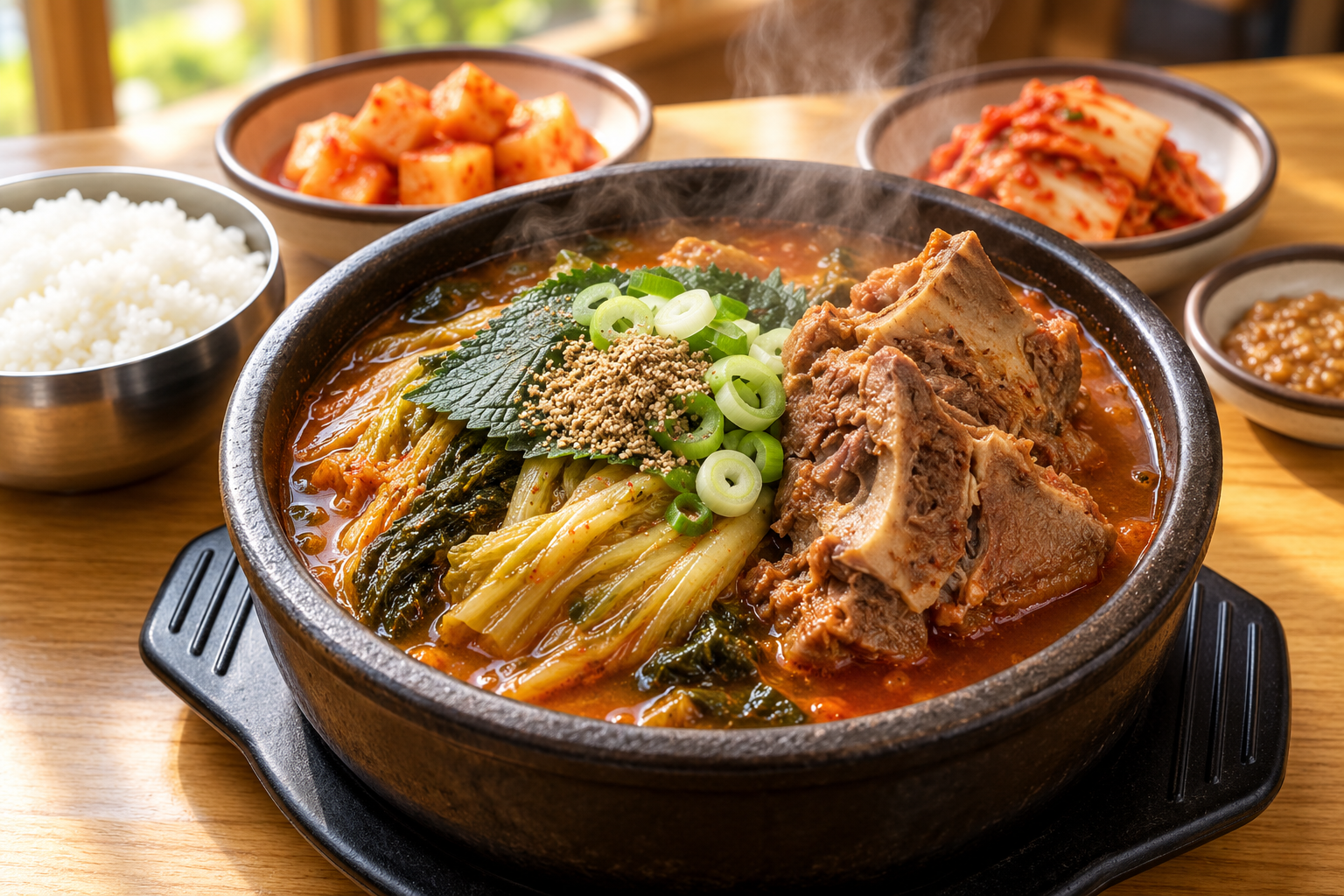 Ppyeo-haejanggukTender pork around the backbone, leafy greens and a spicy, savory broth: learn the ingredients and how to enjoy the bowl comfortably.
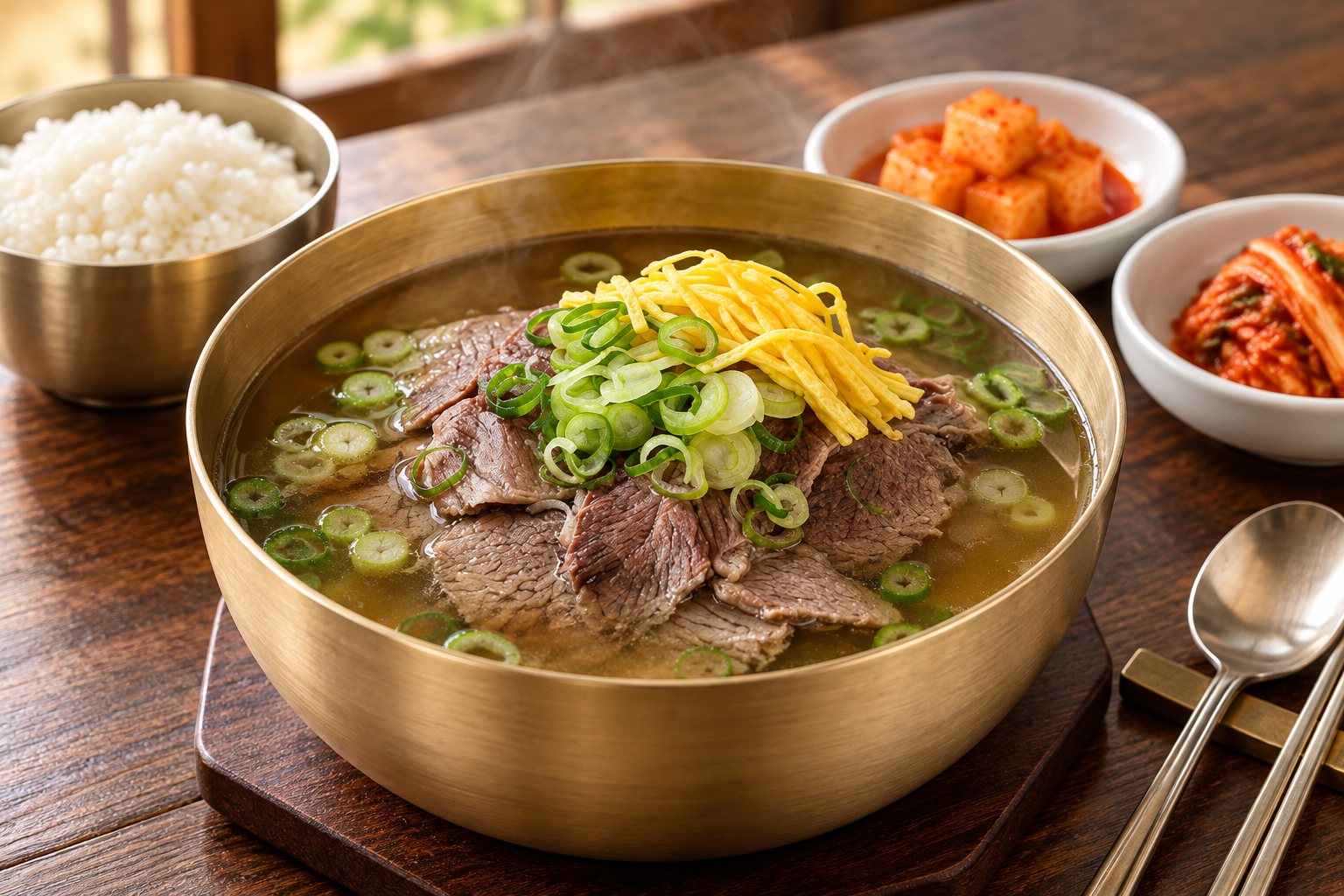 GomtangA clear beef soup style with tender sliced meat: discover gomtang ingredients, restaurant variations and two easy ways to enjoy it.
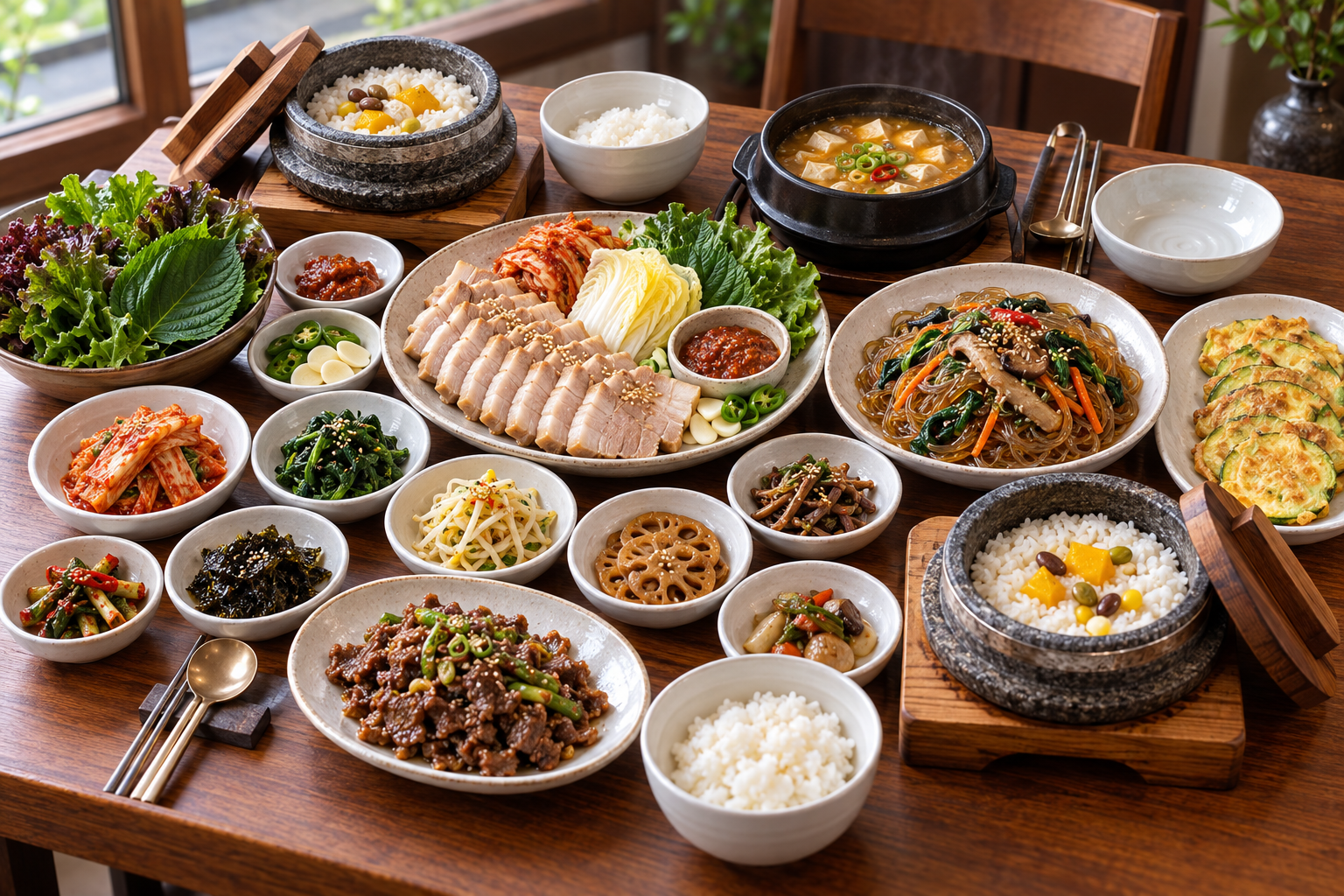 Han-sang charimA full Korean table with stone-pot rice, stew, wraps and banchan, explained in six illustrated dining steps.
Official reference: Korea Tourism Organization: Korean food guide. Ingredients, portions and restaurant preparation vary; confirm allergens and dietary needs with the restaurant.
HELP IMPROVE THIS GUIDE
Leave a Reply